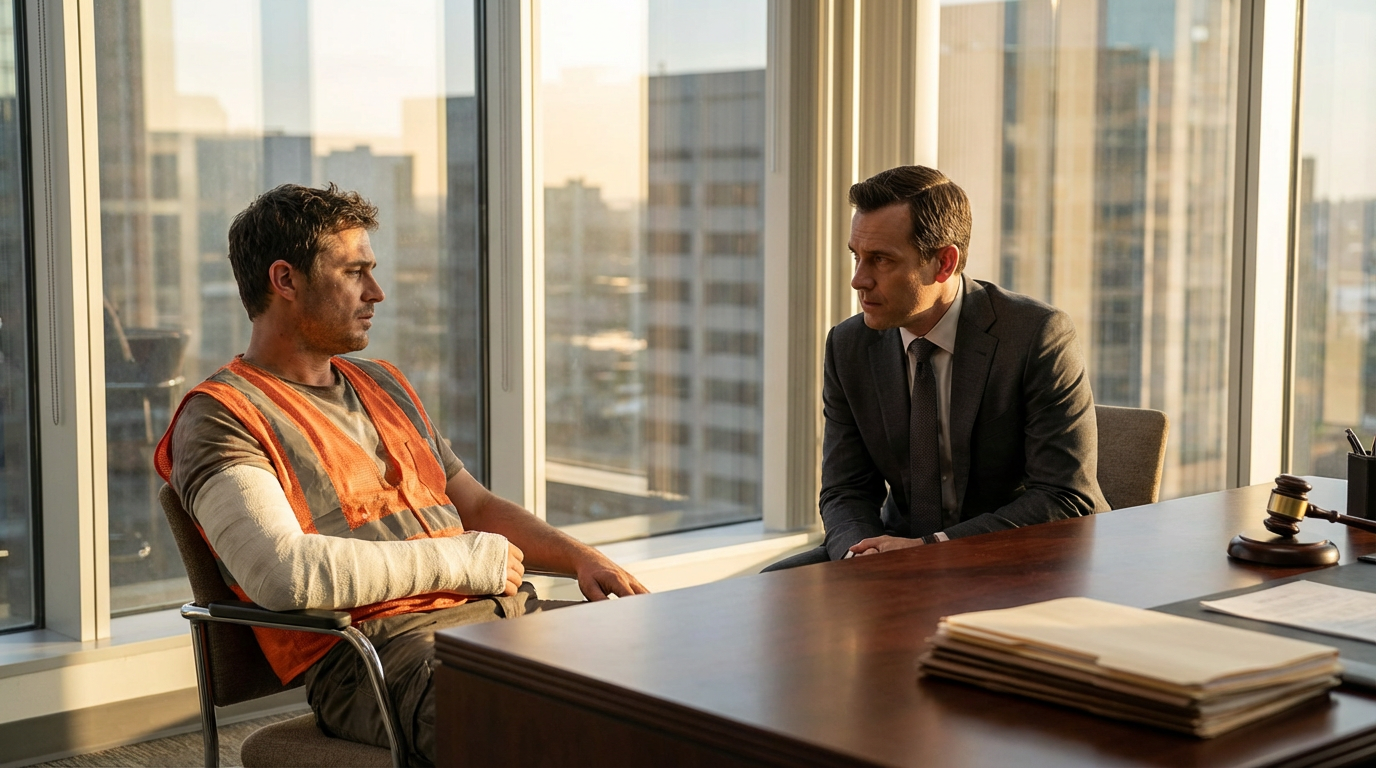
After suffering a severe injury, your first instinct might be to update friends and family online to let them know you are recovering. However, a single innocent post can become the exact evidence an insurance adjuster uses to deny your rightful compensation. Making seemingly harmless social media claim mistakes is one of the fastest ways to destroy a personal injury or disability settlement. What feels like a simple status update or a shared photo can easily be weaponized by defense attorneys to argue that you are not as hurt as you claim.
Even if you have your accounts locked down with strict privacy settings, your digital footprint remains incredibly vulnerable. Investigators continuously monitor your online presence, actively searching for out-of-context images, location check-ins, or tags from friends that contradict your injury timeline. Understanding how insurance companies twist your everyday digital life against you is absolutely crucial for protecting your case and securing the financial recovery you deserve.
Key Takeaways
- Insurance investigators actively monitor your digital footprint, weaponizing seemingly innocent social media posts to devalue your injury claim and deny rightful compensation.
- Strict privacy settings will not fully protect you, because adjusters can easily bypass these barriers by monitoring public tags and photos posted by your friends or family.
- Defense attorneys routinely strip away the context of your online updates, using a simple smile or a brief outing as definitive proof that your physical suffering is exaggerated.
- The most effective way to protect your financial recovery is to completely pause all social media activity and secure experienced legal counsel immediately.
How Insurance Investigators Weaponize Digital Footprints
The moment you file an injury claim, insurance adjusters often launch a covert investigation into your digital life. These professionals utilize highly sophisticated surveillance tactics to monitor your online presence across multiple platforms. Instead of looking for the truth about your recovery, they are actively hunting for any digital footprint that can be used against you. Investigators routinely scour public feeds, comment sections, and tagged photos to build a narrative that contradicts your reported injuries. This relentless scrutiny turns your everyday online interactions into potential evidence that can jeopardize your rightful compensation.
Defense teams are incredibly skilled at taking completely innocent updates entirely out of context to devalue a case. A simple status update about having a good day or a brief check-in at a local restaurant can be twisted to suggest your physical suffering is exaggerated. Adjusters will capture screenshots of these isolated moments and present them as definitive proof that you are fully capable of resuming normal activities. Even sharing an old memory or a throwback picture can trigger devastating social media claim mistakes if the timeline is misunderstood by the insurance company. They rely on these digital fragments to create a misleading picture of your health, giving them the leverage needed to deny your rightful benefits entirely.
Managing this intense level of digital surveillance requires far more than simply setting your profiles to private. The hidden complexities of maintaining a pristine online presence during an active case are incredibly difficult to handle alone. Because insurance companies dedicate vast resources to uncovering these seemingly minor details, claimants are at a severe disadvantage without professional guidance. Securing experienced legal counsel immediately is the most effective way to shield yourself from these predatory investigation tactics. A skilled attorney will implement strict communication boundaries and protect your settlement from being destroyed by a single misunderstood post.
Innocent Photos That Contradict Injury Timelines
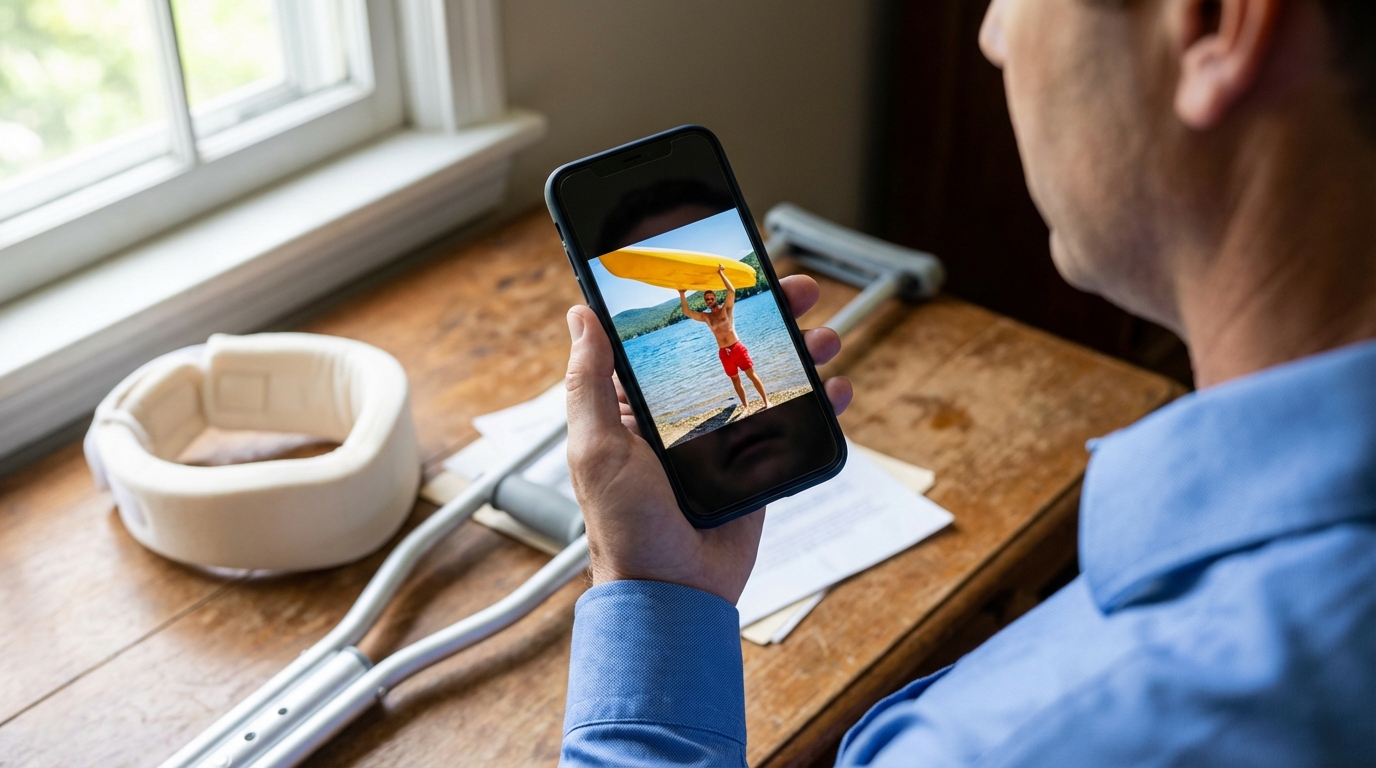
Many injury victims assume that sharing a simple photo of a family gathering or a smiling selfie is perfectly safe during an ongoing case. However, insurance investigators actively hunt for these seemingly harmless images to build a narrative that contradicts your reported injury timeline. A picture of you holding a grandchild, attending a wedding, or enjoying a brief vacation can easily be twisted by defense attorneys to suggest your physical suffering is exaggerated. These professionals are trained to strip away context from your digital life, ignoring the fact that you might have needed days of bed rest just to attend that single event. Before you click post, you must realize that even a momentary smile captured on camera can be manipulated to deny your rightful compensation.
Posting updates about your recovery journey or physical therapy milestones carries a similarly high level of risk. An insurance adjuster looking at a photo of you performing a light stretch or walking in a park will completely disregard the painful rehabilitation process behind that moment. They will simply present the image to a judge or jury as definitive proof that you are fully healed and no longer require financial support for medical treatments. This aggressive tactic highlights the hidden complexities of maintaining a personal injury claim today. Because defense teams are highly skilled at weaponizing your online footprint, securing protective legal counsel early is crucial to prevent these innocent updates from destroying your case.
The Hidden Danger of Friends Tagging Profiles
Many injury claimants mistakenly believe that switching their social media accounts to private mode provides a foolproof shield against prying eyes. Insurance investigators are highly skilled at bypassing these basic security barriers to uncover details about your daily life. Even if your personal profile is locked down, your digital footprint remains vulnerable through the online habits of the people closest to you. Adjusters will actively search for your family members, coworkers, and acquaintances who might have public profiles or looser privacy restrictions. This indirect surveillance method allows them to monitor your activities without ever needing direct access to your personal page.
A simple tag in a group photo or a casual comment on a friend’s timeline can instantly shatter the protective wall you tried to build. When a friend uploads pictures from a weekend barbecue or a shared public album from a recent event, your presence in those images becomes visible to anyone investigating your claim. Defense attorneys eagerly hunt for these tagged posts because they often capture candid moments that can be twisted to contradict your reported physical limitations. A smiling photo uploaded by a relative might be entirely harmless in reality, but an aggressive insurance adjuster will argue it proves you are not truly suffering. You lose control over your own narrative the moment someone else clicks the tag button or mentions your name in a public thread.
Handling this digital risk requires far more than just adjusting your account settings or asking friends to delete pictures. The hidden complexities of digital evidence make it incredibly easy to accidentally jeopardize your rightful compensation. Securing experienced legal counsel early in the process is crucial to protecting your case from these invasive surveillance tactics. A skilled attorney understands exactly how insurance companies weaponize social media and will guide you on how to manage your online presence safely. Taking proactive steps with a legal professional ensures that an innocent digital mistake does not destroy your chance at a fair settlement.
Protecting Claims With Experienced Legal Counsel

Managing a personal injury claim requires far more than just proving your physical injuries to the insurance company. Predatory adjusters actively search for any excuse to deny your rightful benefits, and your digital footprint is often their first target. Hiring an experienced personal injury attorney immediately after your accident provides a critical shield against these invasive investigation tactics. Legal professionals understand exactly how insurance companies twist innocent online posts to destroy valid claims. By securing representation early, you force all communication and investigation efforts to go through a protected legal channel instead of your personal life.
Once you retain legal counsel, your attorney will help you establish strict guidelines for your digital behavior to safeguard your settlement. This protective strategy often involves pausing all social media activity, updating privacy settings, and educating your friends about the dangers of tagging you in their posts. Even a seemingly harmless comment or a shared memory from years ago can be manipulated by defense teams to contradict your injury timeline. Your lawyer will review your current profiles to identify any existing vulnerabilities that an investigator might try to exploit. Having this expert guidance ensures that a momentary lapse in judgment online does not cost you the financial recovery you desperately need.
How Online Oversharing Sabotages Your Insurance Claim
The financial risks associated with online oversharing during an active insurance investigation cannot be overstated. A single photograph or casual status update can provide defense attorneys with the exact ammunition they need to dismantle your case. Insurance adjusters actively hunt for any digital evidence that contradicts your reported injuries, using even the most innocent posts to justify denying your rightful compensation. By continuing to use these platforms, you are essentially handing over a free surveillance tool to the people actively trying to minimize your payout. Protecting your financial future requires recognizing that your digital footprint is a liability until your case reaches a final resolution.
Stepping away from all digital platforms is the single most effective strategy to protect your claim from aggressive investigators. While going completely offline might feel isolating, this temporary sacrifice ensures that your legal team can build a strong case without constantly putting out fires caused by out-of-context updates. Your attorney needs a clean slate to accurately present the full extent of your physical limitations and secure the benefits you desperately need. Rather than risking your recovery on a misunderstood vacation photo or a tagged comment, you must let your legal counsel handle the fight. Silence is your greatest asset while professionals handle the complex tactics used by insurance companies to devalue your suffering.
Securing the compensation you deserve requires both disciplined online behavior and expert guidance through every step of the legal process. If you are worried that past social media claim mistakes have already impacted your case, seeking professional advice immediately is crucial to mitigating the damage. We highly recommend you explore our comprehensive guide, Is Your Workers Compensation Settlement Offer Fair? (2025 Guide), to understand how these digital errors might affect your final payout. Discover how our resources can help you evaluate your options and protect your financial recovery from predatory insurance tactics. Taking action today ensures you have the knowledge needed to maximize your benefits and secure a stable future.
Frequently Asked Questions
1. Can I post updates about my recovery on social media after an injury?
It is highly recommended that you avoid posting any updates about your recovery online. What feels like a simple status update to reassure your loved ones can easily be weaponized by defense attorneys. Insurance adjusters will use these innocent posts as evidence to argue that you are not as hurt as you claim.
2. Will strict privacy settings protect my social media accounts from insurance investigators?
Even with your accounts locked down, your digital footprint remains incredibly vulnerable. Investigators use highly sophisticated surveillance tactics to monitor your online presence across multiple platforms. They can still access public feeds, comment sections, and photos where others have tagged you.
3. How do insurance adjusters use my everyday social media posts against me?
Defense teams are incredibly skilled at taking completely innocent updates entirely out of context to devalue your case. A simple post about having a good day or a brief check-in at a restaurant can be used to build a narrative that contradicts your reported injuries. Their goal is to prove you are physically capable of doing more than your claim suggests.
4. What specific types of digital content are insurance investigators looking for?
Investigators are actively hunting for any digital footprint that contradicts your injury timeline. This includes out-of-context images, location check-ins, and seemingly harmless status updates. They routinely scour these details to find excuses to deny your rightful compensation.
5. Can photos or posts uploaded by my friends affect my personal injury claim?
Yes, content posted by your friends and family can absolutely jeopardize your rightful compensation. Investigators actively search for tags from friends that might contradict your recovery timeline. You must be cautious about any online interactions involving your extended digital network.
6. When do insurance companies start investigating my digital footprint?
The moment you file an injury claim, insurance adjusters often launch a covert investigation into your digital life. These professionals immediately begin scouring your accounts for evidence to use against you. Understanding this relentless scrutiny is crucial for protecting your case and securing your financial recovery.
7. Why is it dangerous to share a positive status update while I am recovering?
A status update about having a good day might seem completely harmless to you. However, defense attorneys will twist this everyday digital interaction to argue that your injuries are not severe. This relentless scrutiny turns your normal online life into potential evidence that can ruin your settlement.