Living with a sudden or progressive sensory deficit can fundamentally alter your career, relationships, and daily peace of mind. If your condition was caused by a workplace hazard, a defective product, or medical negligence, securing a fair settlement for hearing loss is a critical step toward reclaiming your quality of life. In 2025 and 2026, compensation benchmarks have shifted significantly to account for the long-term costs of specialized care and assistive technology.
The value of these claims varies widely, with total hearing loss settlements often reaching into the millions, while partial impairment or chronic tinnitus cases follow different valuation models. Understanding these updated averages is essential for ensuring you aren’t pressured into a low-ball offer that ignores the permanence of your injury. Managing the complexities of inner ear damage requires a clear grasp of how modern courts and insurers quantify the profound impact of silence or constant ringing.
Key Takeaways
- Total hearing loss settlements in 2025 and 2026 can reach into the millions to account for lifetime medical care, assistive technology, and the profound impact on career prospects.
- Industrial settlement values are primarily dictated by precise medical impairment ratings that use standardized formulas to convert decibel loss into a specific disability percentage.
- The presence of chronic tinnitus and the requirement for permanent hearing aids serve as significant financial multipliers that move claims into much higher compensation brackets.
- Long-tenured workers must meticulously document cumulative noise exposure and meet strict filing deadlines to prove the direct link between their workplace environment and sensory damage.
Calculating Industrial Hearing Loss Impairment Ratings
Determining the financial value of an industrial hearing loss claim requires a precise medical evaluation known as an impairment rating. Unlike general personal injury cases, industrial settlements for long-tenured employees are often dictated by strict formulas that convert decibel loss into a percentage of disability. Medical professionals conduct comprehensive audiograms to measure hearing thresholds across specific frequencies, typically focusing on the range most affected by consistent machinery noise. These results are then plugged into state-mandated or federal formulas, such as the AMA Guides to the Evaluation of Permanent Impairment, to calculate a binaural hearing loss percentage. This percentage serves as the foundational metric for your settlement, directly influencing the total compensation awarded for your years of service in a high-noise environment.
The specific math used in these calculations can significantly impact the final settlement for hearing loss, especially for workers with decades of exposure. Most jurisdictions apply a “low fence” deduction, which assumes a certain level of natural hearing ability, and then multiply the remaining loss by a specific factor to determine the impairment rating. For high-value claims involving veteran industrial workers, even a small shift in decibel readings can result in a difference of tens of thousands of dollars. It is also important to account for whether the impairment is unilateral or bilateral, as total loss in both ears commands the highest compensation tiers. By understanding how these medical evaluations translate your audiogram into a dollar amount, you can better advocate for a settlement that reflects the true cost of your occupational injury.
Factors Influencing Occupational Hearing Loss Payouts
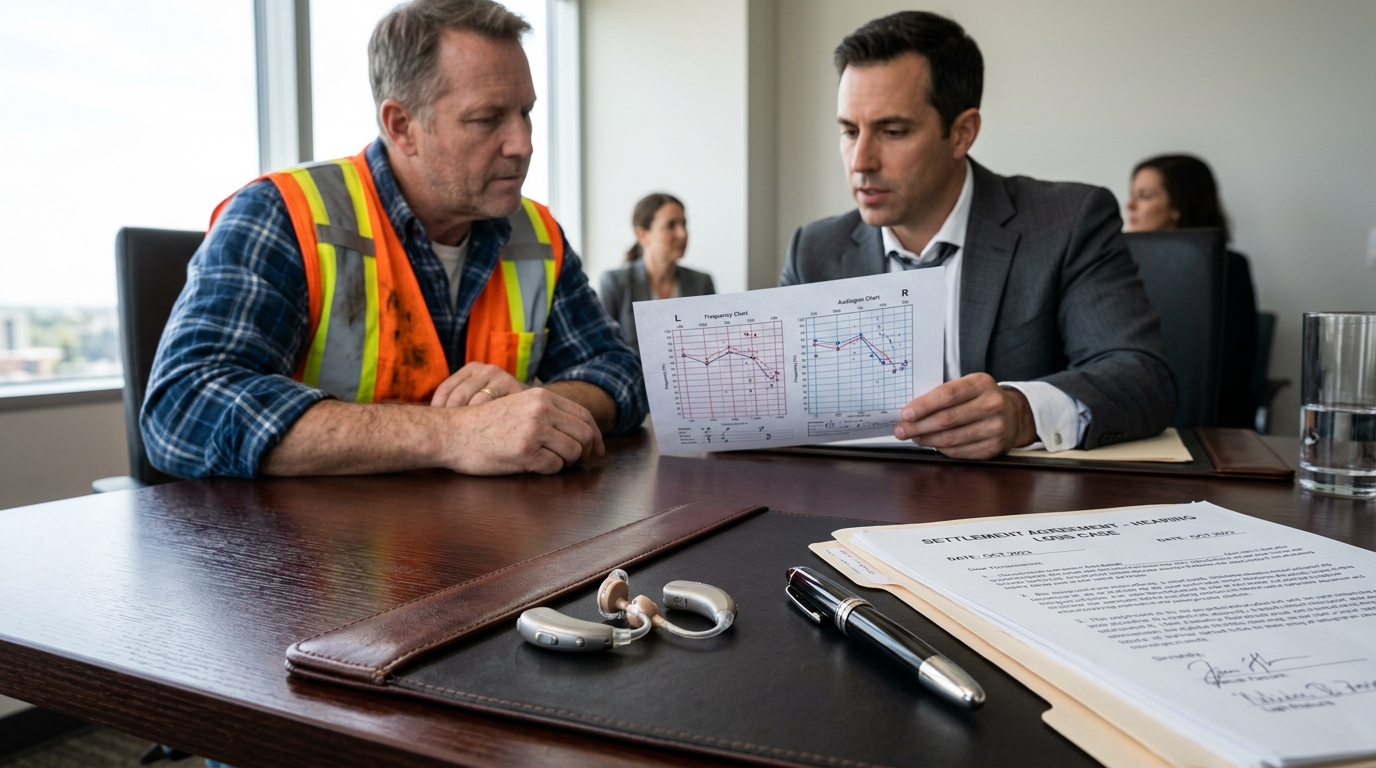
The total value of an occupational hearing loss settlement is heavily dictated by the longevity and intensity of your industrial exposure. Long-tenured employees who have spent decades in high-noise environments like manufacturing, construction, or heavy machinery operation often qualify for higher-tier payouts due to the cumulative noise exposure and the nature of the damage. Legal and medical experts look closely at your occupational history to establish a direct link between the workplace environment and the specific impairment rating assigned to your ears. Because these claims often involve complex calculations regarding decibel loss over time, documented proof of consistent exposure remains a cornerstone of a high-value claim.
The presence of chronic tinnitus and the clinical requirement for permanent hearing aids serve as significant multipliers during settlement negotiations. Tinnitus is more than just a minor annoyance, as it often leads to sleep disturbances, cognitive fatigue, and severe psychological distress that can impact your earnings potential. When a medical professional determines that hearing aids are a permanent necessity, the settlement must account for the lifetime costs of device maintenance, battery replacements, and periodic upgrades. These ongoing medical expenses, combined with the loss of quality of life, move a claim from a standard workers compensation award into a much higher compensation bracket.
Specific impairment ratings are used to translate physical hearing loss into a monetary figure, making the precision of your medical evaluation vital. In 2025 and 2026, compensation schedules have become increasingly rigid, requiring claimants to provide clear audiometric data that meets specific industrial standards. If your hearing loss is found to be total or profound, the median settlements can reach seven figures to address the impact on your ability to communicate and work. Even partial loss can result in substantial payouts if the legal strategy effectively highlights how the injury limits your future career opportunities in high-noise workplaces.
Navigating High Value Claims For Industrial Workers
For long-tenured industrial workers, a settlement for hearing loss represents more than just medical coverage, as it accounts for the cumulative trauma of decades spent in high-decibel environments. These high-value claims often hinge on complex impairment rating rules that translate decibel loss into a specific financial percentage. Because industrial hearing loss occurs gradually over years of exposure, establishing a direct link between the workplace and the current level of impairment is the most critical hurdle. Successful claims must meticulously document the progression of damage to ensure the final settlement reflects the true impact on the worker’s quality of life and future earning capacity.
Meeting strict filing deadlines is a significant challenge for employees who may not realize the extent of their injury until long after the damage has begun. Many jurisdictions require notice within a narrow window of when the worker first discovered the hearing loss was work-related, making it vital to understand how long you have to file a claim. Furthermore, proving cumulative trauma requires sophisticated audiological testing and expert testimony to differentiate between natural aging and occupational noise exposure. When handled correctly, these claims can reach substantial figures, especially when total hearing loss or severe tinnitus is present. High-tenured employees must act decisively to manage these procedural hurdles and secure the maximum compensation allowed under current schedules.
Maximizing Your Settlement for Industrial Hearing Loss
Securing a fair settlement for hearing loss requires a meticulous understanding of how industrial injuries are rated and compensated. Long-tenured employees often face unique challenges, as years of cumulative noise exposure must be accurately documented to reflect the true extent of permanent impairment. Because compensation schedules for sensory loss are highly technical, it is vital to ensure that every decibel of loss is accounted for in your final rating. Professional guidance is often the deciding factor in whether a settlement covers the lifelong costs of hearing aids, medical monitoring, and the profound impact on your quality of life.
Managing the complexities of workers compensation requires more than just a medical diagnosis, it demands a strategic legal approach to ensure your employer’s insurance provider is not underestimating your claim. From understanding the nuances of partial versus total impairment to managing the specific rules surrounding tinnitus, every detail matters in maximize your settlement. If you are concerned about whether the insurance company is giving you a lowball figure, you must evaluate the proposal against current industry benchmarks. To learn more about how our guide on Is Your Workers Compensation Settlement Offer Fair? (2025 Guide) can help you with a settlement for hearing loss, explore our comprehensive solutions today.
Frequently Asked Questions
1. How much is a typical settlement for total hearing loss in 2025?
Settlements for total hearing loss often reach into the millions of dollars because they must account for a lifetime of specialized care and assistive technology. These high valuations reflect the profound impact that complete silence has on your career prospects and personal relationships. Every case is unique, but modern legal benchmarks now prioritize the long term costs of living with a sensory deficit.
2. How is the value of an industrial hearing loss claim calculated?
Your settlement value is primarily determined by a medical impairment rating that converts decibel loss into a specific disability percentage. Professionals use comprehensive audiograms and standardized formulas, such as the AMA Guides, to measure your hearing thresholds across various frequencies. This binaural hearing loss percentage serves as the foundational metric for the compensation you receive for your years of service.
3. Can I receive a settlement for partial hearing impairment or tinnitus?
Yes, you can secure compensation for partial impairment or chronic tinnitus, though these cases follow different valuation models than total deafness. Courts and insurers now recognize that constant ringing or diminished hearing can fundamentally alter your daily peace of mind and productivity. These settlements are calculated based on the severity of the interference with your quality of life.
4. What factors influence the final payout for a hearing loss injury?
The final payout depends on the cause of the injury, whether it was medical negligence, a defective product, or a workplace hazard. Your age, the permanence of the damage, and the projected cost of future medical technology also play critical roles in the valuation. You must ensure that the offer accounts for the long term impact on your earning capacity and social interactions.
5. Why is it important to understand updated settlement averages?
Staying informed about current 2025 and 2026 benchmarks prevents you from being pressured into a low ball offer that ignores the actual cost of your injury. Insurers often attempt to minimize payouts by using outdated formulas that do not reflect the rising costs of modern hearing healthcare. Knowing these averages ensures you are fighting for a fair settlement that covers the true scope of your loss.
6. What role does medical evidence play in my hearing loss case?
Precise medical evaluations are the cornerstone of any successful hearing loss claim. Audiograms and expert medical testimony provide the objective data needed to prove the extent of your inner ear damage to insurers or a court. Without this rigorous documentation, it is difficult to justify the higher compensation tiers required for a full recovery.