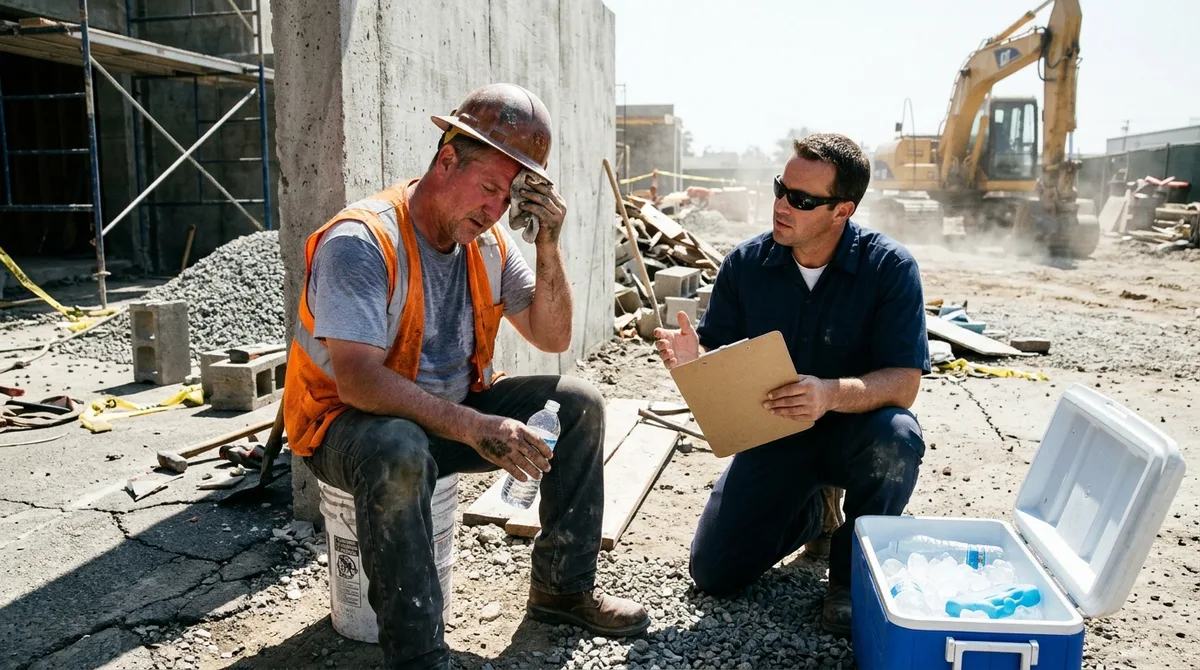
Workers’ comp heat illness claims are generally handled as work injuries when the heat exposure happens during job duties, but reporting deadlines depend on the state. New York expects written notice to the employer within 30 days of the injury, and California’s guidance warns that failing to report within 30 days could jeopardize benefits.
The stakes are high. The U.S. Bureau of Labor Statistics counted 43 worker deaths from environmental heat in 2022, up from 36 in 2021. If a worker shows confusion, slurred speech, or unconsciousness, OSHA advises calling 911 immediately and beginning to cool the worker right away.
Key Takeaways
- If a worker shows confusion, slurred speech, or unconsciousness, OSHA advises calling 911 immediately and beginning to cool the worker with ice or cold water right away.
- Workers’ compensation generally covers heat illness when heat exposure happens because of job duties or the work environment, but reporting deadlines vary by state, such as New York’s requirement that workers give the employer written notice within 30 days of the injury.
- In California, employers must provide a workers’ compensation claim form within one working day after learning of a work-related injury or illness, and a worker who has not received one should ask for it in writing.
- Under 29 CFR 1904.39, employers must report a work-related fatality within eight hours and a work-related inpatient hospitalization within 24 hours, including when a heat event caused it.
- Employers often deny heat injury claims by arguing that a pre-existing condition, a medication, or dehydration before the shift caused the illness, so workers should gather dated photos, shift schedules, temperature readings, and coworker names early to support an appeal.
Can Workers Comp Cover Heat Illness?
Yes, workers’ compensation generally covers heat illness when the heat exposure happens because of job duties or the work environment. Heat stress comes from two sources. The National Institute for Occupational Safety and Health (NIOSH) defines total heat stress as the heat the body produces through its own metabolism, plus heat gained from the surrounding environment, minus heat the body loses to that environment. When work pushes that balance past what the body can release, the result can be heat cramps, heat exhaustion, or heat stroke, and all three can arise from work-related exposure.
Eligibility usually turns on a few questions. Was the worker performing job tasks when symptoms began? Did the work setting, such as a hot kitchen, a roof in summer, or a warehouse without cooling, create the exposure? Did that exposure cause the illness, rather than an unrelated condition? Shift schedules, task assignments, and notes about temperature and breaks often help answer these questions.
Rules vary by state, so the same heat event can be handled differently across state lines. Notice requirements, claim forms, and decision timelines are set by each state’s system. Two workers with identical heat cramps in different states may therefore follow different steps and face different deadlines.
Heat Exhaustion Versus Heat Stroke: Warning Signs to Know
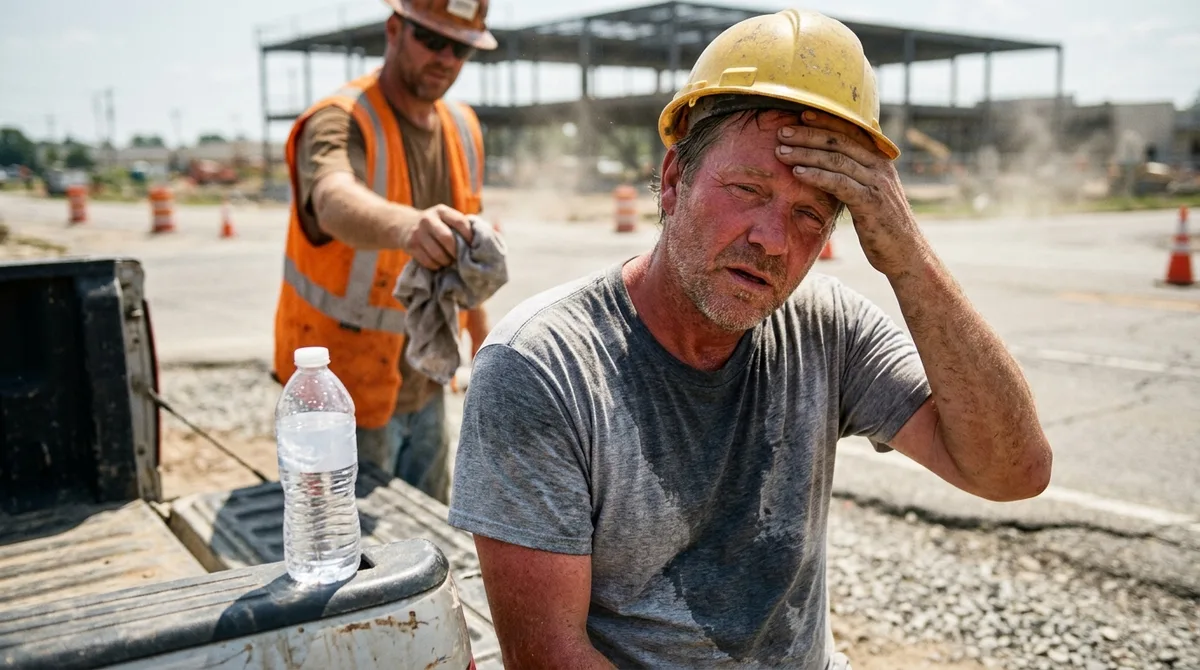
Heat cramps and heat exhaustion are the early stages of heat illness. They often bring muscle pain, heavy sweating, dizziness, nausea, or unusual tiredness. Heat stroke is the more serious condition because the body can lose its ability to cool itself, and the worker’s temperature can keep rising. Coworkers and supervisors should watch for changes in how a worker thinks or acts, not just for complaints of cramps.
OSHA says confusion, slurred speech, or unconsciousness may indicate heat stroke. When any of these signs appear, someone should call 911 immediately rather than waiting to see whether the worker improves.
Cooling is the most time-sensitive part of the response. OSHA directs that workers showing these symptoms be cooled with ice or cold water while emergency help is on the way. Cooling should begin at once, since every minute the body stays hot adds to the danger.
Prevention is the best protection. NIOSH recommends that workers doing moderate work in heat for less than two hours drink 8 ounces of water every 15 to 20 minutes. Crews can set a timer for water breaks or build them into the shift schedule, so that drinking does not depend on who remembers to stop and hydrate.
What Should Workers Do First After a Heat Injury?
After a heat injury, the first step is emergency care, not paperwork. If a worker shows confusion, slurred speech, or unconsciousness, someone should call 911 and begin cooling right away. Reporting and documentation come next, and the deadlines for both depend on the state.
Reporting clocks start running soon after the injury, and states set them differently. California’s guidance says workers should report promptly, because failing to report within 30 days could jeopardize benefits.
New York works differently. Workers there should notify the employer in writing within 30 days, and they may file Employee Claim Form C-3 with the Workers’ Compensation Board within two years.
Once emergency care is underway, work through these steps in order, completing each one before starting the next.
- Confirm your state’s reporting deadline and claim procedure with the state workers’ compensation agency or a licensed attorney in your area.
- Report the injury or illness to your supervisor, then follow up in writing so there is a dated record.
- Ask for the workers’ compensation claim form and keep a copy of everything you sign.
- Write down the date, the exact location, the symptoms, and the names of coworkers who saw what happened.
- Record every medical visit, including the provider, the date, and any work restrictions given.
In California, employers must provide a claim form within one working day after learning of a work-related injury, so a worker who has not received one should ask in writing and note the request.
What Must Employers Do After a Heat Injury?

Employers must provide a claim form, authorize initial treatment, and meet federal reporting and recording duties after a heat injury. In California, an employer must provide a workers’ compensation claim form within one working day after learning of a work-related injury or illness.
Once the employee delivers that form, the clock for treatment starts. Under California’s claims process, the employer must authorize treatment under industrial guidelines up to $10,000 within one day, and this treatment continues while the claim is investigated. Workers should keep a dated copy of the delivered form so the timing can be shown later.
Federal reporting runs on a separate track. Under 29 CFR 1904.39, a work-related fatality has to be reported within eight hours, and an inpatient hospitalization within 24 hours, even when a heat event is the cause.
Recording is a different duty from reporting. A work-related heat illness generally must be recorded when it results in days away from work, restricted work or a job transfer, or medical treatment beyond first aid. Intravenous fluids meet the recording criteria, but telling a worker to drink fluids alone does not.
The OSHA injury log and the workers’ compensation claim are separate systems. The log is a federal record of workplace illnesses and injuries, while the claim is a state process that decides benefits. Completing one does not complete the other, so employers should handle both.
OSHA’s proposed Heat Injury and Illness Prevention in Outdoor and Indoor Work Settings rule is still in progress. It would cover indoor and outdoor work in general industry, construction, maritime, and agriculture sectors within OSHA’s jurisdiction. Its public hearing concluded July 2, 2025, and the post-hearing comment period ended October 30, 2025. Until a final rule is issued, employer duties come from existing federal rules and state law.
Why Do Employers Deny Heat Injury Claims?
Employers usually deny heat injury claims by arguing that something other than the job caused the illness. Common arguments include a pre-existing condition, a medication the worker was taking, or dehydration the employer says began before the shift. During review, the claims administrator often looks at personal factors such as:
- Age, body weight, and general fitness
- How many days the worker had already spent working in the heat, which bears on acclimatization
- Whether water and rest breaks were available and used
These factors do not automatically defeat a claim, but they shape how the investigation is framed. In California, a claim investigation can take up to 90 days. In most cases, the claim is considered accepted if the claims administrator does not send a denial within 90 days after the claim form is filed.
Denied claims can usually be appealed, and the documentation gathered early has a large effect on how strong that appeal will be. Dated photos of the work area, shift schedules, temperature readings for the day if they were recorded, and the names of coworkers who saw the symptoms give an appeal something specific to test against the employer’s explanation.
What Benefits Can a Heat Injury Claim Provide?
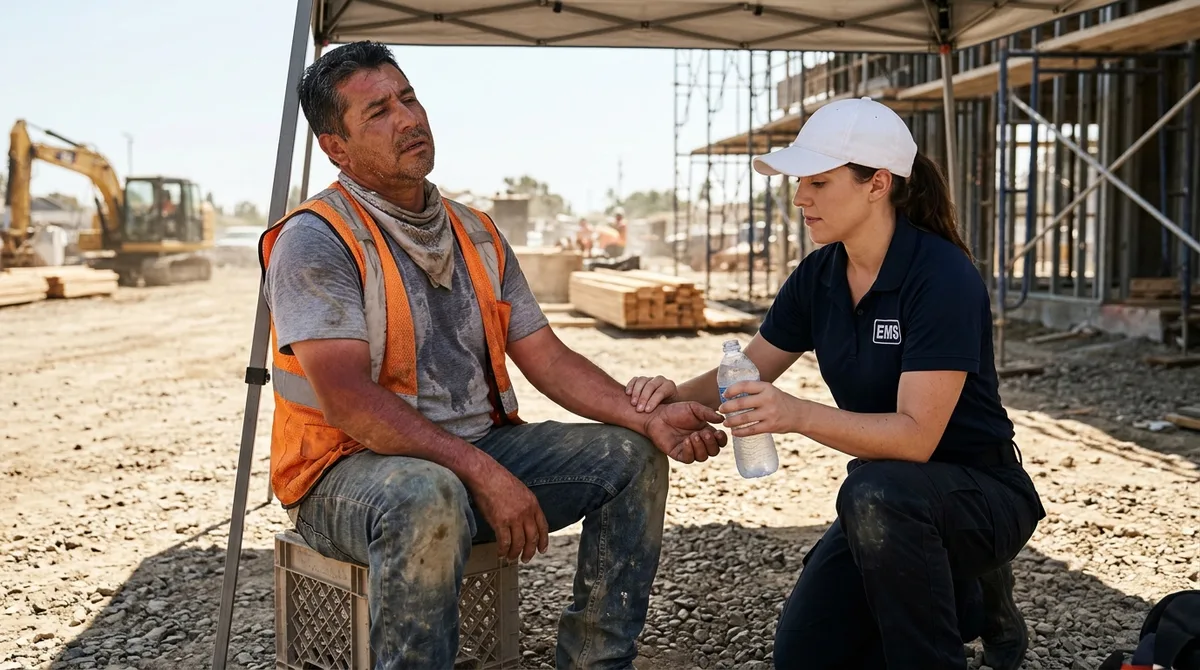
Heat injury claims can provide medical care, temporary disability pay, permanent disability pay, and vocational rehabilitation, depending on the injury and the state’s rules. The main categories are:
- Medical treatment authorized through the claim
- Temporary disability benefits while the worker cannot work during recovery
- Permanent disability benefits if lasting effects remain
- Vocational rehabilitation for workers who cannot return to their prior job
Medical care is the first benefit most workers encounter. Treatment must be authorized through the claim, so workers should ask the claims administrator which providers are approved. Every visit, test, and work restriction should be kept in the claim file, since those records document how the heat injury affected the worker’s health.
Temporary disability pays part of lost wages while a worker is unable to work during recovery. Permanent disability applies once the worker reaches maximum medical improvement, meaning the condition has stabilized and some effects remain. A physician’s assessment of those lasting effects usually determines the permanent benefit.
Benefit amounts depend on state rules, the worker’s wages, and the severity of the injury. Two workers with similar heat exhaustion may therefore receive different amounts. Settlement is also possible in many claims, where the parties agree on a resolution of future benefits, but its terms and effect on future medical care vary by state.
Getting Professional Advice on a Heat Injury Claim
This website explains how workers’ compensation generally works, but it cannot review your injury, your deadlines, or your employer’s response. A licensed workers’ compensation attorney in your state can do that. Start with your state bar association’s lawyer referral service, and look for a lawyer who handles workers’ compensation claims and offers an initial consultation.
Bring a short packet to that first meeting. Include the dated claim form you received, your written report to your supervisor, your log of medical visits and work restrictions, and any shift schedules or notes about temperature and break times. Ask the attorney which reporting deadline applies to your situation and whether any step should happen before your next scheduled shift.
If your employer has already denied the claim, ask the attorney how the appeal process works in your state and which evidence would matter most at that stage.