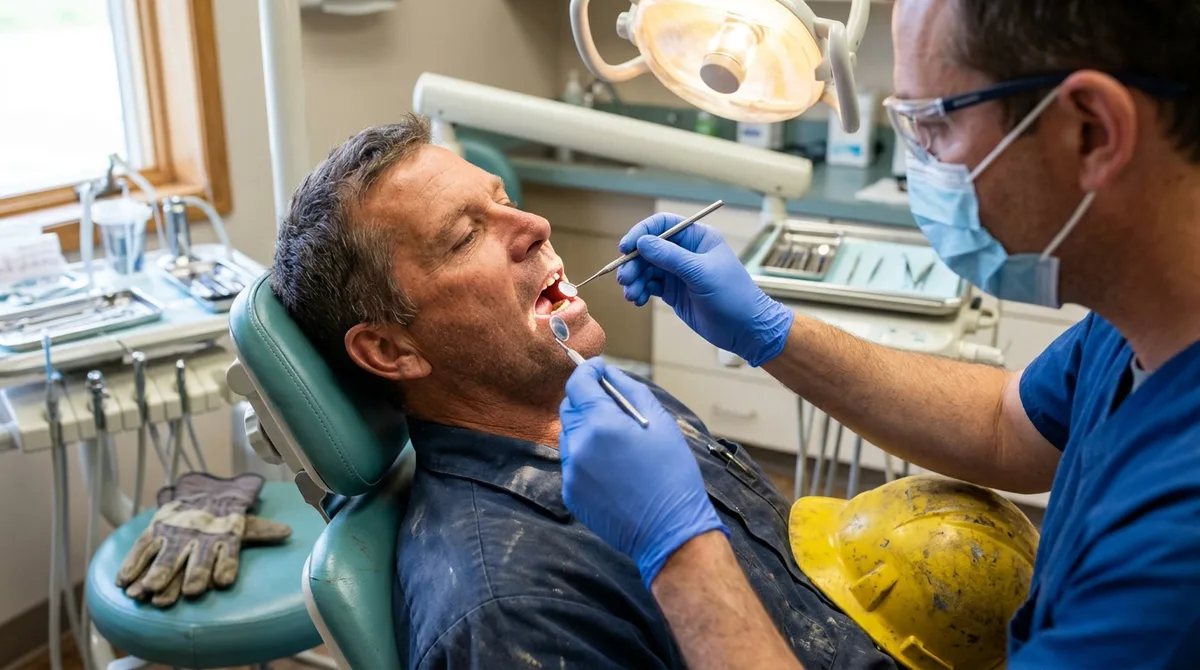
Workers’ comp dental injuries can be covered when a chipped, fractured, or knocked-out tooth is connected to the job, and proving that connection is the core of the claim. Federal OSHA rules require employers to record a work-related chipped or broken tooth once a health care professional diagnoses it, even when no other recording criteria apply.
Filing deadlines differ by state. Texas, for example, requires a written claim within one year of the injury. A knocked-out permanent tooth is more urgent still, since immediate replantation gives the best results and most ligament cells are no longer viable after 30 minutes of dry time.
Key Takeaways
- Pre-incident X-rays documenting each tooth’s condition before the workplace injury help separate old damage from new damage.
- In New York, dental treatment costing more than $1,000 may require prior authorization before the work begins.
- A worker whose dental care is denied should first ask the insurer in writing to state the specific reason.
- The treating dentist should record every period an injured worker could not work, since that time away drives lost wage benefits.
Which Dental Injuries Qualify for Workers’ Comp?
Work-related dental injuries that can fall under workers’ comp include chipped or fractured teeth, knocked-out teeth, and injuries to the mouth or jaw, provided the injury is connected to the job. The core question is whether the workplace incident caused the damage. Clinical records show that this kind of trauma does occur on the job. A study of occupational dental trauma treated at a hospital in Barcelona, Spain, from 2000 through 2006 found 1.71 dental-trauma cases per 1,000 occupational accidents. Of those injuries, 54% were dental fractures, and 67% of patients were referred for dental surgery.
Damaged dentures and artificial teeth can also be part of a claim. In Minnesota, workers’ compensation covers repair or replacement of dentures or artificial teeth damaged by a compensable injury. Coverage rules differ from state to state, so the state where the injury happened determines what is available.
How Do You Document a Tooth Injury at Work?
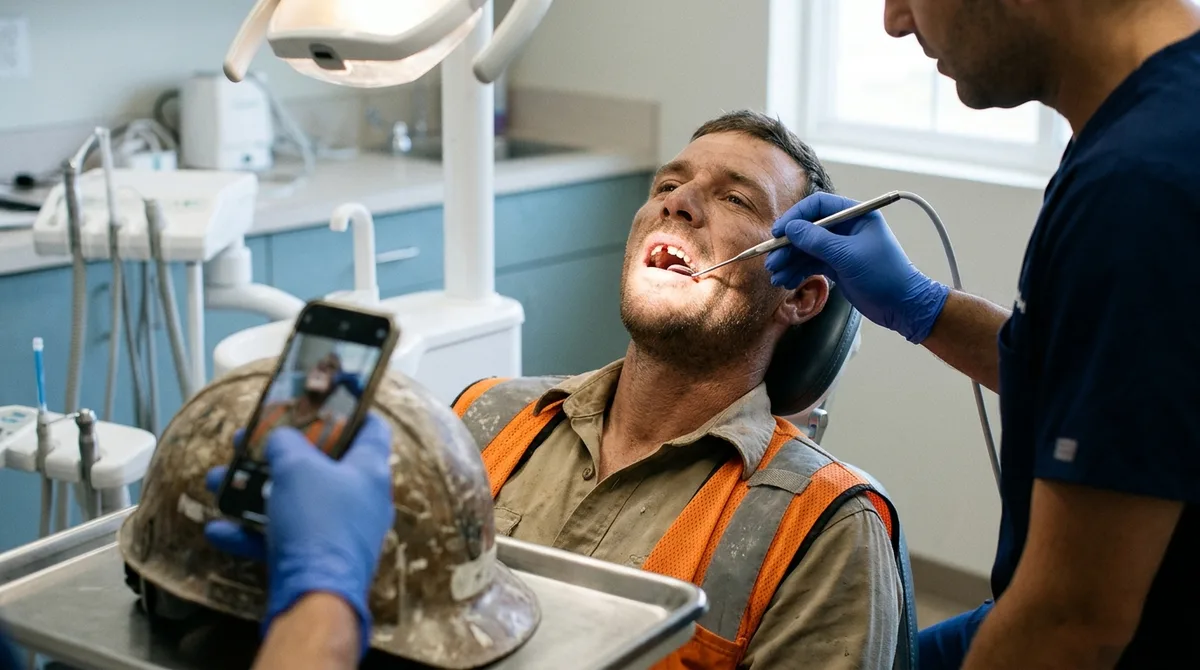
Documenting a tooth injury at work means recording the incident, the affected teeth, the symptoms, any witnesses, the dental findings, and the treatment plan, so that each record connects the damage to the job. Start on the day of the injury by noting the time, the location, what the worker was doing, and what caused the impact.
Useful records include:
- A written account of the incident with the time, place, and circumstances
- The names of coworkers who saw it
- A chart of each affected tooth, plus notes on pain, swelling, or bleeding
- Dental findings, X-rays, and photographs from the first examination
- The written treatment plan and any follow-up appointments
Federal OSHA rules require a work-related chipped or broken tooth to be recorded once a physician or other health care professional diagnoses it, so the employer’s injury log should reflect the diagnosis.
Pre-existing dental problems can complicate a claim. Earlier exams, X-rays, and treatment notes show each tooth’s condition before the incident, which helps establish what changed.
Filing deadlines depend on the state. Texas requires a written claim within one year of the injury, and it asks for the date, time, location, circumstances, witnesses if any, and the treating health care provider. Other states set their own timelines, so check the rules where the injury happened.
What Should You Do If a Tooth Is Knocked Out?
Immediate replantation is the best treatment for a knocked-out permanent tooth, according to International Association of Dental Traumatology guidance endorsed by the American Academy of Pediatric Dentistry. Most periodontal-ligament cells are non-viable after 30 minutes of dry time, so every minute the tooth spends out of the mouth matters.
Because the clock starts at the moment of injury, a worker should act in a set order:
- Pick the tooth up by the crown, not the root, and rinse it gently only if it is dirty.
- Keep it moist by placing it back in the socket or in cold milk.
- Get emergency dental care right away, and tell the dentist the tooth was knocked out on the job.
- Tell the employer about the injury as soon as possible, so the incident is recorded while the details are fresh.
Telling the employer early also creates a dated record that can be matched to the emergency visit.
Do You Need Approval Before Dental Treatment?
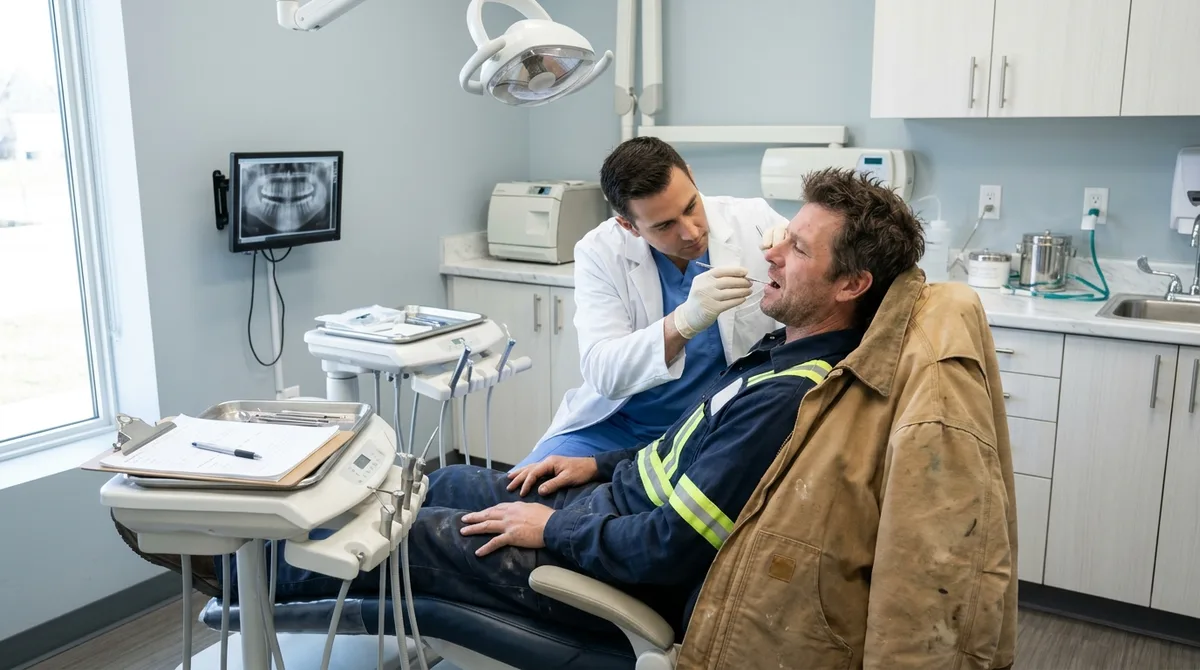
Often, yes. Whether dental treatment needs approval before it starts depends on the state and the procedure, so the rules where the injury happened should be checked early. In New York, for example, New York’s dental fee schedule says treatment costing more than $1,000 may require prior authorization. Procedures marked “PAR Required” need authorization before treatment, except in emergencies.
Trauma cases often also involve referrals. A general dentist may send a worker to an oral surgeon for a jaw injury or a severely fractured tooth, and the insurer may require that the work be done by an approved provider. Insurers generally treat repairs that restore chewing and function differently from cosmetic work such as whitening or shade matching. The treatment plan should explain why each step is needed and which part of the injury it addresses.
How Are Dental Bills Paid Under Workers’ Comp?
Dental bills under workers’ comp are paid by the insurer under the billing rules of the state where the injury happened, so the form, the codes, and the payment timeline all depend on that state. New York shows how specific these rules can be. Since August 1, 2025, New York workers’ compensation dental services must be billed on the CMS-1500 form using CDT codes, with an accompanying medical narrative.
Fees also vary by procedure. The New York dental fee schedule effective November 13, 2025 sets $838 for a resin crown with predominantly base metal (code D2721) and $1,470 for a porcelain or ceramic crown (code D2740). Dental-provider claims should be paid within 45 calendar days of receipt. If a claim is disputed, the insurer must respond and may ask for more information.
Averages can hide wide differences. In Texas, network claim data shows 653 dental-service claims in 2024 totaled $3.275 million, an average of $5,016 per claim. One worker’s bill can land well above or below that figure, depending on whether the treatment is a simple repair, a crown, or surgery.
What Happens If Dental Treatment Is Denied or Delayed?

Dental treatment is sometimes denied or delayed because records are incomplete, the insurer disputes whether the injury came from the job, or it questions whether the treatment is necessary. A missing X-ray, a vague incident report, or a treatment plan without a clear explanation can each stall a claim. When that happens, a worker can respond in a set order:
- Ask the insurer in writing to state the specific reason for the denial or delay.
- Request copies of any missing records, such as the first dental exam, X-rays, and the incident report, and ask the insurer to list anything else it needs.
- Follow the appeal process set by the state where the injury happened, and file within that state’s deadlines.
Each delay can push back a treatment timeline, so keep a log of every request, the date it was sent, and each response. If the denial stands after the appeal, or the dispute over work-relatedness becomes complicated, an attorney who handles workers’ compensation claims can explain the options that apply in that state.
Can a Dental Injury Lead to Lost Wages or Future Care?
Yes, a dental injury can lead to lost wage benefits when it keeps a worker off the job. Whether those benefits apply depends on whether the injury actually causes time away from work and on the rules of the state where it happened. A worker who needs one afternoon for an emergency repair has a very different claim from one who needs weeks of surgery and recovery, so the dentist or oral surgeon should record every period when the worker could not work.
Future dental care is handled separately. An implant or a repair needed years later may need to be considered when a claim is settled. Settlement value depends on the injury’s severity, the treatment still needed, and the expected future costs, so the treatment plan and cost estimates should be written down before settlement talks begin.
Getting Help With a Dental Injury Claim
Your next step depends on where the injury happened and where your claim stands. Start by gathering the first dental exam, the X-rays, the treatment plan, and your written incident report, and keep them in one folder with dates on each item. Then check your state workers’ compensation agency’s website for the filing deadline and any prior-authorization rules that apply to your procedure. If the insurer denies or delays your dental care, review a guide to appeals and denials of workers’ compensation dental care to understand your options. Before any appeal deadline passes, speak with a workers’ compensation attorney in your state, who can review your specific facts. This publication does not review individual claims.
Frequently Asked Questions
1. Can I choose my own dentist for a work-related dental injury?
Many states let the insurer direct non-emergency dental care to providers it approves, so a worker may not be free to pick any dentist for follow-up treatment. In an emergency, you can usually go to the nearest dentist right away, and you should tell that dentist the injury happened on the job. Ask the insurer in writing which providers are approved before scheduling any non-urgent work.
2. Can a dentist outside the workers’ comp network still treat me?
A dentist outside the network can usually provide emergency care after a knocked-out or badly fractured tooth. For ongoing treatment, the insurer may refuse to pay an out-of-network provider unless it approves the referral in advance. Get that approval in writing before the appointment whenever possible.
3. Does a dental injury that happens during a work commute or off-site count as work-related?
It depends on the state’s rules for travel and off-site work, and on whether the worker was performing a job task at the time. An injury that happens while running an errand for the employer or traveling to a job site generally has a clearer connection to work than one during a personal trip. Report the incident to the employer right away and record exactly where and why you were there.
4. Will the insurer pay for an implant or bridge after a tooth is lost at work?
A replacement such as an implant or bridge may be covered when the lost tooth affects chewing or the function of nearby teeth. Cosmetic replacement is usually handled differently. The dentist’s written plan should explain how the replacement restores function and why it is needed because of the injury.
5. What if my dentist’s bill is higher than the state fee schedule allows?
In a state that sets reimbursement fees for specific procedures, the insurer is generally expected to pay up to the scheduled amount for those procedures. Any amount above the schedule may not be covered, so ask the billing office for the code used and compare it to the state’s published fees. Raise the difference with the insurer in writing, and keep a copy of the bill and every response.