
CPT 97545 is the billing code for the first two hours of a work-hardening or work-conditioning session, a structured rehabilitation service that helps an injured worker rebuild the capacity to return to a job. Under the 97545 CPT code description, each additional hour is reported as CPT 97546.
The code sets no universal price, session length, or authorization rule. Texas workers’ compensation rules set work-hardening reimbursement at $64 per hour and require modifier WH, while Minnesota rules set a six-week treatment period. Medicare may deny these codes as not medically necessary because they relate to specific work skills.
Key Takeaways
- Work hardening targets one specific job’s physical demands, while work conditioning offers a broader, less job-specific option for lighter or undecided cases.
- Billed unit counts should match the hours recorded in attendance logs, since mismatches invite payer questions, reductions, or returned bills.
- Washington requires prior authorization for work-hardening services, so programs generally need approval before the worker’s first session begins.
- Progress notes tied to measurable, job-related goals give providers the strongest response to a payer’s denial.
What Does CPT Code 97545 Describe?
CPT 97545 is the billing code for the first two hours of a work-hardening or work-conditioning session. It tells a payer that a structured rehabilitation service was delivered and how long it lasted. The code describes a program rather than a single treatment or procedure. Minnesota rules define work hardening as an intensive, individualized, job-oriented program that uses real or simulated work activities to address productivity, safety, physical tolerances, and work behaviors.
In practice, a session billed under 97545 usually involves supervised practice with job-related tasks rather than a single passive therapy. Washington describes similar work rehabilitation as progressive exercise, work-simulation tasks, and education tailored to the demands of a specific job.
CPT 97546 covers each additional hour beyond the first two. A session that runs longer than two hours adds 97546 units for the extra time, so the billing record shows both the original two-hour block and the added hours.
The code records what was done and for how long. It does not show the price, how many sessions a worker needs, or how long the overall program will last. Those details depend on the payer and the jurisdiction.
How Is Work Hardening Different From Work Conditioning?
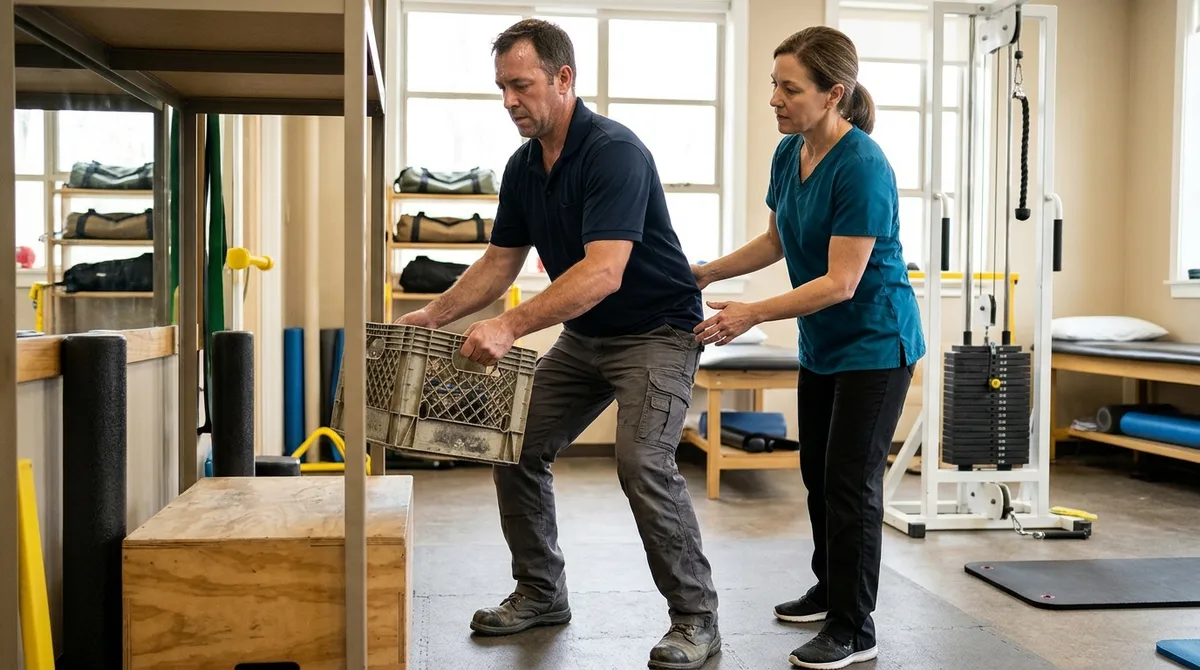
Work hardening is the more narrowly targeted of the two programs. It is built around one job and is generally aimed at workers whose jobs make heavy physical demands. Washington’s workers’ compensation agency describes work rehabilitation of this kind as intended for workers with medium-to-very-heavy physical job demands, and it lists program durations of 2 to 8 hours.
Work conditioning is the broader option. It still uses work-related activities, but it does not have to match a particular job closely. That makes it a better fit for workers whose physical demands are lighter or whose target job is not yet settled.
Physical therapy works toward a different goal. It aims to restore general function, such as joint motion, strength, and the ability to move through everyday tasks. A worker may complete physical therapy without ever practicing the lifting, reaching, or repetitive motions that a specific job requires.
- Physical therapy: restores general function for daily life.
- Work conditioning: builds work-related capacity with a broader, less job-specific focus.
- Work hardening: trains for one job’s physical and behavioral demands.
Work hardening also relies on an interdisciplinary team rather than a single clinician. Team members can record productivity, safety, physical tolerances, and work behaviors side by side, so the progress notes show whether the worker can handle the actual job rather than only a single exercise.
Why Does 97546 Appear Alongside 97545?
CPT 97546 appears alongside 97545 because both codes are time-based units. CPT 97545 covers the first two hours of a session, and each additional hour is reported under CPT 97546. A session that lasts four hours is therefore billed as one 97545 unit and two 97546 units, so the record shows the full length of the day’s work.
Texas adds a modifier to both codes. Its workers’ compensation rules require modifier WH on 97545 for the first two hours and on 97546 for each additional hour. The same rules set work-hardening reimbursement at $64 per hour and pay 80% of the maximum allowable reimbursement when the program is not accredited by CARF.
Modifiers and units work together to tell the payer what happened. The modifier identifies the service as work hardening, and the unit count reports how long the worker was in the program. When the hours on the bill do not match the time recorded in the attendance and progress notes, the payer may question the claim, reduce the payment, or return the bill for correction. Checking that the billed time matches the session record is one of the simplest ways to avoid those delays.
Do Payers and States Set Different Rules for 97545?
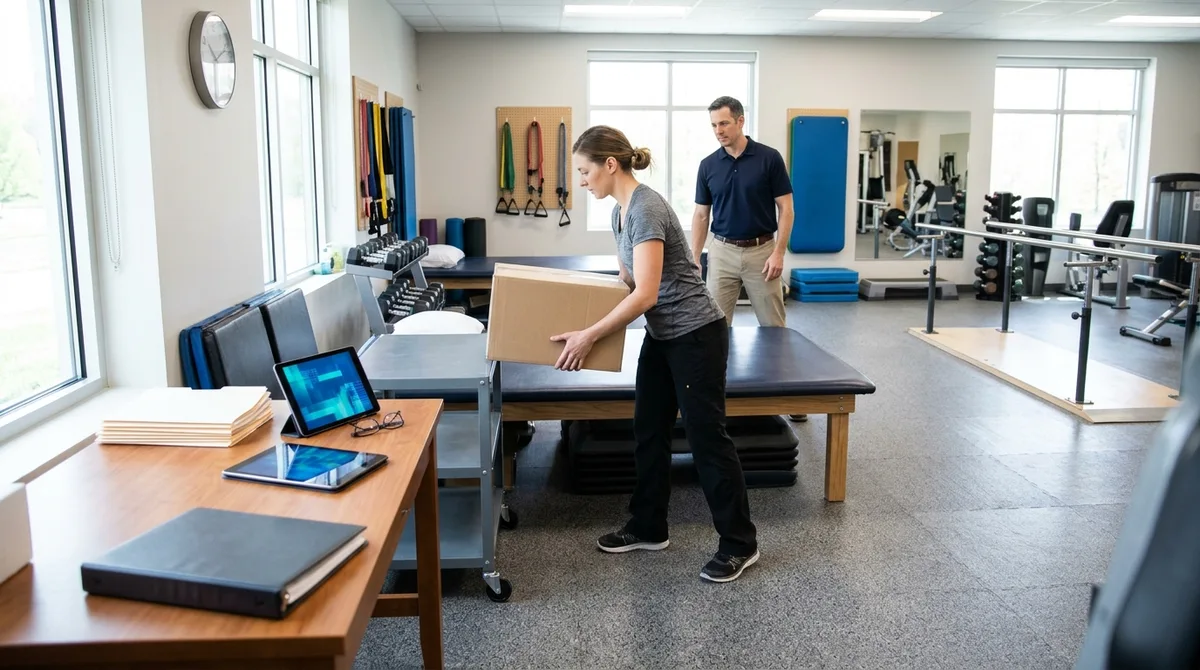
Each state’s workers’ compensation system and each payer set the terms that apply to a work-hardening program, so the same 97545 service can be handled quite differently from one claim to the next.
This guide describes how workers’ compensation rules generally work. The exact rules for any claim depend on the state where the claim is filed and on the payer that handles it.
Washington is one state where the approval step comes first. Washington requires prior authorization for work-hardening program services, so the program generally needs approval before the worker begins it rather than being reviewed only after the bills arrive.
Minnesota focuses on time instead. Its rules set a six-week treatment period for work-hardening or work-conditioning programs. Continuing beyond that period requires prior notification and documentation of the worker’s attendance and progress. A change in the job the program is preparing the worker for may also require the program to be redesigned rather than simply extended.
These differences mean a worker should not assume that a program approved in one state will follow the same timeline in another. Payers can also set their own review steps within a state’s framework. When a program’s approval, length, or job target changes, the attendance records and progress notes usually show whether the change was documented as the state rules require.
Why Are 97545 Claims Often Denied?
Claims for 97545 are often denied for three reasons: the payer decides the program is not medically necessary, prior authorization was never obtained, or the records do not show that the work was done. Medicare offers the clearest example of the first problem. A Centers for Medicare & Medicaid Services billing article says CPT 97545 and 97546 relate solely to specific work skills, so they may be denied as not medically necessary for diagnosing or treating an illness or injury.
Missing prior authorization is another common reason a payer may decline work-hardening services. A bill for sessions that began without approval can be rejected even when the care itself was appropriate, so the approval step matters as much as the treatment.
Documentation is the third area, and it is the one a worker and provider can influence most directly. Records that support a 97545 claim usually include:
- attendance for each session, with hours that match the units billed
- progress toward measurable physical goals, such as lifting, reaching, or repetitive tasks
- job-related goals tied to the specific demands of the worker’s job
A denial is not always the final word. The payer’s appeal process is the first route for review, and state workers’ compensation rules can add steps and deadlines. The denial letter normally states the reason, which lets the worker and provider compare it with the attendance and progress notes and fix the gap the payer identified.
Work Hardening Versus a Functional Capacity Evaluation

A functional capacity evaluation measures what a worker can do at the time of testing. It is usually a single assessment that records current lifting, reaching, standing, and tolerance levels, and the evaluator compares those results with the demands of the job. Work hardening is different. It is an ongoing rehabilitation program that builds capacity over many sessions rather than recording a single snapshot.
Both can appear in the same return-to-work plan. An evaluation can help define the job target, and a work-hardening program can work toward that target. Because they serve different purposes, they are also billed differently. Work hardening is reported in hourly units under CPT 97545 and 97546, while an evaluation appears on the bill as its own service.
Return-to-work goals sit at the center of work hardening. Sessions use job simulation tasks, such as repeated lifting, carrying, or reaching that mirror the worker’s actual duties, so progress can be measured against the job itself. CARF International describes its Comprehensive Occupational Rehabilitation Program as coordinating the physical, functional, and vocational aspects of employability and return to work.
Where to Get Help With Your Rehabilitation Questions
Questions about a bill are best answered by the people who created the record. Start with the treating provider, who can explain what was done and how it was reported. Bring a copy of your attendance log and ask these questions:
- Ask the treating provider which code was billed for each session, and whether the first two hours were reported under 97545 or added hours under 97546.
- Ask how many hours were recorded for each session, and compare that total with the times in your attendance log.
- Ask whether prior authorization was requested before the program began, and request the approval number in writing.
- Keep copies of authorizations, treatment notes, and explanations of benefits together in one folder.
Questions about a specific claim, such as a denial or a payment dispute, go beyond general information. Readers with questions about a specific situation should consult a licensed attorney in their area.
What to Do If a Claim Is Denied or Reduced
If a payer has already denied or reduced a work-hardening claim, your next step is to get the reason in writing. Ask the claims adjuster for the denial letter and the complete claim file, including the billing codes and unit counts the payer reviewed. Write down the date you received the letter, because appeal deadlines run from that notice and are set by your state’s workers’ compensation rules.
Then compare the letter line by line with your own records. If it cites missing prior authorization, look for the original approval request and the payer’s response. If it cites medical necessity, ask your provider for a written summary of the job-related goals the program targeted and the progress recorded toward them.
Keep every letter, call note, and reply in one dated file so you can show exactly what was sent, received, and said, and when.
Frequently Asked Questions
1. How much does CPT 97545 cost for my treatment?
The code itself carries no set price, so the amount billed or paid for a 97545 session depends on the payer’s fee terms and the state’s reimbursement rules. The total also depends on how many hours are recorded and how many sessions the approved plan covers. Asking the billing office for the expected rate for each code before treatment starts can help you estimate your share of the cost.
2. Does my insurance require prior authorization before work hardening starts?
Whether a carrier requires approval first depends on the state’s workers’ compensation rules and on the carrier’s own review process, so the answer can differ between two claims in the same state. Ask the claims adjuster in writing whether the program needs approval before the first session. Keep the approval request and any reply with your other claim papers.
3. How do I appeal a denial for work-hardening services?
Start by reading the denial letter to find the exact reason, such as medical necessity or missing approval, and then follow the payer’s internal appeal steps. Gather the attendance log, the progress notes, and a written summary of the job-related goals the program targets, since these records directly answer the reason given. If your state’s rules set a deadline for appeals, calendar it from the date on the notice and confirm it with the adjuster.
4. What does a work-hardening program cost the employer if the worker is not yet back on the job?
The program’s billing is handled through the workers’ compensation claim, so the employer generally does not pay the provider directly for the sessions. Costs flow through the carrier under the state’s rules and the payer’s terms. Employers with questions about how a specific claim is billed should ask their carrier or claims administrator for the details.