
Firefighters run toward danger when others flee, putting their lives on the line with every emergency call. Due to these extreme hazards, firefighter workers’ compensation claims involve complexity far beyond standard workplace injury filings. From acute burns and severe muscular strains to chronic illnesses caused by toxic exposure, the physical toll on first responders is both unique and severe. Managing this process effectively ensures injured first responders receive the comprehensive medical care and financial protection they have earned.
With tens of thousands of line-of-duty injuries reported every year, understanding the full scope of available benefits is vital for affected workers and their families. Beyond immediate physical trauma like sprains or structural collapse injuries, firefighters face long-term risks such as occupational cancer and psychological trauma that require specialized claim strategies. Knowing how state presumption laws apply and properly documenting both acute and cumulative conditions makes all the difference in securing a successful claim outcome.
Key Takeaways
- Statutory presumption laws automatically classify conditions like occupational cancers, cardiovascular events, and chronic respiratory diseases as line-of-duty injuries, shifting the heavy burden of proof away from the firefighter.
- Workers’ compensation protections increasingly cover stand-alone psychological injuries like PTSD in addition to acute physical trauma, provided the conditions are thoroughly documented by qualified professionals.
- Calculating firefighter disability benefits requires accounting for specialized wage factors—such as mandatory overtime and hazard pay—and properly coordinating workers’ compensation with municipal pension offsets.
- Municipal insurers frequently dispute statutory presumptions and high-value claims, making specialized legal representation and comprehensive medical documentation crucial for securing maximum benefits.
Statutory Presumption Laws for Firefighter Cancer and Cardiac Claims
Under standard workers’ compensation rules, injured employees must present clear medical evidence directly linking their health condition to specific workplace duties. For firefighters facing chronic, hidden illnesses, proving that a specific fire or chemical exposure caused a diagnosis like leukemia or lung damage is exceptionally difficult. Statutory presumption laws eliminate this steep evidentiary hurdle by automatically deeming certain occupational illnesses work-related. By legally establishing that diseases such as cancer, cardiovascular illness, and respiratory conditions stem from line-of-duty hazards, these statutes shift the heavy burden of proof onto municipal employers and insurance carriers. First responders no longer have to trace their diagnosis back to a single incident, which significantly streamlines the process of securing full medical and wage benefits.
- Cardiovascular events, including heart attacks, strokes, and hypertension suffered during or shortly after emergency responses
- Occupational cancers, such as prostate, testicular, brain, non-Hodgkin’s lymphoma, and lung cancer linked to toxic chemical exposure
- Chronic respiratory conditions, including asthma, COPD, and pulmonary fibrosis resulting from smoke and particulate inhalation
While presumption statutes create a favorable legal standard, municipal insurance administrators frequently challenge these high-value claims to minimize financial liabilities. Employers often attempt to rebut the presumption by presenting alternative causes, citing personal health histories, genetic predispositions, or lifestyle factors like former tobacco use. Overcoming these aggressive employer defenses requires sophisticated medical documentation and expert testimony from specialized occupational health physicians. Having a deep understanding of unique administrative rules and precedent case law is crucial when fighting an insurer’s attempt to overturn a statutory presumption. Without proactive legal protection, a firefighter risks losing access to comprehensive medical treatments and crucial indemnity compensation.
Handling first responder claims also involves distinct calculation formulas and supplemental benefit coordination that standard commercial insurance policies do not offer. Depending on the state jurisdiction, injured first responders may be entitled to full salary continuation rather than standard partial wage replacement during disability periods. Furthermore, these statutory claims often intersect with municipal pension systems and line-of-duty disability retirement programs. Securing the maximum allowable financial recovery requires precise coordination between workers’ compensation awards, pension offsets, and lifetime medical care provisions. Specialized advocacy ensures that every available statutory advantage is fully leveraged to protect the firefighter and their family.
Securing Coverage for PTSD and Line-of-Duty Physical Trauma
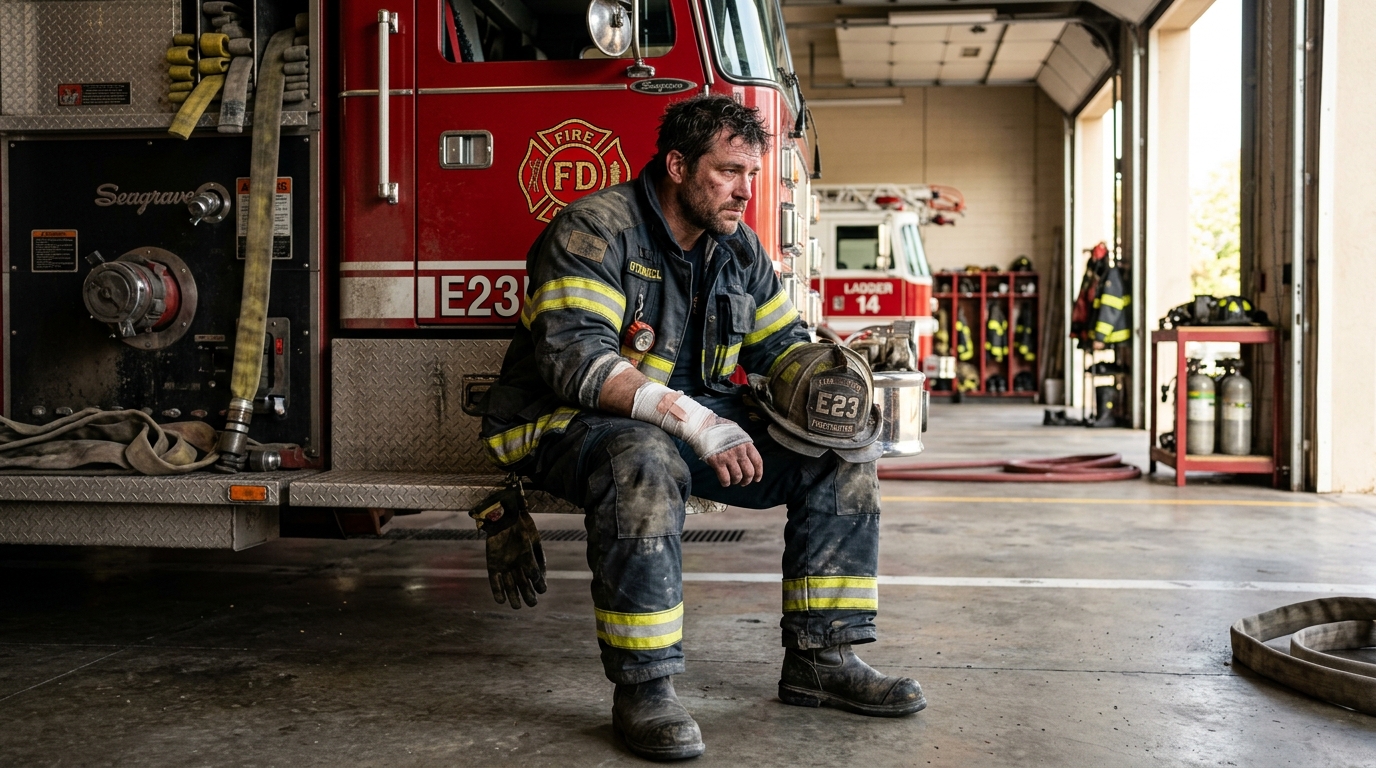
Firefighters face extraordinary physical hazards every day, resulting in high rates of acute line-of-duty injuries like severe burns, smoke inhalation, and overexertion strains. Unlike traditional commercial workers’ compensation claims, first responder claims operate under distinct legal frameworks and specialized administrative rules. Many states have established statutory presumption laws that automatically link specific physical conditions and cardiovascular events directly to the hazards of firefighting. These unique legal protections ensure that injured crew members can access medical care and specialized wage replacement calculations without facing the standard burden of proof required in typical office or factory claims. Managing these claims requires a clear understanding of municipal benefit structures and specific statutory timelines.
- Statutory Presumptions: Legal protections that automatically link certain physical conditions directly to the hazards of active service.
- Acute Physical Trauma Coverage: Direct compensation for severe burns, crush injuries, and overexertion strains suffered during emergency calls.
- Evolving Mental Health Provisions: Expanding state statutes that allow coverage for stand-alone psychological trauma and post-traumatic stress disorder.
In addition to physical trauma, the relentless stress of emergency response can lead to severe psychological conditions such as post-traumatic stress disorder (PTSD). Historically, obtaining workers’ compensation for psychological injuries was difficult because traditional policies often required a physical injury to trigger mental health coverage. Today, evolving state legislation increasingly recognizes stand-alone psychological claims, granting firefighters access to vital mental healthcare and lost wage benefits without requiring an accompanying physical wound. Establishing a valid PTSD claim still involves meeting strict administrative thresholds, such as documenting specific traumatic events or chronic exposure to critical incidents during active duty. Securing these benefits depends on submitting detailed medical documentation from qualified mental health professionals who understand first responder trauma.
Calculating benefits for firefighters involves intricate administrative formulas that account for specialized overtime, hazardous duty pay, and municipal pension integration. Because first responder cases frequently involve high-value disability claims and complex coordination between workers’ compensation and disability retirement, standard claims handling often falls short. Insurance carriers routinely scrutinize these high-stakes filings, attempting to dispute the origin of psychological conditions or argue against the application of statutory presumptions. Working alongside legal advocates who specialize in first responder claims helps protect an injured firefighter’s rights throughout the administrative hearing process. Having dedicated legal representation ensures that every physical injury and psychological condition is fully recognized and compensated under the appropriate statutory protections.
Calculating Unique Disability Benefits and Selecting Specialized Counsel
Unlike standard commercial policy claims, municipal firefighter disability benefits involve intricate financial mechanics that go far beyond basic wage replacement. Adjusters must factor in specialized wage calculations, including mandatory overtime, hazard pay, and differential shift premiums, which are frequently miscalculated by general insurance carriers. Furthermore, statutory presumption laws in many jurisdictions automatically link cardiac conditions, respiratory illnesses, and occupational cancers directly to firefighting duties, shifting the burden of proof off the injured worker. Managing the intersection between workers’ compensation indemnity payments and municipal disability pension offsets requires careful coordination to prevent double-dipping penalties or unnecessary benefit reductions. Establishing accurate permanent disability ratings also demands a precise evaluation of how an impairment impacts a first responder’s specific physical capacity to return to full active service.
- Incorporation of hazard pay, mandatory overtime, and specialized stipends into average weekly wage calculations
- Application of statutory presumption rules for occupational cancers, heart disease, and lung conditions
- Coordination of permanent disability ratings with municipal service-connected retirement pension offsets
Because municipal workers’ compensation claims are governed by distinct administrative procedures and unique statutory frameworks, securing specialized legal representation is essential for protecting your long-term financial security. A seasoned attorney who understands first responder claims can aggressively counter insurance tactics aimed at underestimating average weekly wages or discounting complex occupational exposures. Specialized counsel also collaborates with medical experts to properly document acute traumatic injuries as well as latent condition developments, ensuring every aspect of a claim is supported by credible scientific evidence. By proactively managing pension offsets and permanent disability ratings, dedicated advocates help firefighters avoid costly procedural errors that could permanently diminish their lifetime benefits. Choosing legal counsel thoroughly versed in public safety claims ensures that first responders receive the comprehensive financial recovery and medical coverage they rightfully earned in the line of duty.
Securing Firefighter Benefits Through Statutory Presumption Laws
Firefighters face extraordinary hazards on the job, ranging from severe overexertion injuries to long-term toxic exposures that result in occupational illness. Because of these unique dangers, statutory presumption laws exist in many jurisdictions to automatically connect conditions like occupational cancer, heart disease, and respiratory illnesses to line-of-duty service. These legislative protections streamline the administrative hurdles that typically complicate standard commercial workers’ compensation claims. However, securing full benefits still requires handling specialized evidentiary standards, precise medical reporting, and complex municipal benefit calculations. Protecting your career and health depends heavily on understanding these statutory distinctions from the very start of your claim.
Securing comprehensive financial recovery goes far beyond standard medical coverage, especially when evaluating permanent disability, wage loss calculations, and ongoing care needs for first responders. Municipal claims often involve unique pension interactions and specialized disability evaluations that can dramatically alter the overall value of your case. Choosing the right medical evaluator and pushing back against unfair insurance denials are essential steps toward safeguarding your long-term well-being. Dedicated advocacy ensures that every acute injury and chronic condition is properly rated, documented, and compensated under the law. First responders who proactively protect their statutory rights position themselves for a much more stable physical and financial recovery.
Ultimately, handling a firefighter workers’ comp claim demands a targeted strategy designed around first responder laws rather than generic commercial insurance frameworks. Taking decisive action early on helps guarantee that your benefits reflect the true severity of your duty-related injuries or illnesses. If you are currently negotiating with an insurance adjuster or reviewing a potential buyout, evaluating your claim through a specialized lens is vital. To evaluate whether your current payout properly accounts for your unique statutory benefits, explore our comprehensive resource on Is Your Workers Compensation Settlement Offer Fair? (2025 Guide) to ensure your long-term future is fully protected. Our team is ready to help you learn more about your rights and secure the maximum benefits you deserve.
Frequently Asked Questions
1. How do firefighter workers’ compensation claims differ from standard workers’ comp claims?
Firefighter claims involve a level of complexity far beyond standard workplace injury filings due to unique occupational hazards. First responders face both acute injuries like burns or sprains and chronic conditions like occupational cancer or PTSD. Additionally, special state presumption laws apply specifically to firefighters to simplify proving certain line-of-duty illnesses.
2. What are statutory presumption laws, and how do they help firefighters?
Statutory presumption laws eliminate the steep burden of proving that specific workplace exposures directly caused chronic illnesses like cancer, heart disease, or respiratory illness. Under these statutes, covered conditions are legally presumed to be work-related automatically. This shifts the burden of proof onto municipal employers and insurance carriers to prove the illness was not caused by your service.
3. What types of medical conditions are typically covered under statutory presumptions?
Most statutory presumption laws cover cardiovascular illnesses, acute and chronic respiratory conditions, and specific types of occupational cancers such as leukemia or lung cancer. Some jurisdictions also extend these protections to mental health conditions, including post-traumatic stress disorder (PTSD). You should check your specific state laws to understand which exact conditions qualify for automatic presumption in your area.
4. Can I file a claim for cumulative injuries or toxic exposure that developed over time?
Yes, you can file a workers’ compensation claim for cumulative injuries and long-term health conditions caused by repeated exposures over your career. Diseases resulting from toxic smoke, chemical exposure, or continuous physical exertion are fully eligible for benefits. Properly documenting your service history, exposure logs, and medical treatment is crucial to building a strong claim.
5. What steps should I take immediately after sustaining a line-of-duty injury or illness diagnosis?
First, seek immediate medical attention and inform the treating medical personnel that your injury or condition occurred in the line of duty. Next, officially report the incident or diagnosis to your department in writing as soon as possible. Finally, maintain detailed records of all medical visits, department incident reports, and exposure logs to support your workers’ compensation filing.
6. What happens if the insurance carrier denies my presumption-based workers’ comp claim?
If an insurance carrier denies your claim, they bear the legal burden of proving your condition was entirely caused by non-work-related factors. You have the right to appeal the denial through your state’s workers’ compensation board. Working with an experienced legal advocate can help you challenge the denial and secure the full benefits you have earned.
7. Are psychological conditions like PTSD covered under firefighter workers’ compensation?
Yes, many states recognize post-traumatic stress disorder and other mental health conditions resulting from line-of-duty trauma as compensable claims. Coverage depends on your state’s specific statutes, as some require a companion physical injury while others cover stand-alone psychological trauma. Documenting exposure to traumatic incidents and seeking early professional care will strengthen your claim.