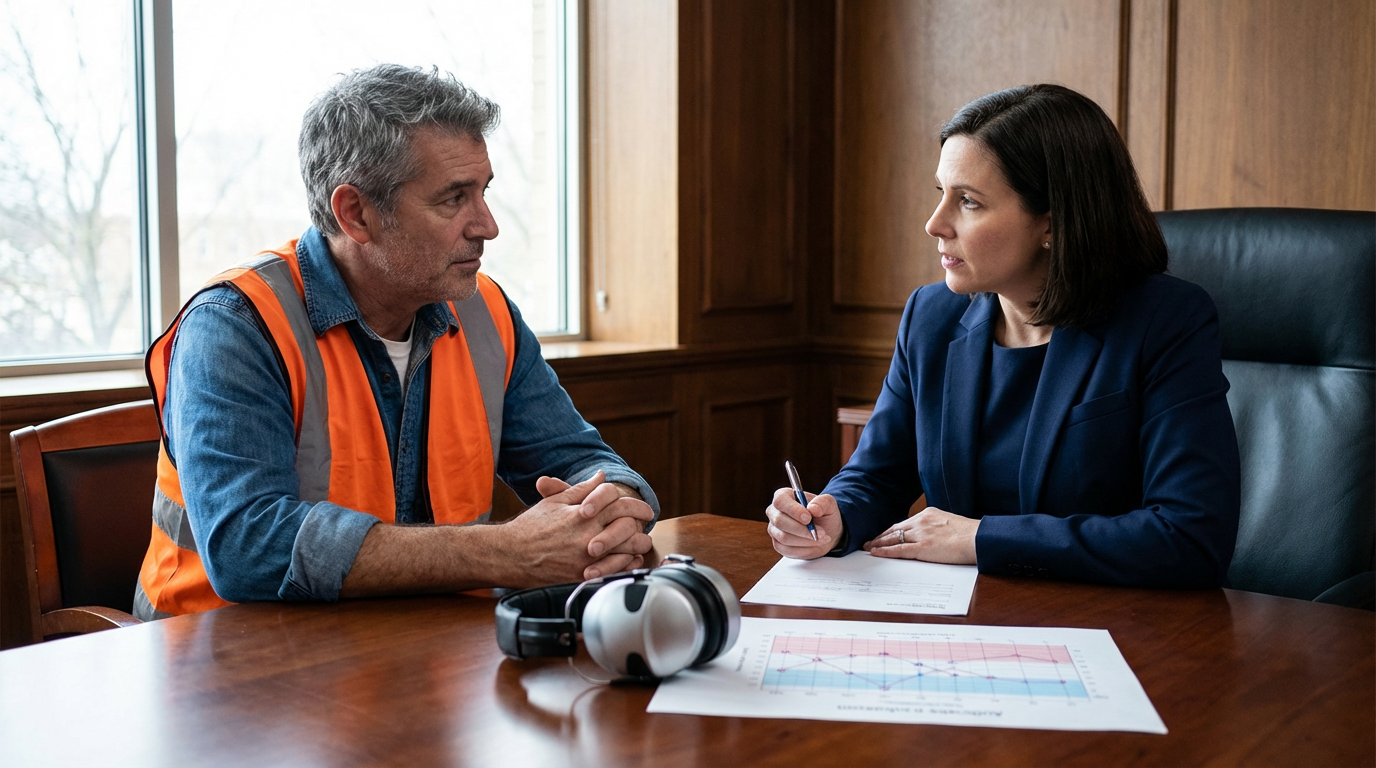
For millions of Americans, the end of a workday isn’t met with silence, but with the persistent ringing of tinnitus or the muffled sounds of a fading world. Approximately 22 million U.S. workers face hazardous noise exposure annually, making workers comp hearing loss one of the most prevalent yet overlooked workplace injuries. If you are struggling to hear conversations or keep up in meetings, you may be entitled to benefits that cover more than just medical bills.
Securing a successful claim requires clear proof of work-related causation through professional audiograms and medical evaluations. These benefits provide a critical safety net, covering the cost of hearing aids and batteries while offering permanent disability payments based on the severity of your impairment. Understanding your state’s specific requirements is the first step toward reclaiming your quality of life and financial stability.
Key Takeaways
- Approximately 22 million U.S. workers face hazardous noise levels annually, with the manufacturing sector alone accounting for 76 percent of all private industry hearing loss cases.
- Securing workers compensation benefits requires objective medical evidence, specifically professional audiograms that distinguish occupational sensorineural damage from age-related hearing loss.
- Successful claims provide a comprehensive safety net that covers the lifetime costs of hearing aids, batteries, and maintenance, as well as permanent partial disability payments based on the severity of the impairment.
- Reporting symptoms immediately and documenting the duration and intensity of noise exposure are critical steps to meet legal filing deadlines and establish work-related causation.
Identifying Occupational Noise Exposure and Causes
Occupational noise exposure remains a primary driver of workers compensation claims, particularly in environments like manufacturing and construction. When employees are consistently subjected to noise levels exceeding 85 decibels, the delicate hair cells within the inner ear begin to sustain permanent sensorineural damage. This type of hearing loss is often gradual, making it difficult for workers to notice the decline until it significantly impacts their daily lives. In the United States alone, approximately 22 million U.S. workers face hazardous noise levels annually. Understanding the specific sources of this noise is the first step in establishing a valid claim for medical benefits or disability payments.
High risk industries such as transportation equipment production, food processing, and metal manufacturing account for the majority of documented cases. Heavy machinery, pneumatic tools, and constant engine roar create an environment where hearing protection is vital yet sometimes insufficient. Statistics show that manufacturing alone accounts for roughly 76 percent of all private industry hearing loss cases reported. Beyond sudden acoustic trauma from explosions, the most common cause is the cumulative effect of daily shifts in loud workshops. This persistent vibration and sound pressure eventually lead to material impairment that requires professional medical evaluation and audiometric testing.
Determining the cause of hearing impairment involves looking at both the intensity and the duration of the workplace noise. Employers are generally required to monitor decibel levels and provide protective gear, but prolonged exposure can still breach these defenses over several years. If you work in a sector like construction or industrial fabrication, your risk of developing tinnitus or bilateral hearing loss is significantly higher than in office settings. Similarly, specialized workers’ comp for truck drivers addresses the unique risks of long-term engine noise and road vibration. Workers compensation systems recognize these specific occupational hazards as legitimate grounds for coverage of hearing aids and lost wages. Proving work related causation is essential, as it links your specific job duties directly to the physiological damage identified by an audiologist.
Filing Claims for Workers Comp Hearing Loss

Initiating a workers compensation claim for hearing loss requires clear documentation of the link between your job duties and your auditory impairment. The most critical piece of evidence is a comprehensive audiogram performed by a licensed professional to establish a baseline and measure current deficits. These tests provide a scientific snapshot of your hearing health, identifying specific frequencies where loss has occurred. Without this objective data, it is difficult to demonstrate that your condition meets the legal threshold for a compensable injury. You should ensure that these professional audiograms are conducted in a controlled, clinical environment to maintain the integrity of the results.
Distinguishing between occupational noise damage and the natural effects of aging, known as presbycusis, is a common hurdle in these legal cases. Medical experts will closely examine the pattern of your hearing loss to see if it matches the typical profile of noise induced trauma. For example, workplace damage often appears as a specific notch in high frequency ranges that differs from age related decline. Providing a detailed history of your daily exposure to loud machinery or constant industrial noise helps the physician validate your claim. This professional medical evaluation serves as the bridge between your test results and your eligibility for benefits.
Once the connection to your employment is established, the focus shifts to determining the severity of the impairment and the necessary treatment. If your claim is denied, you must understand the specific reasons for the rejection to prepare a strong appeal. Successful claims can cover a wide range of expenses, including the cost of modern hearing aids and their ongoing maintenance. Depending on your state’s specific laws, you may also be eligible for permanent partial disability payments if the damage is significant. It is vital to report your symptoms as soon as they become noticeable to meet strict filing deadlines. Taking proactive steps with medical documentation ensures you receive the support needed to manage your long term auditory health.
Benefits for Occupational Tinnitus and Deafness
Securing workers comp hearing loss for hearing impairment involves more than just covering initial doctor visits. If you are diagnosed with occupational deafness or chronic tinnitus, you may be eligible for comprehensive medical benefits that cover the full scope of your treatment. These benefits typically include the cost of high quality hearing aids and batteries, specialized diagnostic testing, and ongoing maintenance expenses like replacement batteries. Some insurance plans even cover cognitive behavioral therapy or sound masking devices specifically designed to manage the persistent ringing of tinnitus. Ensuring these costs are covered helps alleviate the long term financial burden of managing a sensory disability.
Financial recovery also extends to permanent partial disability payments, which compensate you for the lasting impact on your quality of life. The amount of compensation is usually determined by a medical evaluation and an audiogram that measures the severity of your impairment. Most states use a specific settlement chart to calculate these awards based on whether the loss is in one ear or both. Because hearing loss is often progressive, these payments acknowledge that your earning capacity or general well being may be permanently altered. Professional legal or medical guidance can help ensure your impairment rating accurately reflects the true extent of your condition.
Securing Benefits for Work-Related Hearing Loss
Securing workers compensation for hearing loss requires a proactive approach that begins with documented medical evidence. You must prioritize obtaining a professional audiogram and a medical evaluation to establish a clear link between your auditory damage and your workplace environment. Once causation is proven, you can pursue benefits that cover essential medical costs, such as hearing aids and batteries, along with permanent partial disability payments. Navigating these legal and medical requirements ensures you receive the financial support necessary to manage a lifelong sensory impairment.
While pursuing a claim is vital for your recovery, preventing further damage through the consistent use of protective equipment is equally important. Employers are responsible for providing gear like earplugs or noise-canceling earmuffs, but the daily commitment to wearing them rests with the worker. Auditory nerves do not regenerate, so taking immediate steps to mitigate hazardous noise exposure is the only way to preserve your remaining hearing. Combining proper safety protocols with the benefits you have earned creates a comprehensive strategy for your long-term well-being.
As you move forward with your claim, it is essential to ensure that the compensation you receive accurately reflects the severity of your impairment. Many workers struggle to determine if the insurance company is providing a settlement offer fair for their specific medical needs and lost wages. To help you evaluate this financial process, we recommend you learn more about Is Your Workers Compensation Settlement Offer Fair? (2025 Guide). This resource provides the clarity you need to evaluate your options and secure the full benefits you deserve for your hearing loss.
Frequently Asked Questions
1. What qualifies as hazardous noise exposure in the workplace?
Hazardous noise exposure occurs when you are consistently subjected to noise levels exceeding 85 decibels. This environment is common in industries like construction, manufacturing, and transportation where heavy machinery or pneumatic tools are used. Over time, these high decibel levels cause permanent damage to the delicate hair cells in your inner ear.
2. How do I prove my hearing loss is work-related?
You must establish a clear link between your job duties and your impairment through professional medical evaluations. This process requires undergoing audiograms and specialized testing to document sensorineural damage caused by your specific work environment. Clear medical evidence is the most critical component of a successful workers compensation claim.
3. What specific benefits can I receive for a hearing loss claim?
A successful claim provides a vital financial safety net that covers the costs of hearing aids and replacement batteries. Additionally, you may be eligible for permanent disability payments based on the documented severity of your hearing impairment. These benefits are designed to help you reclaim your quality of life and maintain financial stability.
4. Which industries carry the highest risk for hearing impairment?
Workers in manufacturing, food processing, and metal production face the highest risks due to constant exposure to engine roar and heavy equipment. Construction and transportation sectors also account for a large number of claims because of the prevalence of pneumatic tools. If you work in these environments, you are significantly more likely to experience occupational hearing loss.
5. Can I file a claim if my hearing loss happened gradually?
Yes, you can file a claim if the loss occurred slowly over many years. Occupational hearing loss is often a gradual process, making it difficult to notice until it impacts your ability to communicate in meetings or daily life. As long as you can provide medical proof of the damage, you are entitled to pursue benefits regardless of how long the decline took.
6. What is the first step I should take if I suspect hearing damage?
Your first step is to seek a professional audiogram to document the current state of your hearing. Once you have a medical evaluation, you must review your state’s specific requirements and schedules for filing a claim. Early documentation is essential for ensuring your employer’s insurance covers your medical needs and disability payments.