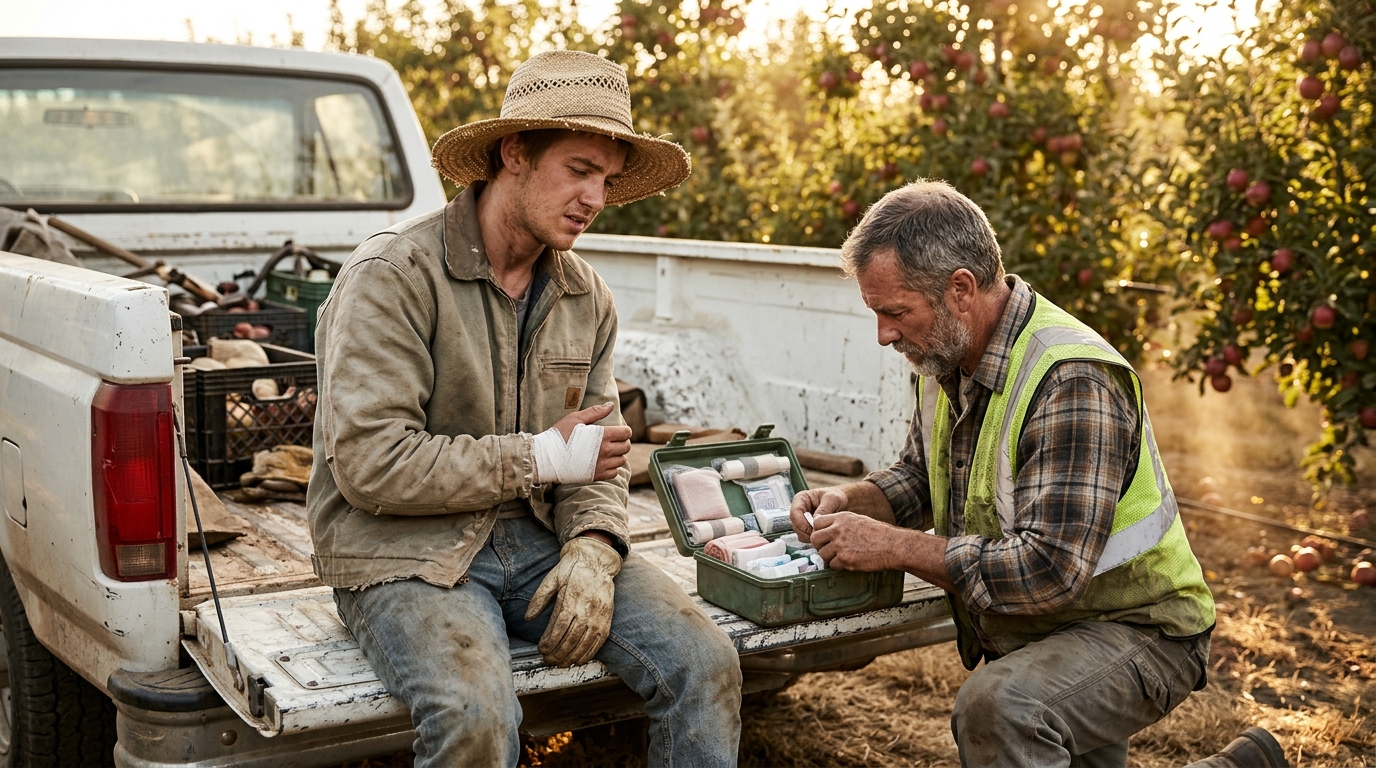
Workers’ comp for seasonal employees is not automatically excluded just because the job is short, but coverage depends on the state where the work happens. In Virginia, coverage is generally required for businesses with more than two employees regularly employed in the state, and seasonal workers count toward that number. New Mexico’s threshold is three or more workers.
A work injury can still bring medical and wage benefits after the season ends, but timing matters. In California, if an employer does not learn of a work injury within 30 days and that delay prevents a full investigation, the worker could lose the right to benefits.
Key Takeaways
- Seasonal work is not automatically excluded from workers’ compensation because the job is short, and coverage depends on the state where the work is performed.
- Seasonal workers generally count toward state headcount thresholds, such as Virginia’s more-than-two-employee rule and New Mexico’s three-worker threshold, so employers should count their crew at its peak.
- In California, a worker’s right to benefits can be lost if the employer does not learn of a work injury within 30 days and that delay prevents a full investigation.
- A seasonal worker with a qualifying California injury can keep receiving temporary disability payments of two-thirds of lost gross wages every two weeks after the season ends, so that worker should keep doctor work-status notes, pay stubs, and hour records.
- Seasonal workers should obtain a written job offer stating the expected season length, because Alberta’s Workers’ Compensation Board sets temporary compensation rates based on when the job was expected to end.
Does Workers’ Comp Cover Seasonal Employees?
Seasonal work is not automatically outside workers’ compensation. A short job does not by itself exclude a worker from coverage, and the answer depends on the state where the work is performed. Because coverage rules are set state by state, the first step is always to identify the state that governs the job.
New York’s Workers’ Compensation Board takes a broad view of who counts as an employee. It says most people who provide services to a for-profit business under the employer’s supervision, direction, and control are employees for coverage purposes, including temporary and seasonal workers. Under that standard, a seasonal worker’s length of employment is not the deciding factor.
Employer obligations also change with the industry and the number of workers. In Florida, the Florida Department of Financial Services explains that agricultural employers generally need coverage when they have six regular employees, or 12 seasonal employees who work more than 30 days in a season or more than 45 days in a calendar year. A farm that hires a large seasonal crew for a few weeks may therefore face a requirement that a non-farm business with the same crew would not.
For that reason, an employer hiring seasonal help should check the rules for the state where the crew will work, the headcount that state uses, and whether the industry has its own threshold before the first day on site.
Do Seasonal Workers Count Toward Coverage Thresholds?
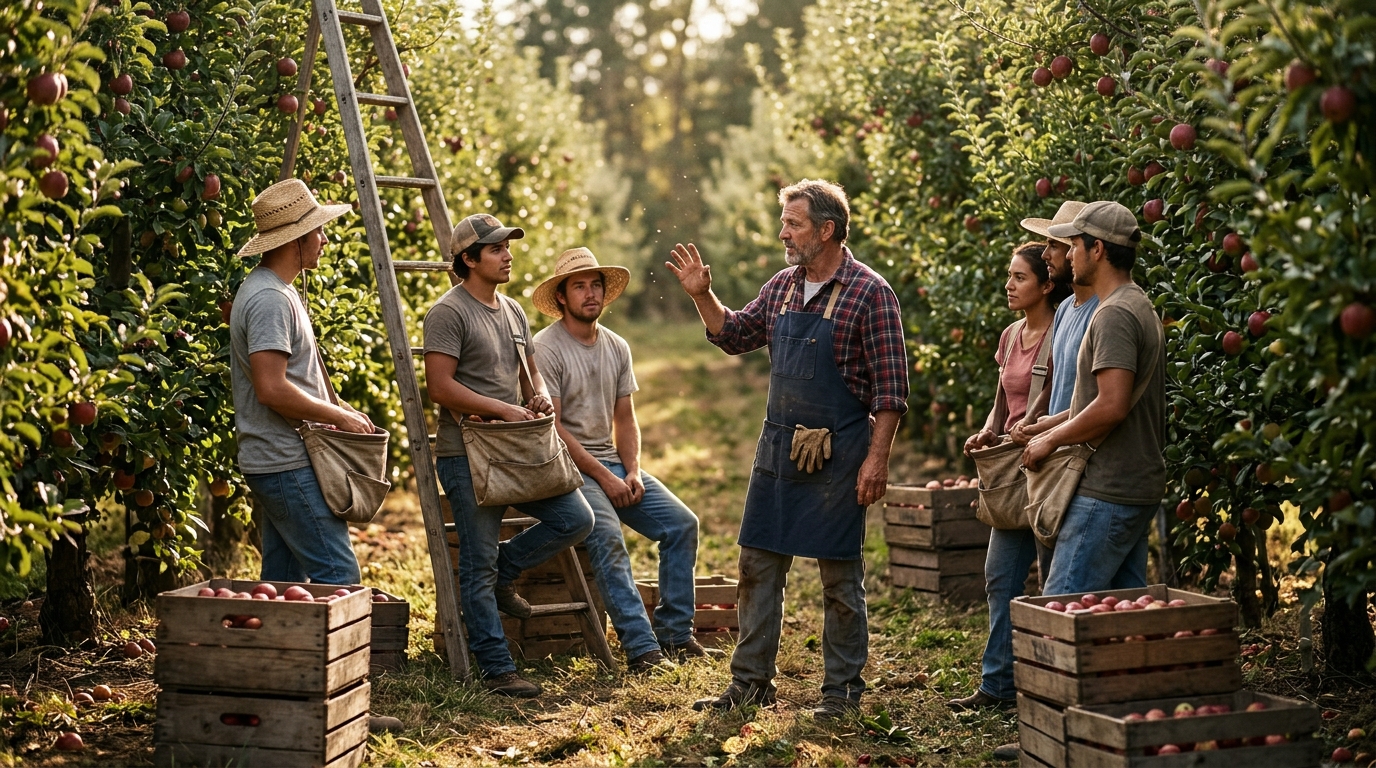
Seasonal workers generally do count toward the headcount that triggers coverage, and each state sets its own counting rules. In Virginia, coverage is generally required for businesses with more than two employees regularly employed in the state, and seasonal and temporary workers are included in that count. A business with two year-round staff and one summer hire could therefore need coverage during the season.
New Mexico sets a lower bar. Employers with three or more workers must generally carry coverage, and the New Mexico Workers’ Compensation Administration says part-time and seasonal workers count toward that threshold, including in agriculture. A farm operator with two regular employees who adds a part-time picker in August would need to recheck the count.
Florida shows how a short crew can matter more than a year-round headcount. Under Florida Statutes section 440.02(20), an agricultural employer with five year-round workers is below the six-regular-employee line. A seasonal crew of 12 who each work more than 30 days in one season, however, can bring that same farm under the requirement.
Employers should therefore count the crew at its peak, not the payroll in the slowest month. They should also record how many days each seasonal worker is on the job, since some states measure seasonal status by days worked rather than by job title.
What Benefits Continue When the Season Ends Early?
A work injury can still produce medical and wage-replacement benefits after the season ends, even if the worker has not recovered by the last day on the job. California’s temporary disability rules show how this works in practice.
Under California’s temporary disability rules, benefits generally pay two-thirds of lost gross wages. They begin when a doctor says the worker cannot do the usual job for more than three days, or when the worker is hospitalized overnight. Payments are generally made every two weeks, so a worker whose crew was laid off in October can keep receiving checks after the farm has closed for the season.
Timing still matters at the start of the claim. Under California Code of Regulations, title 8, section 4650(a), the first temporary disability payment is due no later than 14 days after the claims administrator learns of the injury and the disability, unless liability was denied earlier.
Benefits do not run indefinitely. Payments may end when the treating doctor releases the worker to the usual job, when the worker returns at qualifying wages, when the condition becomes permanent and stationary, or when a statutory limit is reached. The general limit is 104 weeks within five years for injuries on or after January 1, 2008, and the state’s injured worker guidebook lists specified exceptions.
A seasonal worker who is still under medical restrictions when the job ends should keep every work status note from the doctor, along with pay stubs and hour records from the final weeks. Those documents show both the restrictions and the wage loss that the claim depends on.
How Are Benefits Calculated on Seasonal Earnings?
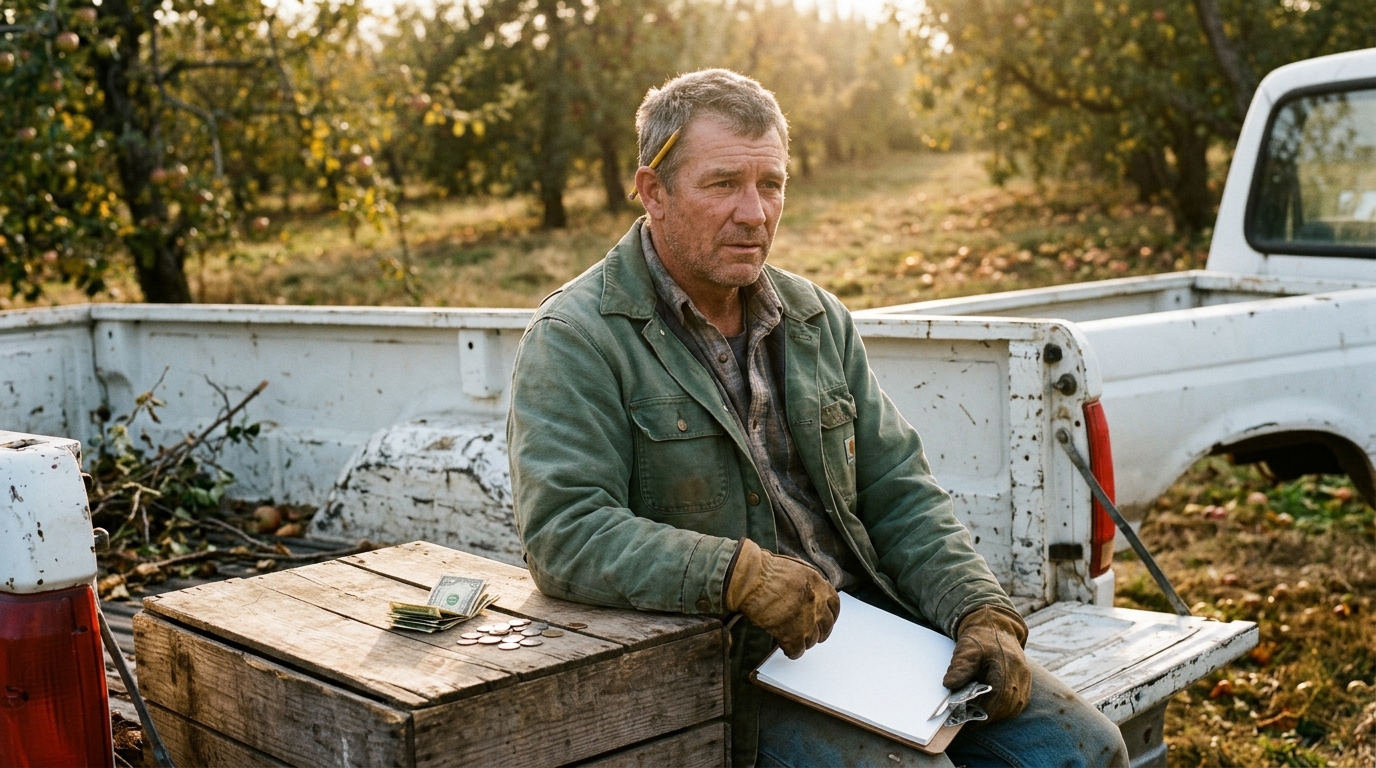
Seasonal pay complicates benefit calculations because a short season may not reflect a full year of earnings. A worker paid for four months of work could receive a benefit that misstates what the job would have paid over a normal year, so the rules focus on how long the job was expected to last, not only on the final pay stub.
Alberta’s Workers’ Compensation Board uses a two-stage approach. If a worker’s job was not expected to last 12 months because of seasonal breaks, shutdowns, or layoffs, the worker receives a temporary compensation rate through the expected last workday. After that date, a base rate applies for the rest of the claim. Other off-season earnings may be included in the calculation.
Records determine how these rules play out. Workers should keep a written job offer or employment letter that states the expected season length, along with timesheets or pay stubs showing actual hours each week. Records of any off-season earnings matter too, since they may be included in the calculation.
A worker laid off in September from a job expected to run through November would need both kinds of document. The expected end date sets when the temporary rate stops, and the hour records show what the worker actually earned before the layoff.
When Must a Seasonal Worker Report an Injury?
A seasonal worker should report a work injury to the employer as soon as it happens, because delay matters more once the job has ended and the crew has scattered. In California, if the employer does not learn of the injury within 30 days and that delay prevents a full investigation, the worker could lose the right to benefits.
The risk is sharper for seasonal staff than for year-round staff. A foreman may have left for the season, and co-workers may have moved on to other farms or states, which makes it harder to gather witness statements and time records while they are still easy to find.
Reporting rules differ by state, so the local deadline should be checked with the state’s workers’ compensation agency before assuming the California timeline applies. Some states set shorter or longer windows, and some require a specific form.
In California, the claim process usually follows a set sequence once the injury is reported:
1. Report the injury to the employer in writing, noting the date, the time, the location, and what happened. 2. Ask for the claim form if it has not arrived. The employer must provide it or mail it within one working day after learning of the injury. 3. Complete the form and return it to the employer, keeping a copy and a record of the date it was handed over. 4. Watch the calendar. If the claim is not accepted or denied within 90 days after the completed form was given to the employer, the injury may be presumed to be work-related.
Keep the date stamps, emails, and mailing receipts for every step. If the employer disputes when the form arrived, those records show exactly when each clock started.
Why Seasonal Employers’ Premiums Vary by Payroll

Premiums are generally based on payroll and work classifications, not on a flat price for each worker. A seasonal employer’s cost therefore follows how much is paid and which kinds of work those wages cover.
Texas shows the mechanics. The Texas Department of Insurance explains that an employer’s basic premium is calculated by assigning payroll to work classifications and multiplying the payroll in each classification by that company’s rate per $100 of payroll. Because each classification carries its own rate, a crew paid mostly for higher-rated field work costs more than the same total wages spread across lower-rated jobs.
For a sense of scale, New Mexico’s 2024 annual report estimates that the average workers’ compensation premium in the state for 2023 was $0.87 per $100 of payroll. That is a statewide benchmark, not a quote for seasonal workers, and it cannot predict what a particular farm or event business will owe.
Cost figures are tied to each jurisdiction, so a benchmark from one state does not carry over to another. Seasonal payroll can also change the total sharply. A crew hired for a harvest window may push wages up for a few weeks, and the premium follows those wages rather than the year-round headcount.
Protecting Yourself Before and After a Seasonal Job
Before the job starts, identify the state where the work will be performed, then check that state’s coverage threshold and how it defines an employee. Start a written file on day one that includes:
- The job offer or employment letter, showing your hire date and expected end date
- Weekly hour records or timesheets for every week of the season
- Pay stubs and records of any off-season earnings
A worker who spent only a few days in a state may still need to check that state’s rules, because a short stay does not automatically place the job outside them. If you are injured, report it to your employer right away, in writing, and ask for the written claim form if it has not arrived. Write down the date you reported the injury, and keep a copy of everything you hand over.
Checking the Employer Before the First Shift
Before the first shift, send your employer one short email. Ask which state the work will be performed in, how many workers the company counts toward coverage, and whether it carries a workers’ compensation policy. Request the insurer’s name and policy number in the same message.
Save the reply with your job offer and hour records. If the employer does not answer or names no insurer, call the state’s workers’ compensation agency before you start work. A written answer, or a documented lack of one, gives you a dated record of what the employer said before any injury happened.
Then mark your expected last workday on the calendar, and mark it again if the season ends early. That date can affect how temporary payments are calculated, so keep it with your hour records.
Frequently Asked Questions
1. How can a worker tell if they are an employee or an independent contractor?
In New York, most people who provide services to a for-profit business under the employer’s supervision, direction, and control are treated as employees for coverage purposes. That standard includes temporary and seasonal workers, so a worker who is directed on schedule, tasks, and methods may fall within it. Workers unsure of their status should compare their working arrangement with the rules of the state where the work is performed.
2. Is a worker hired in one state but injured in another covered?
Coverage generally follows the state where the work is performed, so the injury location matters as much as the hiring location. That state’s employee definition, headcount threshold, and reporting deadline may differ from the rules in the state where the worker was hired. A worker in this situation should check the rules of the injury state before assuming the original arrangement applies.
3. How much does workers’ comp cost for two or three employees?
No fixed price applies to a crew of two or three, because premiums are based on payroll and work classifications rather than headcount. The total depends on how much each worker is paid and which classification those wages fall under. New Mexico’s 2023 statewide average of $0.87 per $100 of payroll is a broad benchmark, not a quote for a small crew.
4. Is workers’ comp an employee benefit?
Workers’ compensation is generally an insurance program paid for by the employer, not by the worker. When a covered work injury happens, it can pay for medical care and wage replacement. Whether an employer must carry it depends on the state and its employee-count rules, and a seasonal worker who is covered can keep these benefits after the season ends if the injury is reported on time.