
Workers’ comp home care coverage can refer to two different situations: protection for a home-care worker injured on the job or in-home services for an employee recovering from a work-related injury. Identifying the applicable situation is the first step toward determining potential benefits, filing the correct claim, and avoiding delays. Because workers’ compensation rules vary by state, eligibility often depends on the worker’s status, the injury, and the care that is medically necessary.
An injured home-care worker may qualify for medical treatment, wage replacement, or disability compensation. An injured employee may need coverage for a nurse, aide, or attendant at home. Documentation, employer and insurer procedures, and state-specific requirements can affect the outcome. Understanding the process can make it easier to obtain support when it is needed most.
Key Takeaways
- Workers’ comp home care coverage has two distinct meanings: benefits for a home-care worker injured on the job, or in-home services for an employee recovering from a work-related injury. Identify which situation applies before pursuing benefits or filing a claim.
- In-home care generally requires an accepted work-injury claim plus medical proof that the injury causes functional limitations and makes specific services medically necessary. Coverage may include skilled nursing, therapy, medication assistance, wound care, or personal attendants, but usually excludes routine household help or unrelated care.
- A strong request must document the exact tasks the employee cannot safely perform, the type and frequency of care needed, its expected duration, and its direct connection to the workplace injury. Physician orders, functional assessments, treatment records, discharge instructions, and daily care logs can support authorization.
- State rules control eligibility, authorization, provider qualifications, billing, and appeal deadlines, so an insurer’s denial or reduction of care is not necessarily final. Preserve denial notices and care records, then seek reconsideration or appeal with additional medical evidence and professional assistance when needed.
Workers’ Comp Home Care Eligibility
Eligibility for workers’ comp home care coverage generally begins with an accepted claim for a workplace injury or occupational illness. The injury must be serious enough to cause functional limitations that affect daily activities, mobility, personal care, medication management, or other essential tasks at home. State law, the workers’ compensation system, and the medical facts of the claim all influence whether assistance is covered. An accepted claim alone may not establish eligibility if the requested services are unrelated to the work injury or constitute routine household support.
Medical documentation is essential to show that in-home assistance is necessary and connected to the workplace injury. A treating physician should describe the employee’s limitations, the tasks they cannot safely perform, the type and amount of care required, and the expected duration of that need. Supporting records may include treatment notes, functional assessments, discharge instructions, and evidence that less intensive options are inadequate. A professional case review can help identify gaps in the records and organize the documentation needed to pursue home care benefits.
The length and purpose of care also affect eligibility. Temporary home health services, nursing visits, or personal assistance may be appropriate while an employee recovers from surgery, a traumatic injury, or a serious complication. Long-term attendant or custodial care requires stronger evidence that the injury has caused lasting limitations and an ongoing need for help with personal care or daily activities. Because approval procedures and covered services vary by state, reviewing the claim promptly can help determine whether the requested care is medically necessary, properly documented, and covered through workers’ compensation.
Covered In-Home Medical Services
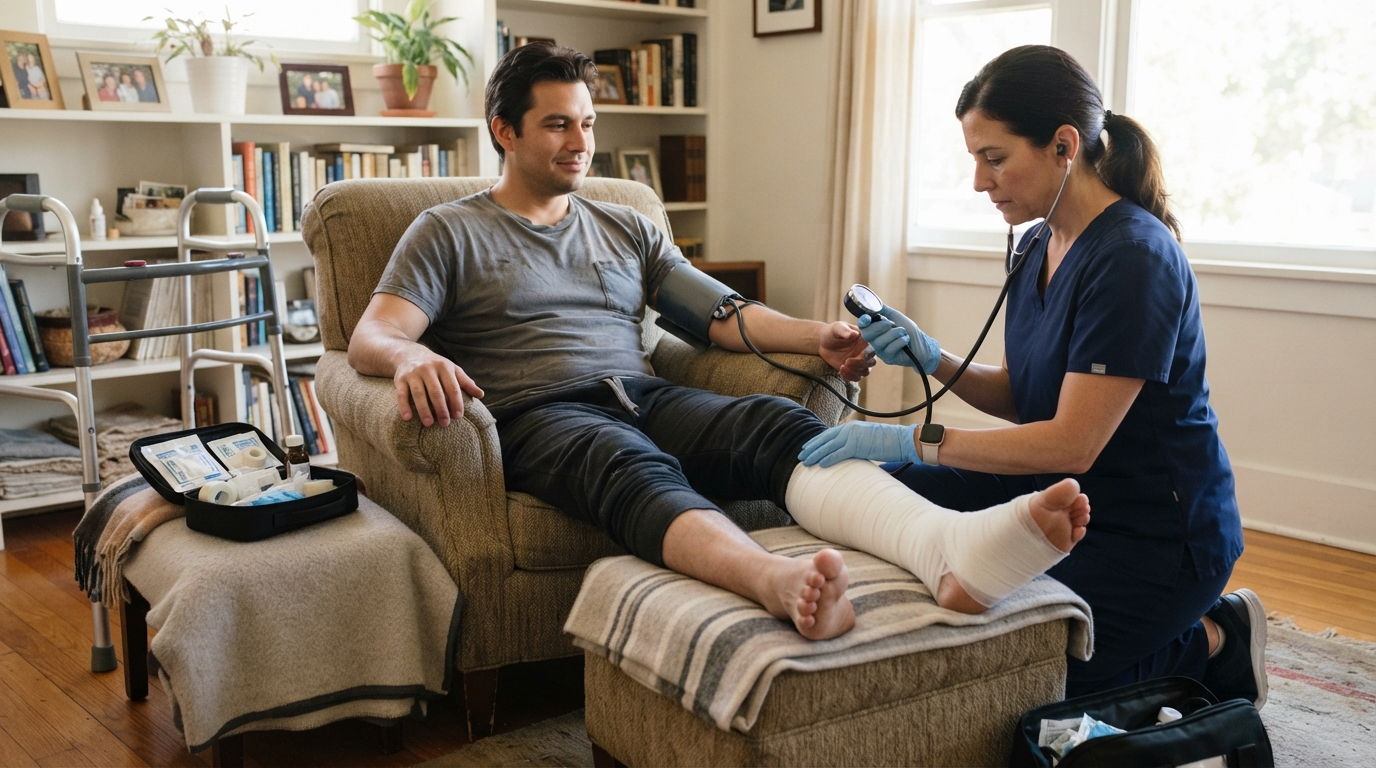
Workers’ compensation may authorize in-home medical services when a work-related injury leaves an employee unable to manage recovery safely without professional support. Covered care can include skilled nursing, physical therapy, medication assistance, wound care, and personal attendants who help with bathing, dressing, mobility, or other activities of daily living. A treating physician typically must document the need for these services and explain how they support the employee’s recovery. Because workers’ comp home care coverage is governed largely by state law and the terms of the claim, approval is not automatic.
Commonly requested in-home services may include:
- Skilled nursing visits for monitoring, injections, medication assistance, or changes in medical condition
- Physical or occupational therapy to restore strength, movement, and independence
- Wound care and other treatment ordered by the authorized provider
- Personal attendants who assist with bathing, dressing, toileting, transfers, meals, and mobility
The insurer may evaluate whether each service is medically necessary, reasonably priced, and directly related to the accepted workplace injury. Routine household help or care for unrelated health conditions may not qualify, even when the employee is having difficulty at home. Disputes often arise when an insurer questions the doctor’s orders, limits the number of visits, or offers a less intensive level of assistance. Reviewing medical records, treatment orders, and the claim’s benefits can help determine whether additional home-care support should be requested or challenged.
When in-home assistance is essential, timely documentation can improve the chances of securing benefits. A case review can identify gaps between the care prescribed by medical providers and the services the insurer has approved. It may also clarify whether a nurse, aide, attendant, or therapy provider is the appropriate form of support under applicable state rules. Employees facing a serious workplace injury may benefit from professional help evaluating eligibility and pursuing the home-care benefits needed for a safe recovery.
Home Care Authorization And Documentation
A request for workers’ comp home care coverage typically begins with a medical evaluation documenting how the workplace injury affects daily activities, mobility, hygiene, medication management, or safety. The treating provider should explain why in-home assistance is medically necessary and include a treatment plan describing the type, frequency, and expected duration of care. A detailed recommendation is stronger when it identifies specific tasks, such as bathing, dressing, transfers, meal preparation, or skilled nursing support, rather than simply requesting “home care.” Because workers’ compensation rules vary by state, the documentation should follow the applicable authorization procedures and forms.
After the medical records and provider recommendation are submitted, the insurer generally reviews whether the injury is compensable, whether the requested services are related to that injury, and whether the proposed caregiver or agency meets applicable qualifications. Care-hour estimates should be supported by functional limitations, task-specific needs, and safety concerns, with updates when the employee’s condition changes. Insurers may approve fewer hours than requested, delay a decision, or argue that family assistance, outpatient treatment, or another service is sufficient. They may also dispute whether the provider is qualified or claim that the requested care is unrelated, unnecessary, or unsupported by objective medical evidence.
Denied or limited requests should not be treated as final, particularly when the records do not fully explain the employee’s daily needs. A case review can identify missing evaluations, inconsistent medical statements, unsupported hour estimates, or procedural errors that may be addressed through additional documentation, provider clarification, or a formal appeal. Benefits-recovery assistance may also help organize medical evidence, compare approved care with actual needs, and present a clearer request for reasonable in-home support. Prompt action is important because authorization rules, appeal deadlines, and available remedies depend on the state and the workers’ compensation claim.
Recovering Home Care Benefits

Strengthening a workers’ compensation home care coverage request starts with thorough medical documentation. Keep records of diagnoses, treatment plans, medications, restrictions, and provider recommendations connecting the need for in-home assistance to the workplace injury. A daily log can show which tasks require help, such as bathing, dressing, preparing meals, moving safely, or managing medical equipment. Record how often care is needed, how long it takes, and what happens when assistance is unavailable. Opinions from qualified physicians, nurses, therapists, or other authorized providers can help establish that the requested care is medically necessary.
Because workers’ compensation rules vary by state, eligibility may depend on the nature of the injury, the approved treatment plan, and whether the requested services are reasonable and necessary. Submit specific information about the type and amount of care needed rather than relying on general statements about difficulty at home. If an insurer denies the request, reduces approved hours, or refuses to pay for care already provided, preserve the denial notice, bills, care logs, and related communications. These records can help show the difference between the assistance recommended by providers and the support actually authorized.
A workers’ compensation attorney or benefits-recovery professional may help review the claim, identify missing medical support, and challenge a denial through the appropriate state process. Professional assistance can also be useful when pursuing unpaid home care, responding to an insurer’s claim that family assistance is sufficient, or negotiating an appropriate schedule of nursing, attendant, or personal-care services. A case review can clarify whether the available evidence supports in-home care and what additional opinions or documentation may strengthen the request. Acting promptly is important because appeals, medical evaluations, and payment disputes may be subject to state-specific deadlines.
Proving Medical Necessity for Home Care Coverage
Workers’ comp home care coverage often depends on proving that in-home assistance is medically necessary because of a compensable workplace injury. Medical records, physician orders, functional limitations, and a clear explanation of the required care can help connect the requested services to the injury. The care must also comply with applicable state workers’ compensation rules, including authorization, provider, and billing requirements. Because eligibility standards vary by state, a request may be denied even when the need for assistance is genuine if the documentation is incomplete or the required procedures were not followed.
A serious injury or denied home care request does not necessarily end the possibility of obtaining benefits. Reviewing the claim file can reveal missing medical support, incorrect benefit decisions, or documentation problems that may be addressed through the workers’ compensation process. A claim documentation review service can help evaluate whether your records support home care coverage and identify potential next steps. A case review may clarify your coverage, identify potential errors, and assess available benefit-recovery options.
Frequently Asked Questions
1. What does workers’ comp home care coverage mean?
Workers’ comp home care coverage can refer to two different situations. It may provide benefits to a home-care worker injured while performing job duties, or it may cover in-home nursing, aide, or attendant services for an employee recovering from a work-related injury.
2. Who may qualify for home care services after a workplace injury?
You may qualify if your work-related injury or occupational illness causes functional limitations that affect mobility, personal care, medication management, or other essential daily activities. Your claim generally must be accepted, and the requested care must be medically necessary and directly related to the workplace injury.
3. What types of home care can workers’ compensation cover?
Depending on state law and medical necessity, coverage may include a nurse, home health aide, or attendant who helps with personal care, mobility, medication management, and other injury-related needs. Routine household assistance or services unrelated to the accepted injury may not be covered.
4. What documentation is needed to request workers’ comp home care coverage?
You should obtain medical documentation describing your limitations, the tasks you cannot safely perform, the type and amount of care required, and the expected duration of your need. Treatment notes, functional assessments, discharge instructions, and other records connecting the services to your work injury can strengthen the request.
5. Does an accepted workers’ compensation claim automatically cover home care?
No. An accepted claim does not automatically establish eligibility for in-home assistance. You must generally show that the care is medically necessary, related to the accepted injury, and permitted under the workers’ compensation rules in your state.
6. How do you request home care through workers’ compensation?
Start by discussing your limitations with your treating physician and asking for a written care recommendation. Submit the medical records and service request through the required employer, workers’ compensation insurer, or claims administrator procedures, and follow any state-specific authorization requirements.
7. What happens if the insurer denies home care coverage?
Request the denial in writing and review the stated reason, which may involve medical necessity, insufficient documentation, unrelated services, or an authorization problem. You may be able to provide additional medical evidence, request reconsideration, or pursue the appeal process available in your state.
8. Can a home-care worker receive workers’ compensation after being injured on the job?
A home-care worker may qualify for medical treatment, wage replacement, or disability benefits if the injury occurred during covered work and the worker meets applicable state requirements. Eligibility can depend on employment status, whether the worker is an employee or independent contractor, the employer’s coverage, and timely reporting of the injury.

