
For many individuals living with disabilities, a career is more than just a paycheck; it is a pathway to independence and dignity. However, the bridge to employment often buckles under the weight of systemic pressures, leading to critical vocational rehabilitation counselor mistakes that can derail a person’s future. From premature case closures to the dismissal of ambitious career goals, these errors frequently stem from high caseloads and bureaucratic bloat rather than a lack of potential in the client.
Understanding these service failures is essential for anyone using state-funded employment programs. When a counselor prematurely ends a case or discourages higher education, it often reflects a funding shortfall or a rigid administrative process rather than the client’s actual ability to work. Recognizing these patterns empowers individuals to advocate for the services they deserve and ensures that systemic hurdles do not become permanent barriers to professional success.
Key Takeaways
- Vocational rehabilitation counselors frequently commit service errors like premature case closure and eligibility denial due to overwhelming caseloads and bureaucratic pressure rather than a client’s lack of potential.
- Counselors often sabotage long-term financial stability by steering clients toward low-wage, entry-level labor while dismissing ambitious career goals, higher education, or previous professional experience.
- Hidden neurodivergent disabilities are often overlooked when counselors equate verbal fluency with a lack of impairment, leading to the denial of critical workplace accommodations and specialized support.
- Systemic bureaucratic bloat and communication breakdowns result in missed deadlines and forfeited funding, requiring claimants to proactively document all interactions to protect their legal rights and benefits.
Premature Case Closure And Eligibility Denial Errors
One of the most damaging mistakes a vocational rehabilitation counselor can make is closing a file before a claimant has received a comprehensive evaluation. Driven by overwhelming high caseloads and bureaucratic pressure, many counselors rush to terminate cases under the guise of non-cooperation or lack of progress. This often happens before the counselor has even determined eligibility or conducted the necessary vocational testing to understand the claimant’s true potential. For individuals with intellectual or psychological disabilities, these premature case closures are especially prevalent and can feel like a deliberate attempt to limit access to essential benefits. When a case is shuttered without a full assessment, the system effectively ignores the complex barriers that the claimant is trying to overcome.
Eligibility denial errors frequently stem from a counselor’s failure to look beyond basic medical records to the actual functional limitations of the applicant. Instead of performing the thorough review required by law, some counselors rely on surface level observations to justify a denial, claiming the individual is either too disabled to benefit or not disabled enough to qualify. This creates a frustrating “catch-22” where claimants are left without a clear path forward simply because a counselor prioritized clearing their desk over performing a diligent review. These errors are not just administrative oversights, they represent a fundamental breakdown in the duty to provide individualized support. If eligibility was denied without a thorough explanation of how specific limitations were considered, it may be a result of a systemic rush to reduce department numbers.
Steering Clients Toward Low Wage Entry Level Labor
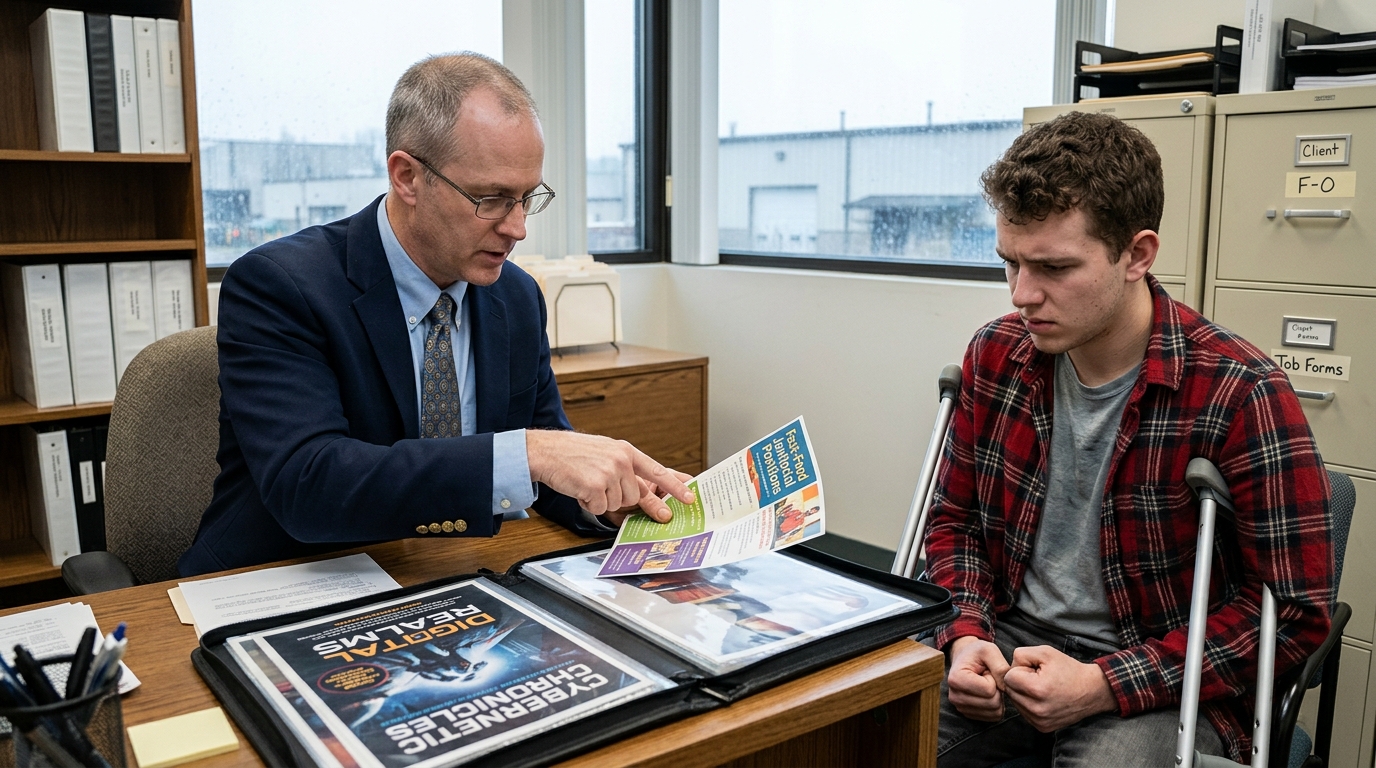
One of the most damaging mistakes a vocational rehabilitation counselor can make is dismissing a client’s ambitious career goals in favor of immediate, low-wage, entry-level labor. This often manifests as a counselor dismissing a claimant’s desire for higher education or professional certification, instead pushing them toward menial labor or entry level service positions. By ignoring a client’s past professional experience or academic potential, the counselor effectively sabotages the individual’s long term financial stability. This narrow focus on quick stats over quality outcomes often stems from high caseloads and a desire to close files as rapidly as possible. Such a strategy fails to account for the client’s actual capabilities and can lead to a cycle of underemployment and poverty.
Pigeonholing disabled individuals into repetitive or unskilled roles ignores the modern reality of the workforce and the diverse talents of claimants. When a counselor insists that a client is only fit for “light duty” janitorial work or basic retail despite their background in management or technology, they are committing a significant service failure. This approach frequently stems from systemic biases or a lack of creative thinking regarding reasonable accommodations in high level fields. Instead of advocating for the tools necessary to return a client to their peak earning potential, the counselor settles for the path of least resistance. This not only demoralizes the claimant but also undermines the very purpose of vocational rehabilitation programs.
Forcing a claimant into a low wage role that does not match their potential can have devastating consequences on their overall benefits and future security. These entry level positions rarely provide the necessary income to sustain a family or cover the ongoing costs associated with managing a disability. When a counselor ignores high level aspirations, they are essentially capping the client’s recovery and limiting their independence. Claimants must be vigilant when they feel their skills are being overlooked or when their professional history is being disregarded during the evaluation process. Recognizing this pattern is the first step in demanding a rehabilitation plan that truly reflects one’s vocational worth and long term career viability.
Overlooking Support For Hidden Neurodivergent Disabilities
Vocational rehabilitation counselors often make the critical error of equating verbal fluency with a lack of functional impairment. For high-functioning autistic individuals or those with other hidden neurodivergent traits, being articulate often masks significant executive functioning challenges or sensory processing issues. When a counselor sees a client who speaks clearly and maintains a professional appearance, they may incorrectly assume that person requires minimal support. This bias leads to the denial of necessary accommodations, effectively sabotaging the claimant’s ability to succeed in a traditional workplace. By ignoring the invisible barriers that neurodivergent individuals face, counselors fail in their primary duty to provide individualized and effective vocational assistance.
This systemic failure frequently manifests as the dismissal of specific workplace needs, such as noise-canceling headphones, flexible scheduling, or written rather than verbal instructions. Counselors may view these requests as preferences rather than medical necessities, leading to a breakdown in the rehabilitation plan. In many cases, these mistakes are driven by high caseloads and a bureaucratic pressure to close files quickly. When a counselor refuses to acknowledge the validity of neurodivergent struggles, the claimant is often left feeling unsupported by the very system designed to help them. This lack of specialized understanding can cause a claimant to cycle through failed job placements, which further complicates their long-term employment prospects.
Furthermore, the tendency to push neurodivergent clients toward entry-level or repetitive labor ignores their potential for high-level careers and specialized roles. Counselors often dismiss ambitious goals, assuming that a neurodivergent diagnosis automatically limits a person to low-stress or low-skill environments. This narrow-minded approach disregards the unique strengths that neurodivergent individuals bring to the workforce, such as intense focus or creative problem-solving. When services are denied based on a superficial assessment of a client’s “high-functioning” status, it creates an unnecessary barrier to economic independence. Professional advocacy is often required to challenge these flawed determinations and ensure that the psychological evaluation process accounts for the full spectrum of a client’s disability.
Bureaucratic Bloat And Communication Breakdown Failures

Administrative delays within the vocational rehabilitation system often stem from a heavy reliance on outdated bureaucratic processes that prioritize paperwork over person-centered care. When counselors are overwhelmed by high caseloads, the resulting communication breakdown can lead to missed deadlines for tuition payments, equipment purchases, or specialized training certifications. These delays are not merely inconveniences, as they frequently result in the forfeiture of essential funding that a claimant is legally entitled to receive. Claimants often find themselves stuck in a cycle of unreturned phone calls and unanswered emails while critical windows for career advancement slowly close.
The lack of counselor responsiveness is frequently a precursor to premature case closure, a common error where files are shuttered before eligibility is even fully determined. In many instances, counselors may interpret a claimant’s difficulty in navigating complex forms as a lack of cooperation rather than a need for additional support. This systemic failure disproportionately affects those with psychological or intellectual disabilities who may require more frequent contact to stay on track with their employment plans. Without consistent guidance, the disconnect between the agency’s requirements and the claimant’s reality leads to a total collapse of the rehabilitative process.
When communication fails, the burden of advocacy often shifts entirely onto the individual, who may already be struggling with the challenges of their disability. Bureaucratic bloat creates a shield of red tape that makes it difficult for claimants to hold their counselors accountable for inaction or administrative errors. This environment fosters a sense of hopelessness, leading many to abandon their claims despite having a legitimate right to vocational assistance. Protecting disability benefits requires a proactive approach to documentation, ensuring that every interaction or lack thereof is recorded to challenge these systemic failures effectively.
Common Pitfalls and Systemic Counselor Failures
Navigating the vocational rehabilitation process can feel like an uphill battle when a counselor seems more interested in closing a file than helping a client succeed. From premature case closures to the dismissal of professional goals, these systemic failures often stem from high caseloads and bureaucratic pressures rather than an actual inability to work. When a counselor dismisses ambitions or pushes toward low-wage roles that do not match existing skills, they are sabotaging long-term financial stability. Recognizing these red flags early is the only way to protect rights and ensure that workers compensation benefits are used to truly rebuild a career.
Protecting the future requires a proactive approach to managing every professional involved in a claim, including those who are supposed to provide support. There is no requirement to accept a rehabilitation plan that ignores medical limitations or undermines earning potential. By staying informed and demanding accountability, individuals can prevent counselor mistakes from derailing recovery and settlement negotiations. To ensure full preparation for every stage of a claim, explore our guide on Vocational Rehabilitation in Workers’ Comp: Services, Stats, and Essential FAQs to learn more about securing the support you deserve.
Frequently Asked Questions
1. Why do vocational rehabilitation counselors close cases prematurely?
Counselors often close cases early due to overwhelming caseloads and bureaucratic pressure to meet administrative quotas. This frequently happens before a comprehensive evaluation or vocational testing is completed, leading to a loss of essential benefits and support.
2. How do high caseloads impact the quality of vocational services?
When counselors are burdened by excessive files, they may prioritize administrative speed over individual needs. This systemic bloat often leads to rushed decisions, such as dismissing ambitious career goals or failing to conduct the thorough assessments required for success.
3. What should you do if a counselor denies eligibility for services?
If eligibility is denied, it is important to advocate for a full vocational assessment to ensure potential is accurately measured. Denials often stem from a counselor’s failure to understand complex barriers, so demanding a complete evaluation is a critical step in securing the benefits you deserve.
4. Why might a counselor discourage seeking higher education?
Counselors may steer individuals away from advanced degrees because of funding shortfalls or a rigid focus on immediate, low level employment. This reflects the limitations of the state program’s budget rather than actual intellectual capacity or professional potential.
5. Are certain disabilities more at risk for service failures than others?
Individuals with intellectual or psychological disabilities are disproportionately affected by premature case closures and eligibility errors. These systemic failures often occur because counselors do not take the necessary time to understand how these specific conditions impact the path to employment.
6. How can rights be protected when navigating state funded employment programs?
Rights can be protected by recognizing patterns of counselor error and maintaining a clear record of all interactions. Understanding that service failures are often a result of systemic hurdles allows individuals to push back against premature closures and advocate for comprehensive support.