A single moment of mechanical failure or operator error can lead to a lifetime of physical and financial hardship. Navigating the aftermath of a workplace injury requires a clear understanding of your legal rights and the potential value of your claim. This forklift accident settlement guide provides the essential framework for evaluating your case, from minor fractures to life-altering catastrophic injuries.
Recent legal shifts in 2024 and 2025 have seen a rise in high-value awards, particularly when gross negligence or equipment defects are involved. While minor injuries may result in smaller payouts, severe cases involving permanent disability or wrongful death are increasingly reaching substantial verdicts. Understanding how evidence of safety violations impacts these figures is critical to securing the compensation you deserve for medical bills and lost wages.
Key Takeaways
- Settlement values for forklift injuries are categorized by severity, with minor injuries typically ranging from $10,000 to $50,000, while catastrophic injuries involving permanent disability frequently exceed $150,000 and can reach over $1,000,000.
- Victims can bypass the limitations of standard workers’ compensation by identifying third-party liability, such as equipment manufacturers or maintenance contractors, to secure significantly higher damages for pain and suffering.
- The strength of a claim depends on securing critical evidence like OSHA violation reports, warehouse surveillance footage, and telematics data that records speed and mechanical faults at the time of the accident.
- Maximizing a payout requires an accurate calculation of lost future earning capacity and long-term rehabilitation costs, as recent legal trends in 2024 and 2025 show a sharp increase in awards for gross negligence and equipment defects.
Calculating Settlement Values For Forklift Injuries
Determining the potential value of a forklift accident settlement requires a thorough evaluation of the specific economic and non-economic damages sustained by the worker. In the current legal environment, minor injuries such as soft tissue strains or simple fractures typically see payouts ranging from $10,000 to $50,000. These cases generally involve shorter recovery periods and minimal time away from the warehouse floor. However, when an accident involves surgical intervention or moderate nerve damage, settlement figures often climb into the $50,000 to $150,000 range. Legal teams look closely at medical bills, lost wages, and the impact on the victim’s future earning capacity during these evaluations.
Catastrophic injuries represent the most significant portion of high value settlements due to the life altering nature of the trauma. For workers suffering from crushed limbs, traumatic brain injuries, or spinal cord damage, settlement values frequently exceed $150,000 and can reach well over $1,000,000. These figures account for the necessity of long term rehabilitative care, home modifications, and the profound loss of quality of life. In cases where gross negligence or equipment defects are proven, recent legal shifts in 2024 and 2025 show a sharp increase in jury awards. These larger amounts serve to provide a financial safety net for those facing permanent disability or the inability to return to the logistics industry.
The final valuation of a claim often hinges on the strength of evidence regarding safety violations and third party liability. If a forklift manufacturer provided a defective product or a maintenance company failed to perform essential repairs, the settlement may increase significantly beyond standard workers compensation limits. Documentation of OSHA violations and witness testimony play a crucial role in securing these higher payouts for injured staff. By understanding these 2024 and 2025 benchmarks, victims can better manage the recovery process and advocate for the full compensation they deserve. Every detail from the initial medical report to the long term prognosis influences the final roadmap for financial recovery.
Identifying Third Party Liability In Logistics Accidents
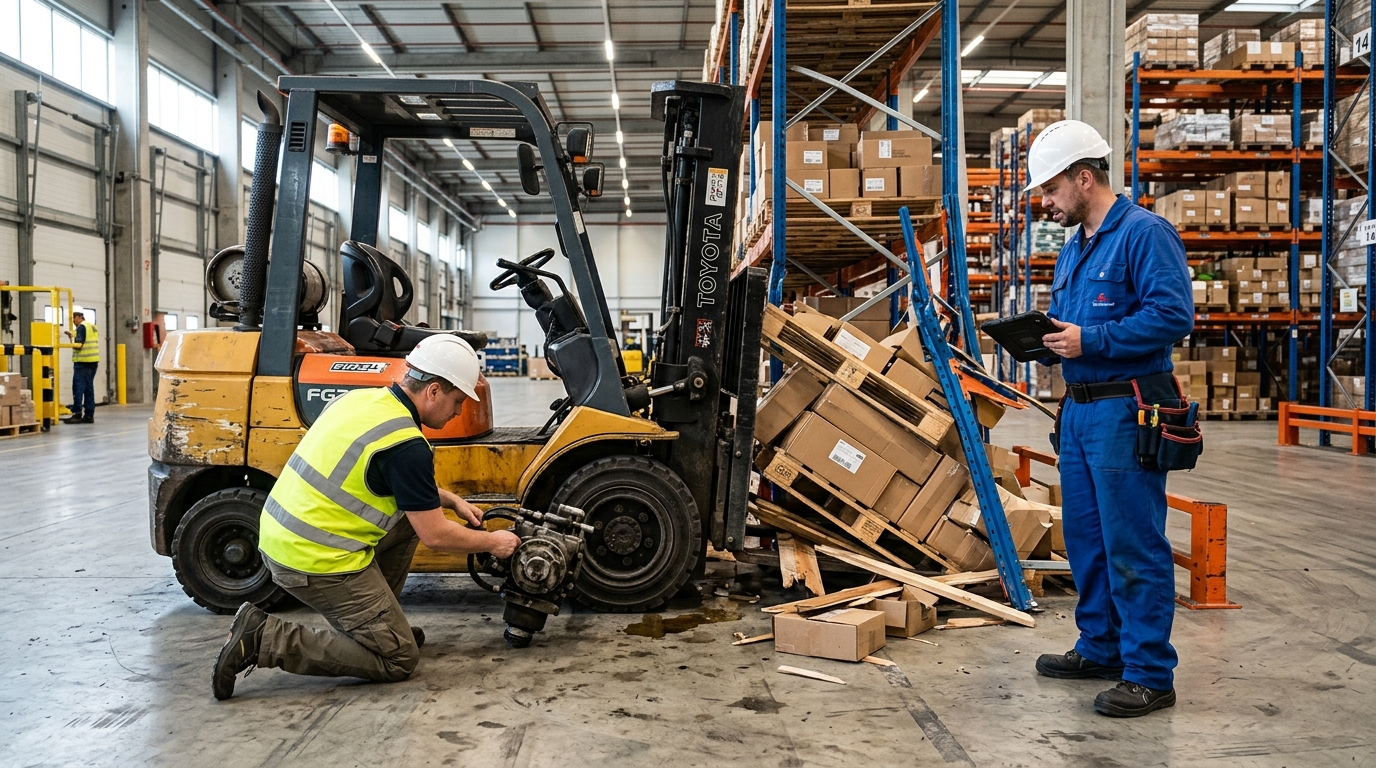
While workers compensation provides a basic safety net for medical bills and lost wages, it often fails to cover the full scope of pain, suffering, and long term financial loss following a catastrophic forklift injury. Identifying third party liability allows injured warehouse workers to step outside the limitations of the workers compensation system and pursue a civil lawsuit against negligent entities. This strategy is particularly effective when the accident was caused by a mechanical failure or a design flaw rather than simple operator error. By targeting equipment manufacturers or outside maintenance contractors, victims can seek significantly higher damages that reflect the true impact of their injuries.
Equipment manufacturers are frequently held liable when a forklift lacks essential safety features or suffers from a manufacturing defect that leads to a malfunction. For example, if a braking system fails or a tip over occurs due to a known stability issue, the manufacturer may be responsible for the resulting damages. Additionally, many logistics hubs outsource their fleet maintenance to specialized third party contractors who are tasked with ensuring every machine is in peak working order. If these contractors fail to perform routine inspections or use substandard parts during repairs, they can be sued for negligence if those failures lead to a workplace accident.
Proving third party liability requires a meticulous investigation into the service history of the equipment and the specific circumstances of the crash. Legal experts often look for third party liability examples such as skipped maintenance logs, ignored recall notices, or improper modifications made by outside vendors. Because these cases involve complex corporate entities and insurance policies, they often result in much larger settlements than standard workplace claims. As legal trends in 2024 and 2025 show an increase in high value verdicts for industrial accidents, identifying these outside parties is a critical step in securing the maximum recovery possible.
Essential Evidence For Forklift Negligence Claims
Building a strong foundation for your claim begins with securing official documentation of safety breaches. OSHA violation reports are often the most influential pieces of evidence, as they provide an objective record of whether the employer failed to meet federal safety standards. These reports can highlight issues such as inadequate operator training, lack of equipment maintenance, or failure to enforce floor marking protocols. When a regulatory agency confirms a safety lapse, it becomes much harder for insurance companies to dispute liability. Your legal team will use these findings to establish a direct link between the company’s negligence and your resulting injuries.
Modern warehouses increasingly rely on digital footprints to monitor productivity and safety through telematics data. This onboard technology records critical details like forklift speed, impact alerts, and whether the operator was wearing a seatbelt at the time of the collision. Accessing this data allows you to reconstruct the moments leading up to the accident with high precision. If the logs show the forklift was traveling at an unsafe speed or that a mechanical fault was ignored, the evidence becomes undeniable. This technical data often serves as a silent witness that cannot be contradicted by biased testimony.
Visual evidence from warehouse surveillance footage provides the most compelling narrative for a jury or insurance adjuster. Because most industrial facilities are equipped with 24/7 monitoring, there is a high probability that the incident was captured from multiple angles. This footage can reveal environmental hazards like obstructed sightlines, slick floors, or improper stacking that contributed to the crash. It is vital to act quickly to preserve these recordings before they are overwritten by the system. Combined with witness statements and maintenance logs, this comprehensive evidentiary package is essential for securing a settlement that reflects the true extent of your damages.
Maximizing Payouts Through Expert Legal Representation

Securing a fair settlement for a forklift accident requires a strategic approach that goes far beyond simply filing an insurance claim. Specialized attorneys play a critical role in this process by meticulously documenting the full scope of a worker’s losses, including immediate medical bills and the often overlooked costs of long term rehabilitation. These legal experts understand how to identify third party liability, such as equipment manufacturers or maintenance contractors, which can significantly increase the total payout beyond standard workers compensation limits. By gathering evidence of safety violations or mechanical defects, a lawyer builds a compelling case that pressures insurance companies to offer more substantial settlements.
A significant factor in maximizing a payout is the accurate calculation of lost future earning capacity, especially for warehouse and logistics professionals who may no longer be able to perform physically demanding labor. Attorneys work with vocational experts and economists to project how a catastrophic injury, such as a crushed limb or spinal damage, will impact a worker’s ability to earn a living over their remaining career. This forward looking analysis ensures that the settlement accounts for decades of potential income loss rather than just the weeks spent in initial recovery. Many victims wonder is an industrial accident lawyer worth the cost when facing these complex calculations, but without this expert intervention, many workers risk accepting low offers that fail to provide financial security for their long term needs.
The current legal environment in 2024 and 2025 shows an increasing trend toward higher awards for industrial accidents involving gross negligence or equipment failure. Experienced legal representation is essential for navigating these complex trends and positioning a claim to potentially reach the million dollar threshold seen in catastrophic injury cases. Lawyers act as a shield against aggressive insurance adjusters who aim to minimize the value of a claim by downplaying the severity of chronic pain or permanent disability. By leveraging detailed medical testimony and accident reconstruction, an attorney ensures that every aspect of the victim’s physical and financial suffering is reflected in the final negotiation.
Maximizing Your Forklift Settlement Recovery
Securing a fair settlement after a forklift accident requires a proactive approach that begins the moment the incident occurs. Because these cases often involve complex layers of liability, including equipment manufacturers or negligent third-party contractors, maintaining a detailed record of the scene is vital. You should prioritize gathering witness statements, photographing equipment malfunctions, and obtaining copies of maintenance logs before evidence is altered or misplaced. Acting quickly ensures that your legal team has the necessary tools to fight for a payout that reflects the true extent of your medical bills and lost wages.
The nature of industrial accident litigation is shifting, with modern settlements increasingly reflecting the long-term impact of catastrophic injuries. Whether you are dealing with a moderate fracture or a life-altering permanent disability, understanding if your settlement offer fair is key to a successful recovery. As you move forward, you must remain vigilant about the various roles involved in your case, especially when insurance companies attempt to minimize your claim through workers comp surveillance tactics. To ensure you are fully prepared for the road ahead, learn more about Navigating Your Workers Compensation Claim And The Nurse Case Manager Role to better understand how these professionals impact your medical treatment and final settlement outcome.
Frequently Asked Questions
1. What is the typical settlement range for a minor forklift injury?
Minor injuries such as simple fractures or soft tissue strains typically result in payouts between $10,000 and $50,000. These values reflect cases with shorter recovery times and minimal disruption to your long term ability to work.
2. How much compensation can I expect for a forklift accident requiring surgery?
When an accident involves surgical intervention or moderate nerve damage, settlement figures generally climb into the $50,000 to $150,000 range. These evaluations account for your increased medical expenses, recovery time, and the immediate impact on your future earning capacity.
3. What factors lead to multi-million dollar settlements in forklift cases?
High value settlements are typically triggered by catastrophic injuries such as crushed limbs, traumatic brain injuries, or spinal cord damage. In 2024 and 2025, these awards are increasingly common when evidence of gross negligence or equipment defects is established.
4. How do safety violations impact the value of my legal claim?
Evidence of safety violations is a critical driver of settlement value because it demonstrates employer or manufacturer negligence. Proving that a company ignored safety standards can significantly increase your compensation beyond basic medical bills and lost wages.
5. Can I seek compensation for more than just my current medical bills?
You are entitled to seek damages for both economic and non-economic losses, including future medical care and lost wages. Your claim should account for the long term physical and financial hardship caused by the injury to ensure your future needs are fully covered.
6. Does equipment failure change the nature of a forklift accident lawsuit?
Yes, if a mechanical failure caused the accident, you may have a product liability claim against the manufacturer in addition to other legal avenues. These cases often lead to higher awards particularly when an equipment defect is proven to be the primary cause of your injury.
7. What should I do if my forklift injury results in a permanent disability?
In cases of permanent disability, you should pursue a settlement that exceeds $150,000 to account for life altering trauma. You must ensure the final figure reflects the total cost of lifelong care and the complete loss of your previous earning potential.