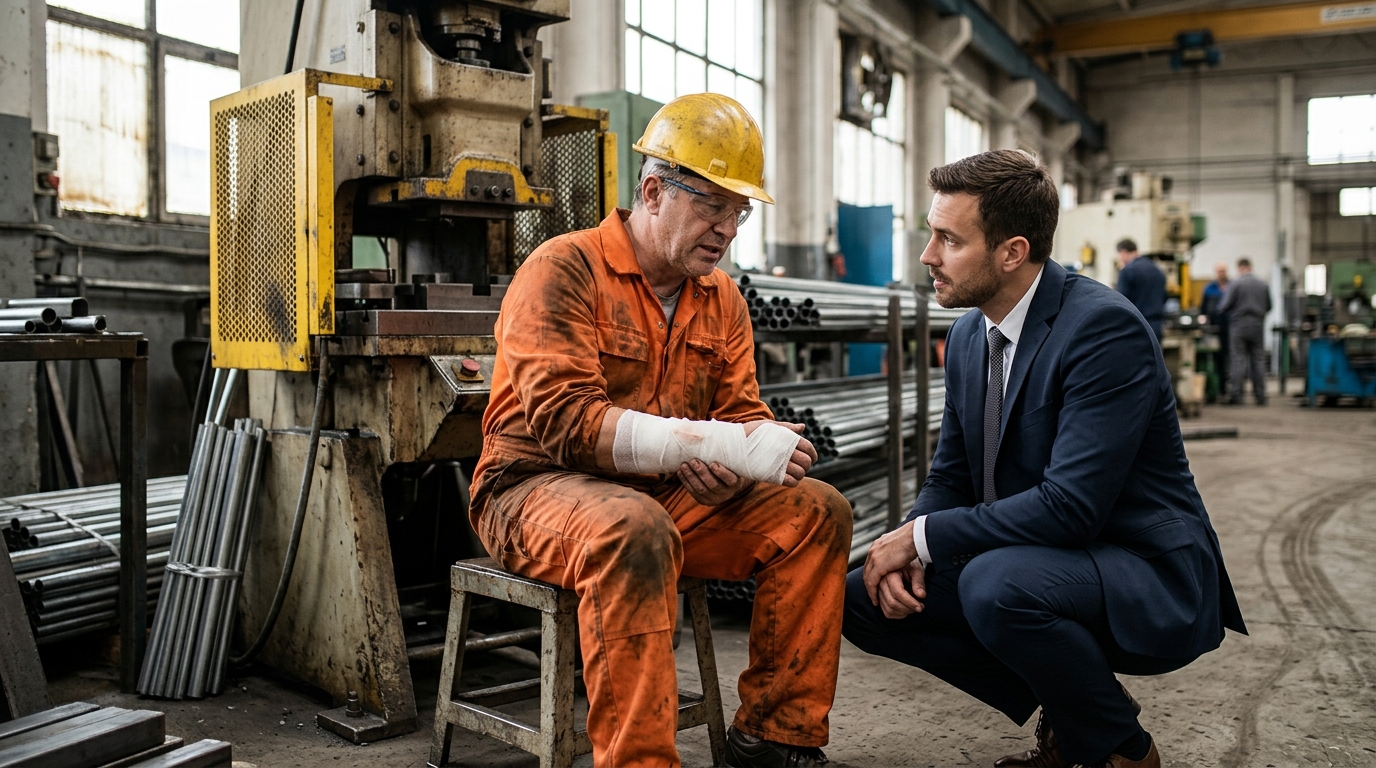
A hand caught in a press or a worker pinned beneath heavy equipment can suffer fractures, nerve damage, amputation, and lifelong consequences in an instant. A workplace crush injury attorney can help protect your rights, investigate what happened, and pursue workers’ compensation benefits or other available claims. Prompt action matters because evidence can disappear and state filing deadlines may limit your options.
Medical records, incident reports, safety violations, witness accounts, and equipment maintenance history may all affect the outcome of a claim. An attorney can also help determine whether a third party may be responsible in addition to your employer and explain the benefits and damages available under your state’s laws. Understanding these issues early can help you make informed decisions during a difficult recovery.
Key Takeaways
- Seek legal advice promptly after a serious workplace crush injury, particularly after surgery, hospitalization, amputation, or a potentially permanent disability. Early action helps protect filing deadlines and preserve evidence before it is lost or altered.
- Workers’ compensation may cover medical care, wage replacement, rehabilitation, and disability benefits, while a separate third-party claim may provide additional damages when defective equipment, contractors, property owners, or other parties contributed to the injury.
- Preserve photographs, videos, medical records, incident reports, witness accounts, maintenance logs, training materials, inspection records, and safety policies. Do not alter equipment or confront witnesses, and request that relevant evidence be preserved.
- Choose an attorney experienced with severe machinery injuries who can evaluate both workers’ compensation and third-party claims, investigate safety violations, document long-term losses, and explain state-specific deadlines, fees, and litigation options.
When to Hire a Crush Injury Attorney
A prompt consultation with a workplace crush injury attorney is especially important after surgery, hospitalization, an amputation, or an injury that may cause permanent disability. Serious crush injuries can require ongoing medical care and rehabilitation and may result in lost earning capacity and lasting pain that is not fully apparent at first. Legal review is also warranted when a machine lacked adequate guarding, required lockout or tagout procedures were not followed, or defective equipment may have contributed to the incident. These circumstances can raise questions beyond a workers’ compensation claim, including whether another responsible party may be liable under applicable state law.
Early representation can help protect filing deadlines and ensure that important evidence is preserved before it is changed, discarded, or overwritten. An attorney may seek maintenance records, safety policies, training materials, inspection reports, photographs, video footage, and witness statements while the details remain fresh. Prompt review can also help determine whether workers’ compensation benefits are being calculated correctly or improperly denied, delayed, or disputed. Because state rules governing deadlines, benefits, third-party claims, and attorney fees vary, injured workers and their families should seek advice tailored to the location of the accident.
Workers’ Compensation and Third-Party Claims
Workers’ compensation may provide benefits after a workplace crush injury, even when the accident was not caused by an employer’s intentional conduct. Depending on state law and the injury’s severity, benefits may cover reasonable medical treatment, a portion of lost wages, vocational rehabilitation, and temporary or permanent disability. A workplace crush injury attorney can help document the injury, preserve medical records, and address filing deadlines or disputes over available benefits. These claims generally do not require proof that another party was negligent, but eligibility and benefit amounts vary by state.
A separate third-party claim may also be possible when someone other than the employer contributed to the accident. Potential defendants can include an equipment manufacturer, subcontractor, property owner, or negligent driver, depending on how the machinery, worksite, vehicle, or safety conditions caused the injury. A successful third-party claim may seek damages that workers’ compensation does not provide, such as certain unreimbursed wage losses, pain and suffering, or other legally available losses. Claim requirements, defenses, deadlines, and recoverable damages depend on state law and the facts, so prompt legal review can help identify responsible parties and preserve important evidence.
Preserving Machinery Accident Evidence
Preserving evidence after a machinery accident can be essential to understanding how a crush injury occurred. Photograph the scene, equipment, warning labels, guards, controls, and visible damage. Identify any surveillance or cellphone video before it is overwritten. A workplace crush injury attorney may also seek equipment records, safety manuals, maintenance logs, training materials, witness information, and internal incident reports. OSHA citations, inspection records, complaints, and other related documentation may provide additional insight into known hazards or prior safety concerns. Because conditions can change quickly, prompt documentation may help protect details that are difficult to recreate later.
An attorney may investigate whether a missing or inadequate guard, defective machine component, unsafe lockout or shutdown procedure, insufficient training, or employer safety violation contributed to the incident. The investigation can include reviewing inspection and maintenance histories, comparing workplace practices with safety instructions, and determining whether supervisors ignored warnings or required employees to bypass safeguards. Depending on the facts and state law, these issues may affect workers’ compensation claims or support other potential claims involving third parties, defective equipment, or employer negligence. Witness accounts should be collected carefully because employees may later transfer, forget details, or feel pressure not to discuss what happened. Medical records and photographs of the injury should also be preserved alongside the machinery evidence.
Important evidence may be altered, repaired, discarded, or lost after an accident, sometimes before an injured worker realizes its significance. A workplace crush injury attorney can send preservation requests, identify who controls relevant records, and document the equipment’s condition before it is returned to service or removed. The attorney may also examine whether incident reports were changed, whether video was retained, and whether maintenance or training records are complete. Prompt legal review does not guarantee a particular result, but it can improve the ability to evaluate responsibility and prepare a well-supported claim. Workers and families should avoid altering equipment or confronting witnesses and should preserve any documents, messages, photographs, or recordings already in their possession.
Choosing a Workplace Crush Injury Lawyer

Choosing a workplace crush injury attorney with experience in severe industrial accidents can make a meaningful difference after a machinery or equipment incident. Look for a lawyer who understands caught-in and caught-between injuries, including fractures, nerve damage, degloving injuries, compartment syndrome, and amputations. Ask whether the attorney has investigated presses, conveyors, forklifts, loading equipment, safety guards, lockout procedures, and employer training records. This background may help preserve evidence and identify whether unsafe machinery, maintenance failures, inadequate supervision, or defective equipment contributed to the injury.
Your attorney should also be prepared to evaluate workers’ compensation benefits alongside potential third-party claims. A case may involve an equipment manufacturer, maintenance contractor, property owner, staffing agency, or another party whose negligence contributed to the incident. Ask how the lawyer will use medical records, expert opinions, wage documentation, photographs, video, witness statements, and vocational evidence to establish the full impact of the injury. Experience with amputation and catastrophic-injury litigation is especially important when future medical care, prosthetics, rehabilitation, lost earning capacity, and permanent disability are involved.
Before hiring a workplace crush injury attorney, discuss how often you will receive updates and who will handle your questions. Ask about the proposed case strategy, the expected investigation, possible challenges, and whether the attorney anticipates negotiating, mediating, or taking the case to trial. You should also understand the fee arrangement, litigation expenses, expert costs, and what happens if the case does not result in a recovery. Finally, confirm that the lawyer knows the applicable state deadlines for workers’ compensation notices and claims, personal injury actions, and any third-party lawsuit, because missing a deadline can affect your legal options.
How a Crush Injury Attorney Can Help
A workplace crush injury attorney can help an injured worker or family understand whether workers’ compensation, a third-party liability claim, or other legal options may be available after a machinery or equipment accident. Counsel can also help preserve critical evidence, including machine settings, maintenance records, safety policies, photographs, surveillance footage, witness statements, and medical documentation. Prompt legal review may be especially important when an employer, equipment manufacturer, contractor, or insurer disputes responsibility or the extent of the injury. Because filing deadlines, available benefits, recoverable damages, and attorney fee rules vary by state, the right strategy depends on the facts of the accident and the worker’s location.
After a serious injury, consulting a qualified attorney promptly can help protect important rights while evidence remains available and treatment needs continue to develop. A lawyer may assist with medical care documentation, wage-loss benefits, permanent disability issues, settlement evaluation, and potential claims against responsible third parties. For additional guidance on the claims process, explore our “Navigating Your Workers’ Compensation Claim and the Nurse Case Manager Role” to learn more about managing communication and benefits during recovery. Taking informed action early can help an injured worker or family make confident decisions, but general information cannot replace advice tailored to individual circumstances.
Frequently Asked Questions
1. What does a workplace crush injury attorney do?
A workplace crush injury attorney investigates how the accident happened, identifies responsible parties, and helps you pursue the benefits or damages available under state law. Your attorney can gather medical records, incident reports, witness statements, safety policies, maintenance records, photographs, and video before important evidence is lost or changed.
2. When should you hire an attorney after a workplace crush injury?
You should seek legal advice as soon as possible, especially after surgery, hospitalization, an amputation, or an injury that may cause permanent disability. Early representation helps protect filing deadlines and allows your attorney to preserve evidence while accident details and witness memories are still fresh.
3. Can you receive workers’ compensation for a workplace crush injury?
You may be entitled to workers’ compensation benefits for reasonable medical treatment, rehabilitation, temporary wage replacement, and benefits related to permanent impairment or disability. Specific benefits and filing requirements depend on your state, so report the injury promptly and obtain legal guidance if the claim is disputed or delayed.
4. Can you file a claim against someone other than your employer?
Possibly. A third-party claim may be available when defective equipment, negligent maintenance, unsafe contracting practices, or another company’s conduct contributed to the crush injury. A third-party lawsuit may provide damages that workers’ compensation does not, but eligibility must be evaluated under applicable state law and filing deadlines.
5. What evidence is important in a workplace crush injury case?
Important evidence may include medical records, accident reports, photographs, video footage, witness accounts, equipment maintenance logs, inspection reports, training materials, and machine safety policies. Evidence showing missing guards, inadequate training, or failures to follow lockout or tagout procedures may help establish how the injury occurred and who may be responsible.
6. How much compensation can you recover for a crush injury?
The amount depends on the severity of your injury, medical expenses, rehabilitation needs, lost wages, reduced earning capacity, permanent disability, and applicable legal claims. Workers’ compensation and a third-party lawsuit may provide different benefits or damages, so an attorney should review your diagnosis, prognosis, employment impact, and available insurance coverage.
7. What if your employer or insurer disputes your claim?
Do not ignore a denial, delayed payment, request for an independent medical examination, or pressure to return to work before you are medically ready. An attorney can review the dispute, gather supporting medical and workplace evidence, challenge improper decisions, and help you meet the deadlines for appealing or filing a claim.
8. How much does it cost to hire a workplace crush injury attorney?
Many attorneys handle personal injury and third-party cases on a contingency fee basis, meaning you generally do not pay an attorney fee unless compensation is recovered. Workers’ compensation representation may follow different fee rules, which vary by state, so ask about fees, case expenses, and potential costs during your initial consultation.