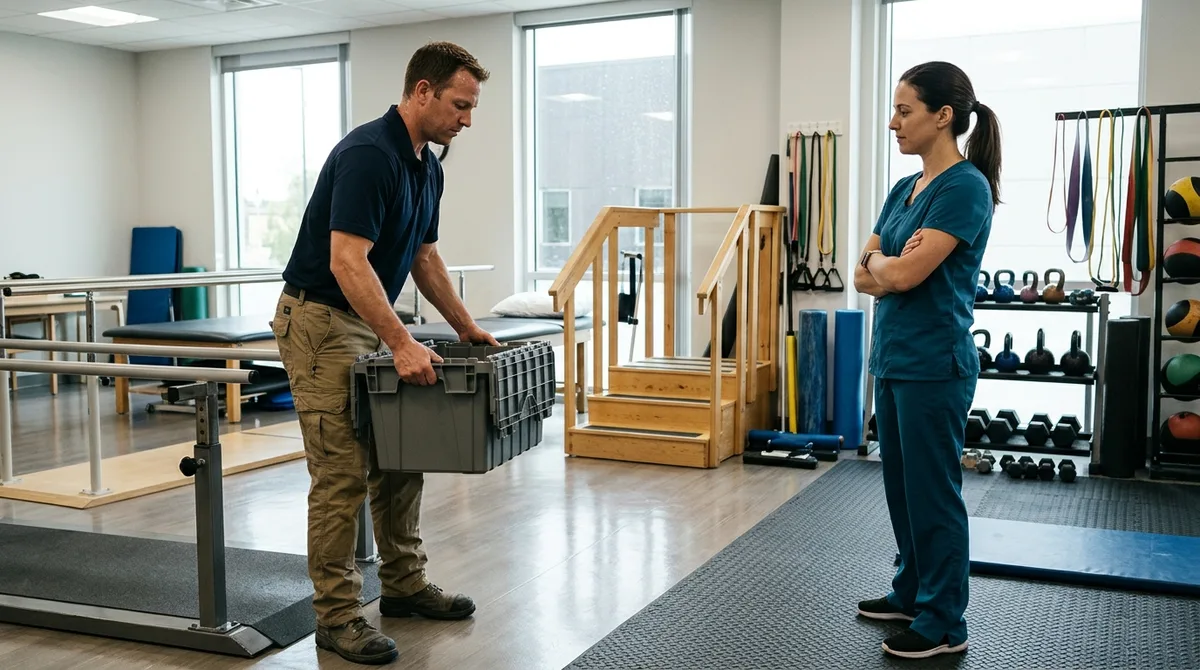
CPT 97546 is the add-on billing code for each additional hour of work hardening, a return-to-work rehabilitation program. It must be billed with CPT 97545, which covers the first two hours of a session. Washington’s 2026 schedule caps the code at 6 units per day and 240 units per program.
The payment for CPT 97546 varies by state. Hawaii’s 2026 supplemental fee schedule lists a maximum of $51.17, while Texas sets work-hardening reimbursement at $64 per hour before adjustments. Workers’ Comp Answers serves readers across the United States, so authorization and billing rules depend on where the claim is filed.
Key Takeaways
- Authorized work-hardening programs still carry unit or visit limits, so billing can stop before completed hours are reached.
- A non-accredited Texas work-hardening program is paid 80% of the $64 hourly maximum, while CARF-accredited programs receive the full amount.
- Evaluation reports need test or measurement results and/or the worker’s progress, and progress notes should show changes in the worker’s abilities.
- Compare the units on a 97546 line with the hours in your daily activity log for that date of service.
What Is CPT 97546 in Work Hardening?
CPT 97546 is the add-on code for each additional hour of work hardening. It is billed only after the first two hours of a session are recorded under CPT 97545. Work hardening is a return-to-work rehabilitation program designed to build a worker’s capacity to meet the physical and functional demands of a job. The Commission on Accreditation of Rehabilitation Facilities describes these programs as individualized and focused on return to work, aiming to minimize risk and optimize work capability.
CPT stands for Current Procedural Terminology, a standard set of numeric codes that providers use to describe the services they deliver. A code tells the payer what type of service was provided and how many units were billed. It does not show whether the care was approved in advance, how many hours a claim will cover, or how much the payer will reimburse.
Those answers come from the rules that govern the claim. The payer and the jurisdiction where the claim is filed set the authorization, unit limits, documentation requirements, and reimbursement. Two bills that list the same code can be handled differently depending on the state, the insurer, or whether the employer is self-insured. Reading a 97546 charge accurately therefore means checking the rules that apply to that claim, not just the code itself.
How Are 97545 and 97546 Hours Billed Together?

CPT 97545 is billed first for the initial two hours of a work-hardening session, and CPT 97546 is added for each additional hour. The modifiers and time rules that apply to the add-on hours vary by state. Washington handles a short extra hour differently from a full one. Under Washington’s 2026 billing instructions, an additional hour with less than 38 minutes of program work is prorated and billed with modifier -52, so it is not billed as a full unit.
Texas uses a different structure and marks each unit with its own modifier. Under the state’s workers’ compensation rules, the billing works as follows:
- The first two hours are billed as CPT 97545 with modifier WH.
- Each additional hour is billed as CPT 97546 with modifier WH.
- Programs accredited by CARF add modifier CA to these units.
Texas also measures time in smaller pieces than a full hour. Units shorter than an hour are prorated in 15-minute increments, and a single increment becomes billable when the extra time runs from 8 to 22 minutes. A session that ends a few minutes short of the next increment may therefore not generate a billable unit at all. The modifiers and minute counts on a bill are often the quickest way to see how a session was recorded.
Why Do Work-Hardening Claims Get Denied?
Work-hardening charges are most often denied for three reasons: medical necessity, weak documentation, and days with too little treatment time. The Centers for Medicare & Medicaid Services states that CPT 97545 and 97546 address specific work skills and will be denied as not medically necessary for diagnosing or treating an illness or injury. A payer applying that position may question whether the program fits a medical diagnosis at all, not just whether the paperwork is complete.
Documentation is the second common problem. Under Washington’s 2026 rules, work-hardening records must meet the state’s Work Rehabilitation Standards, and the evaluation report must include test or measurement results and/or the worker’s progress. A day with less than the minimum treatment duration must be documented as an absence rather than as a billed session.
Records that are typically checked on review include:
- The evaluation report, with test or measurement results
- Progress notes showing how the worker’s abilities changed over the program
- Absence entries for any day that fell below the minimum treatment duration
Texas shows how these records are used in practice. In a 2025 medical-fee dispute, the Texas Division of Workers’ Compensation found that medical records and Work Hardening Daily Activity Logs supported the units billed under CPT 97546-WH. A daily log that matches each billed hour is the record to compare against the bill.
Does CPT 97546 Require Prior Authorization?
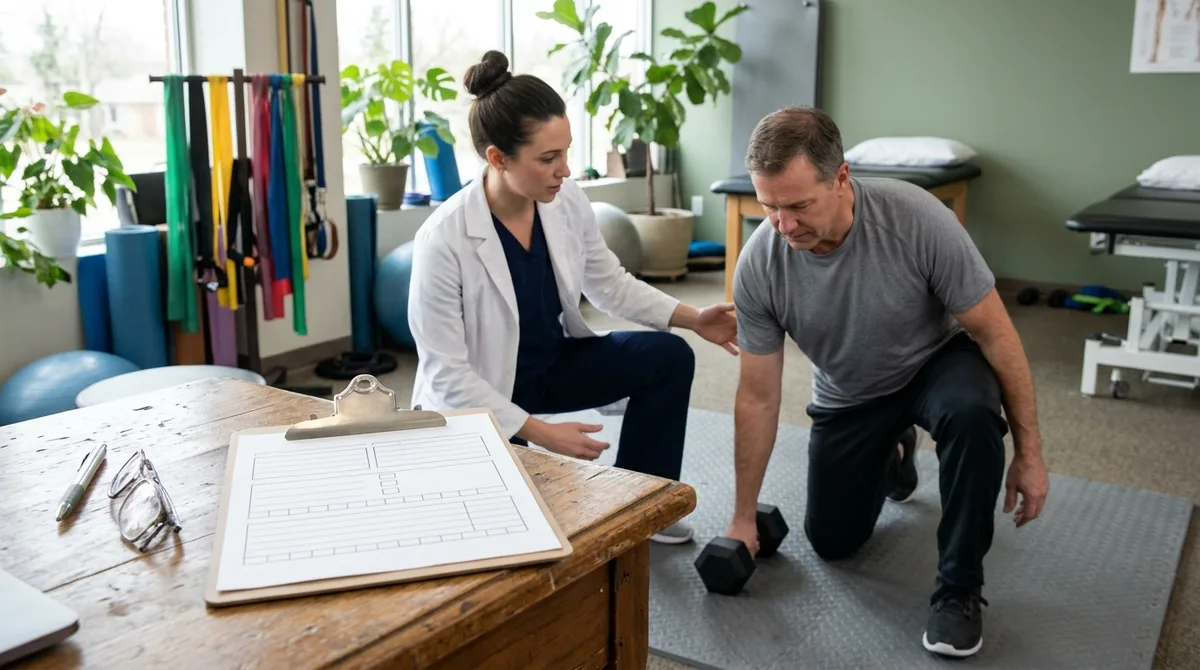
Yes, in the states that require it, work hardening must be approved before it begins. In Washington, work-hardening services billed under CPT 97545 and 97546 require prior authorization, and work-rehabilitation programs also require a referral from the attending provider. Who makes the authorization decision depends on how the claim is insured. On State Fund claims, utilization review decides whether the program is approved. On self-insured claims, the decision comes from the self-insured employer’s representative.
Texas uses preauthorization under 28 TAC §134.600, which lists work-hardening and work-conditioning services among non-emergency health care that requires approval in advance. Providers in Texas therefore need that approval in place before scheduling the program.
Approval does not end the review. Authorized programs still carry limits on units or visits, and billing can stop once a limit is reached, even when the worker has actually completed more hours. Comparing the authorized amount with the units already billed is a practical step for any injured worker reviewing a program.
Why Does CPT 97546 Pay Differently by State?
Reimbursement for CPT 97546 depends on the state’s rules and, in Texas, on the program’s accreditation. Texas pays a CARF-accredited program 100% of the maximum allowable reimbursement, while a non-accredited program receives 80%. Two programs that bill the same hour in Texas can therefore be paid differently.
Once the units were supported, the Division calculated reimbursement for the non-accredited program at 80% of the $64 hourly maximum allowable reimbursement. That calculation is how accreditation status changes the payment for the same hour.
| Reference point | Basis | Payment figure |
|---|---|---|
| Hawaii, 2026 | Maximum fee for CPT 97546 | $51.17 |
| Texas, before adjustment | Work-hardening reimbursement | $64 per hour |
| Texas, CARF-accredited program | 100% of maximum allowable reimbursement | $64 per hour |
| Texas, non-accredited program | 80% of maximum allowable reimbursement | 80% of $64 per hour |
These figures are not interchangeable. Hawaii’s number is a fee-schedule maximum for the code, while Texas’s number is an hourly rate that changes with accreditation. Comparing a bill from one state with a figure from another without first confirming the jurisdiction and the program type can lead to the wrong conclusion about what a claim should pay.
How to Read CPT 97546 on a Bill or Explanation of Benefits

A remittance advice or explanation of benefits (EOB) shows what the payer paid, what it adjusted, and what it denied on each line. Each adjusted or denied 97546 line usually carries a reason code or remark that explains the decision, so the statement itself is the first place to look when a charge seems wrong.
Reviewing the statement goes more smoothly when you follow the same order each time:
- Find the 97546 line and confirm that its date of service matches a day you actually attended the program.
- Check the modifier, such as WH, CA, or -52, since these signal which state’s billing rules were applied to the line.
- Compare the units billed with the hours recorded in your daily activity log for that date.
- Read the reason code beside any adjusted or denied line to see what the payer said.
- Ask the claims adjuster what was decided on the 97546 line and whether the decision can be reviewed.
Many denials can be corrected by the provider. The provider may send missing progress notes or a corrected activity log, or resubmit the claim with the right modifier or unit count. Ask the provider’s billing office which correction they plan to make, and keep copies of every statement and letter you receive.
Taking Questions About Authorized Work Hardening to an Attorney
If a 97546 line has been denied, reduced, or billed for hours that do not match your attendance, an attorney who handles workers’ compensation claims can explain how your state’s rules apply. This publication cannot review your file or judge whether a decision is correct, so use the points below to prepare for that conversation.
Before you meet, gather the explanation of benefits, the authorization for your program, and your daily activity log for every date with a 97546 charge. Note each date of service, the modifier on the line, and the reason code beside any adjusted or denied amount.
Then bring specific questions. Ask whether the authorization covers the units that were billed, whether the provider has sent the progress notes and evaluation results that a denial may be missing, and what deadline applies if you want the decision reviewed. Ask which state’s rules govern your claim, since Washington requires prior authorization and Texas requires preauthorization, and the steps for each differ.
Put every request in writing, and keep copies of your letters and the payer’s replies.
Frequently Asked Questions
1. Can a worker be billed for CPT 97546 if the program was never authorized?
Work hardening billed under CPT 97546 in Washington and Texas must be approved before it begins, so hours delivered without that approval are likely to be denied when the claim is reviewed. Check whether the authorization on file covers the dates of service on the statement. If it does not, ask the provider’s billing office whether an authorization request was filed and what its status is.
2. How can I tell whether a work-hardening program is CARF-accredited?
Ask the provider directly to confirm its CARF accreditation, because Texas ties work-hardening reimbursement to whether the program holds that accreditation. On a Texas bill, accredited programs add modifier CA to their units alongside WH. A Texas bill without CA is a reason to ask the provider to confirm the program’s status.
3. Is CPT 97546 the same as the timed codes used for ordinary physical therapy visits?
No. CPT 97546 is an add-on code used only for work-hardening hours that follow CPT 97545, and it is not part of a standard physical therapy visit. Ordinary physical therapy sessions are billed with other therapy codes that describe the specific treatment given.