
Workers’ Comp Personal Comfort Doctrine: Breaks, Restrooms, and Injuries
The personal comfort doctrine is a workers’ compensation principle that treats brief, ordinary acts such as drinking water, eating, resting, or using the restroom as part of employment, even when the worker is not performing a specific job task. The Texas Department of Insurance describes it as covering reasonable personal acts for health and comfort and treats compensability as a question of fact. Because each state applies its own law, the outcome depends on where the injury happened.
Courts weigh the activity’s purpose, its duration, its location, the employer’s workplace rules, and whether the worker’s conduct was unusual or unreasonable. In a July 15, 2026 decision, the Pennsylvania Commonwealth Court affirmed compensation for a pharmacy technician struck by a vehicle while crossing the street for food during one of her two mandatory 15-minute breaks. Being in the course of employment, however, is only part of the test. A 2022 Minnesota restroom-fall case shows that an injury can still fail without proof of a slippery floor or other workplace hazard.
Key Takeaways
- The personal comfort doctrine covers brief, ordinary acts such as drinking water, eating, resting, or using the restroom during a shift, even when the worker is not performing a specific job task.
- A worker’s injury during a comfort break must satisfy two separate tests: the worker must be in the course of employment, and the injury must also arise out of employment.
- A restroom fall can be denied when the worker cannot prove a slippery floor or another external, special, or unsafe workplace hazard, as the Minnesota court found in Tomah v. Good Samaritan Society in 2022.
- Courts weigh the purpose, duration, and location of a break, the employer’s workplace rules, and whether the worker’s conduct was unusual or unreasonable, and a 15-minute mandatory break taken off premises was held covered in a July 15, 2026 Pennsylvania Commonwealth Court decision.
- A worker hurt on a break should record the exact start and end times, the activity, the location and route, and any hazard, report the injury to a supervisor as soon as possible, and confirm the governing state’s workers’ compensation law because outcomes differ across state lines.
What Is the Personal Comfort Doctrine in Workers’ Comp?
The personal comfort doctrine asks whether a short pause from active work still belongs to the job. Its underlying idea is practical: a worker who needs water, food, rest, or a restroom is still at the workplace during the shift, so those needs are treated as part of the work rather than a departure from it. Texas frames the test around reasonable acts for health and comfort, with quenching thirst and relieving hunger as the standard examples.
Pennsylvania courts describe the doctrine as covering a momentary departure from active work. In Starr Aviation v. Workers’ Compensation Appeal Board, the Commonwealth Court listed restroom use, fixing hair, and adjusting contact lenses or makeup as examples.
Proving a comfort activity does not finish the analysis, however. The Oregon Court of Appeals held in Watt v. SAIF that a personal-comfort activity must still be separated from the question of whether the injury arose out of employment.
Workers’ compensation is built on state statutes and state court decisions, so the doctrine is applied through each state’s own law. Judges weigh the purpose of the activity, how long it lasted, where it happened, the employer’s workplace rules, and whether the worker’s conduct was unusual or unreasonable. Those factors can point in different directions from one state to the next.
The same kind of break can therefore produce different results across state lines. In Munson v. Wilmar/Interline Brands, a Minnesota appeals court held in 2008 that a worker required to maintain a home office stayed in the course of employment during a short coffee break in his kitchen.
Which Everyday Breaks Fall Under the Doctrine?
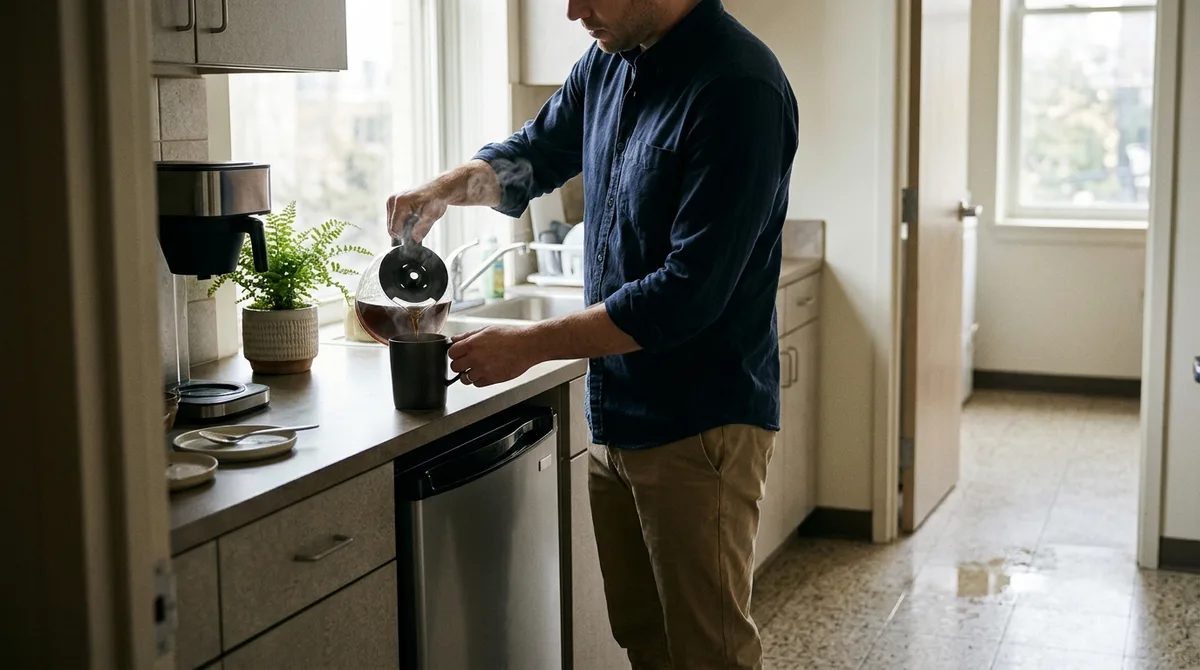
Brief, ordinary acts that help a worker keep going through a shift usually fall under the doctrine. The core examples are drinking water, eating, resting, and using the restroom. A Pennsylvania Commonwealth Court decision also described the doctrine as covering a momentary departure from active work, and it listed fixing hair and adjusting contact lenses or makeup alongside restroom use.
Courts commonly place these activities in the same group:
- Drinking water or taking a sip from a fountain
- Eating a snack or meal during a break
- Sitting or standing still to rest
- Using the restroom
- Fixing hair, or adjusting contact lenses or makeup
The reasoning is practical. A worker who is thirsty, hungry, fatigued, or uncomfortable cannot stay alert or work safely, so these needs are treated as incidental to the job rather than as a separate personal errand. The worker remains on the job site and on the clock while meeting them.
Brevity is the usual focus. The longer or more elaborate the departure, the more a court may ask whether work was still being interrupted only briefly. A quick drink of water fits the doctrine easily. A lengthy trip away from the workstation, or an activity that takes the worker well beyond the normal break, invites closer scrutiny.
Location and conduct matter too. In Connor v. Chester County Sportswear Co., a Tennessee panel found that a worker who twisted her knee while rising from a workplace toilet was in the course of employment. The injury still did not arise out of employment, because the same movement could happen in any restroom and had no rational connection to the work. That result shows why an activity can be covered while an injury from it is not.
Does Being on Shift Automatically Mean Coverage?
No, being on shift during a comfort break does not automatically mean an injury is covered. Workers’ compensation claims generally have to satisfy two separate questions, and passing the first does not settle the second.
The first question is whether the worker was in the course of employment. This turns on timing and purpose: was the worker on the clock, at or near the workplace, and doing something that fits the doctrine, such as a short drink, a snack, or a restroom visit? The second question is whether the injury arose out of employment. That asks whether the injury was connected to a risk that came from the work itself.
The Oregon Court of Appeals made this gap clear in 2022. Its decision in Watt v. SAIF held that showing a personal-comfort activity does not remove the need to analyze the arising-out-of question on its own.
Minnesota’s 2022 decision in Tomah v. Good Samaritan Society shows how the two questions can split. The court accepted that a short personal-rest period was within the course of employment, but the doctrine alone did not establish that the injury arose out of employment. The worker had not proven a slippery floor or another external, special, or unsafe hazard, and standing up without extenuating circumstances did not show an increased risk.
Some jurisdictions therefore require evidence tying the injury to a work-related hazard or risk. In practice, a claimant may need to point to something about the workplace that contributed to the fall or strain, such as a wet floor, an uneven step, damaged equipment, or a condition the employer controlled. A movement that could have happened in any setting, like rising from a chair or a toilet, gives the claim little to connect to the job.
Why Are Restroom Fall Claims Sometimes Denied?
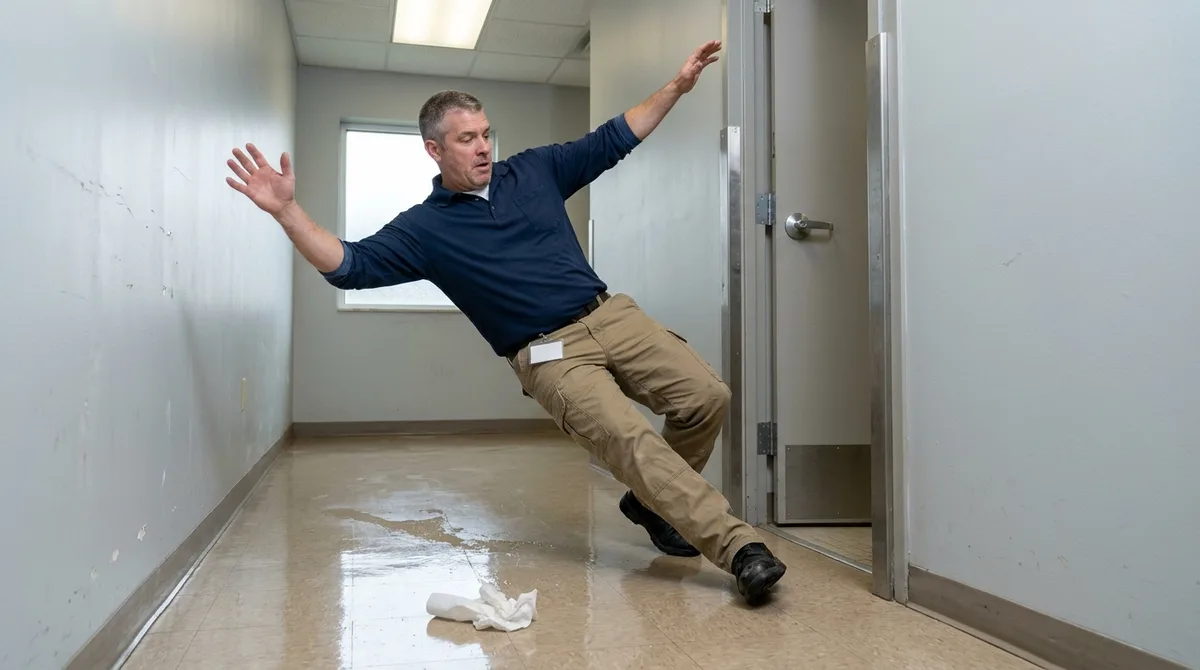
A restroom fall can be denied even when the worker was clearly on a covered break, because the injury must also be tied to a risk created by the job. Two contrasting cases show where that line falls.
In the Minnesota restroom-fall case, the appeals court affirmed the denial of the claim. The worker had not proven a slippery floor or another external, special, or unsafe hazard, and standing up without extenuating circumstances was not treated as an increased risk.
Connor v. Chester County Sportswear Co., decided by a Tennessee workers’ compensation panel in 2002, presents a different pattern. A worker twisted her knee while rising from a workplace toilet. The panel found she was in the course of employment, but it concluded that the injury did not arise out of employment because the same movement could have happened in any restroom and had no rational connection to her work.
Both workers were on a brief personal break, and both were hurt by an ordinary movement. What separated the outcomes was whether something about the workplace made the fall or strain more likely.
For a worker, the useful question is what at the job made the injury more likely, not simply whether it happened during a break. A restroom floor left wet by a leaking fixture, a damaged grab bar, a missing step edge, or a mop bucket parked in a narrow hallway each gives an adjuster something concrete to connect to the job. A knee that simply buckled on a dry floor offers far less.
Evidence matters here. Report any unsafe condition to a supervisor as soon as possible, and note the time, the exact location, and the names of anyone who saw the condition or the fall. A photograph of the hazard, taken before it is repaired, can make the difference between a claim that describes a risk and one that only describes a movement.
How Do Break Length and Location Change the Outcome?
Break length and location change the outcome because courts ask whether a pause was a brief interruption of work or a separate personal trip. A July 2026 Pennsylvania decision shows how much weight the details carry. A Giant Eagle pharmacy technician was struck by a vehicle while crossing the street to get food during one of her two mandatory 15-minute breaks. The Commonwealth Court affirmed compensation, but the decision stressed that doctrine application is case-specific.
The court’s reasoning centered on brevity. The majority concluded that a 15-minute break was short enough that the worker’s course of employment was not broken, even though she had left the building. A judge dissented, which shows that reasonable judges can disagree about when an off-premises errand becomes too long or too far from the job.
Home-based breaks can also be covered. In a 2008 Minnesota decision, a worker whose employer required him to maintain a home office did not leave the course of employment when he took a short coffee break in his kitchen. The required home office made the kitchen part of the work setting for that purpose.
Because these cases turn on facts, courts commonly look at a short set of questions:
– How long the break lasted, and whether it was scheduled or mandatory – What the worker was doing, such as getting water, eating, or running a personal errand – Where the break happened, including whether the worker left the premises – What the employer’s workplace rules allowed or required
A worker who leaves a site for food should be able to show the break start and end times, the route taken, and whether a policy or schedule allowed the trip. Those details give a court the facts it needs to apply the test to the specific break.
Checking Your State’s Rules After a Break-Time Injury
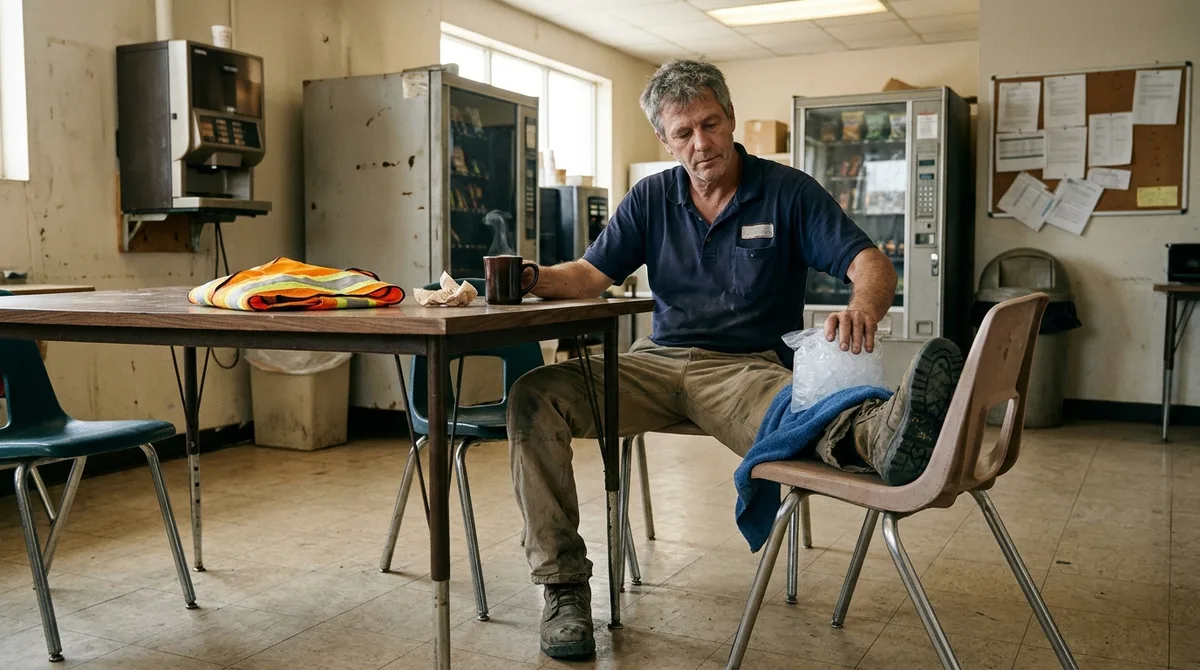
Start by identifying which state’s workers’ compensation law governs the claim. Courts apply each state’s statutes and case law, so a break that is covered in one state may be treated differently in another. Your state’s workers’ compensation agency can confirm the governing rules, such as the Tennessee Bureau of Workers’ Compensation for injuries in Tennessee.
Because these claims turn on facts, the record you build early often decides the outcome. Work through these steps while your memory is fresh:
- Write down the activity you were doing, such as getting water, eating a snack, or using the restroom.
- Record the exact start and end times of the break and whether it was scheduled or one of your mandatory breaks.
- Note where the break happened, including whether you left the premises, and the route you took.
- Check whether a written workplace rule or schedule allowed the break and any trip off site.
- Describe any hazard at the location, such as a wet floor, uneven step, damaged equipment, or a mop bucket in a narrow hallway.
- Note any extenuating circumstance that explains why the fall or strain happened.
- Report the injury to your supervisor as soon as possible, and ask for the report in writing.
- Photograph any hazard before it is repaired, and keep copies of every form, medical record, and letter you receive.
Checking Your State’s Rules After a Break-Time Injury
Start by pulling the workers’ compensation statute for the state where you were hurt, then search that state’s appellate decisions for break cases. Minnesota’s framework is in Minn. Stat. § 176.021, subd. 1, and Tennessee’s definition of injury appears in Tennessee Code Annotated § 50-6-102(14)(B). Read the decisions involving breaks closest to yours, and check whether the court asked separately whether the injury arose out of employment.
Then compare your facts to those decisions. Note how long the break lasted, whether it was scheduled or mandatory, and whether you stayed on the premises. A Pennsylvania worker who crossed the street for food during a 15-minute mandatory break stands on different facts than a worker whose break grew into a long errand, so write those details down while they are fresh.
Next, focus on the hazard. Record what in the workplace could have caused the fall or strain, such as a wet floor, a loose step, or equipment that was out of order, and ask your employer for any maintenance or incident records covering that spot.
If the answer is still unclear, contact the Tennessee Bureau of Workers’ Compensation or your own state’s agency and describe the injury, the timeline, and the location. Ask which evidence the state typically expects for break-time injuries. A workers’ compensation attorney licensed in your state can also review the local case law against your timeline before you respond to any insurer’s decision.
Frequently Asked Questions
1. Is a smoke break covered under the personal comfort doctrine?
A smoke break is not one of the core examples the doctrine lists, which are drinking water, eating, resting, and using the restroom. Courts judge a smoke break the same way they judge any break, by its purpose, how long it lasted, where the worker went, and whether the employer’s rules allowed it. A short break taken on the premises with permission presents the strongest case, while a longer trip away from the workstation invites closer scrutiny.
2. Can an employer’s rule about where breaks may be taken defeat a personal comfort claim?
An employer’s rule about where breaks may be taken is one of the factors courts weigh, so a rule can work against a claim. A worker who leaves a designated break area in violation of a written policy may have a harder time arguing that the trip was reasonable. How much weight the rule carries still depends on the governing state’s law and on the length and purpose of the break.
3. What happens if the break was not authorized by the employer?
An unauthorized break makes the course-of-employment question harder to win, because courts consider whether workplace rules allowed the break and whether the worker’s conduct was unusual or unreasonable. The risk grows if the worker also left the site or stayed away from the job for longer than a normal break. Records showing the break’s timing and whether a supervisor knew about it can help a claim address that gap.
4. How long can a break last before it takes the worker out of the course of employment?
Courts do not apply a fixed time limit, and the answer depends on the state’s law and the facts of the case. In the 2026 Pennsylvania decision, the majority found that a 15-minute mandatory break was brief enough that the worker’s course of employment was not broken. Longer absences, especially ones that take the worker well beyond a normal break, draw closer review.
5. Does an injury during a comfort break have to involve a workplace hazard in every state?
No, the requirement is not uniform across states. Some jurisdictions require evidence connecting the injury to a work-related hazard or risk, while others may analyze the question differently. A worker should check the rules of the state where the injury happened before assuming a hazard must be proven or that none is needed.