
Workers’ comp coverage for volunteers has no single rule across the United States, so an unpaid helper may be protected in one state and left out in another. Coverage depends on state law, the type of organization, the work performed, and whether the person receives anything of value in return. In New York, an unpaid person doing charitable work for a nonprofit is generally not treated as an employee who must be covered. However, stipends, room and board, and other perks with monetary value can change that answer, while expense-offset stipends do not. Virginia takes a different approach: unpaid, uncompensated volunteers generally are not employees under its workers’ compensation act, yet a business may add them to its policy by endorsement. In many cases, protection is a decision the organization makes rather than a default.
Ohio shows how much the type of organization matters. Under the Ohio Bureau of Workers’ Compensation rules, public employers must report at least $300 per covered volunteer emergency-service worker each year, subject to a $4,500 policy minimum. Private employers and nonprofits, by contrast, do not cover non-emergency volunteers under their workers’ compensation policy. Volunteers should therefore ask two questions before starting: which state rules apply to the activity, and whether the organization has actually added them to a policy. The answers can differ even within one city, so a volunteer who assumes coverage without checking may learn otherwise only after an injury.
Key Takeaways
- Volunteers are not automatically covered by workers’ compensation in the United States, because coverage depends on the state where the work happens, the type of organization, the activity performed, and whether the volunteer receives money or other value in return.
- In New York, a stipend, room and board, or other perk with monetary value can make an unpaid helper a covered worker, while a stipend that only offsets documented expenses does not.
- In Virginia, a business may add unpaid volunteers to its workers’ compensation policy by endorsement, and in Washington, an organization that elects volunteer coverage must keep auditable volunteer records for three full calendar years after reporting volunteer hours.
- Before any shift, a volunteer should confirm in writing that the organization’s workers’ compensation endorsement or election names the volunteer’s specific role, because a volunteer who is missing from that list may not be covered for that work.
- A volunteer accident policy is a private insurance contract, not workers’ compensation, so a volunteer may have medical bills paid after an injury while receiving no wage replacement or disability benefits.
Are Volunteers Covered by Workers Comp Across the United States?
No, unpaid volunteers are not automatically covered by workers’ compensation across the United States, because no single national rule applies to every unpaid helper. Protection depends on the state where the work happens, the type of organization involved, the activity the volunteer performs, and whether the volunteer receives money or other value in return.
Washington shows how a state can define a volunteer narrowly. The Washington State Department of Labor & Industries describes a volunteer as someone who donates labor by choice and generally receives nothing of monetary value. A person who receives value in exchange for work is probably a covered worker under Washington law. Certain organizations there may also elect medical-aid-only coverage, which excludes wage replacement, vocational benefits, permanent partial disability, and death benefits. A volunteer covered under that arrangement may have medical care paid but no income replacement if injured.
Alaska takes a different approach by naming specific groups in its statute. The Alaska Department of Labor and Workforce Development lists separate statutory coverage exceptions for volunteer emergency medical technicians, volunteer firefighters, emergency and disaster relief forces, special officers, and members of the organized militia, each tied to its own section of the Alaska Statutes. The same agency warns that substantial perks or benefits beyond expense reimbursement may cause a purported volunteer to be treated as an employee. A stipend that merely covers fuel is treated differently from a payment that functions as wages.
Texas allows emergency-service organization volunteers to be covered through an election. Under Texas Labor Code § 406.098, a qualifying organization that is not a political subdivision, or that is separate from one, may elect workers’ compensation coverage for named active volunteer members. Covered volunteers receive full medical benefits and minimum compensation payments. The statute defines “normal functions” broadly to include responses, training, meetings, equipment maintenance, and organizational functions, so an injury during an equipment check may fall within coverage even though no emergency call was involved.
These examples show why the same unpaid role can produce different answers. A volunteer who helps at a food pantry in one state may have no workers’ compensation protection, while a volunteer doing similar work for an emergency-service group in Texas may be covered if the organization elected coverage. The state statute, the organization’s own policy decisions, and the exact duties performed all matter.
Can Stipends and Perks Turn a Volunteer Into an Employee?

Yes, a stipend or other perk can turn a volunteer into a covered worker in some states, because the central question is whether the person is being paid for work or only repaid for costs. Agencies and courts look at what the person actually receives, not the label the organization gives it.
The line between reimbursement and payment does most of the work. Money that repays a volunteer for real out-of-pocket costs, such as fuel for a delivery route, parking at a shift, or supplies bought for a program, leaves the volunteer no better off than before. Money that rewards time or effort is different. New York treats stipends, room and board, and other perks with monetary value as compensation, while an expense-offset stipend is not. A volunteer who receives free lodging at a nonprofit’s facility or a regular cash payment has received something of value, even if the organization calls it a thank-you gift.
Alaska applies the same logic through its warning that substantial perks or benefits beyond expense reimbursement may cause a purported volunteer to be treated as an employee. The word “purported” is important. The title “volunteer” does not decide the question, and the actual arrangement does. A modest meal at a fundraising event looks nothing like a benefits package, but a combination of regular payments, free housing, and other benefits may look like wages.
Washington approaches the question from the other direction. A volunteer there donates labor by choice and generally receives nothing of monetary value. When someone receives value in exchange for work, that person is probably a covered worker, which means the protection applies whether or not the organization thought of the person as an employee.
The same mileage check or meal voucher may therefore be treated differently depending on the state and on what else the person receives. A volunteer who gets reimbursed for a documented drive is in a different position from one who gets a flat monthly amount that does not change with the cost of the drive, even if the total dollars look similar.
Volunteers who receive anything beyond their own time should keep records from the start. For each payment or benefit, write down what it was, when it was given, and what it was meant to cover. Keep receipts or mileage logs for reimbursements, and keep any written agreement that explains why a payment was made. If a payment is labeled as a stipend, note whether it is tied to specific costs or to hours served. These records show how the arrangement actually worked, and they are the first evidence anyone will look at if a claim is filed after an injury.
How Volunteer Coverage Differs From State to State
The comparison below covers five jurisdictions. Each row describes only the named state and the coverage type listed beside it. A rule in one row should not be applied to any other state or to a different kind of coverage.
| Jurisdiction | Coverage type | What the rule does for volunteers |
|---|---|---|
| Ohio | Public employer coverage for emergency-service volunteers | Public employers must report at least $300 per covered volunteer each year, subject to a $4,500 policy minimum. Private employers and nonprofits do not cover non-emergency volunteers under their workers’ compensation policy. |
| New York | General workers’ compensation for nonprofit charitable work | Unpaid, uncompensated volunteers generally are not employees who must be covered. |
| New York | Volunteer Firefighters’ Benefits Law | Active volunteer firefighters injured or made ill in the line of duty may receive cash benefits, medical care, or both, paid by the local political subdivision. |
| Washington | Medical-aid-only coverage elected by an organization | Medical care is provided, but wage replacement, vocational benefits, permanent partial disability, and death benefits are excluded. |
| Virginia | Endorsement added to a business’s policy | Unpaid, uncompensated volunteers generally are not employees, but a business may add them by endorsement. |
| Texas | Election by a qualifying emergency-service organization under Labor Code § 406.098 | Named active volunteer members receive full medical benefits and minimum compensation payments. |
The table also shows three different ways states decide the question. New York sets a default rule that excludes most charitable volunteers, then adds a separate statute for firefighters. Washington and Texas let organizations make an election, though the scope of what they can elect differs. Ohio divides the answer by the type of employer, so the same volunteer may be covered in one setting and not in another.
New York’s firefighter benefits operate apart from the general rule for charitable volunteers. The local political subdivision pays for the insurance, and volunteers do not have to contribute. A firefighter who is hurt must notify a listed local official or fire company representative within 90 days, so the reporting deadline matters as much as the benefit itself.
Washington’s election comes with recordkeeping duties. An organization that elects volunteer coverage may report either actual volunteer hours or 100 hours per volunteer per calendar year. It must also keep auditable volunteer records for three full calendar years after reporting those hours. Without those records, proving who was covered and for how long can become difficult.
Virginia’s rule depends on a decision by the business rather than on the volunteer’s own status. Whether an endorsement has been added to the policy is a matter for the business’s policy documents, which volunteers can ask to see. The Virginia Workers’ Compensation Commission’s employer FAQ addresses the endorsement option for businesses.
Texas gives emergency-service organizations a different kind of choice. Coverage applies to named active members rather than to every person who helps out, so a volunteer who is not on the organization’s named list may fall outside the election even if the organization is otherwise eligible. A volunteer who cannot tell whether they are named should ask the organization before relying on that protection.
Are Volunteer Firefighters Covered Differently?
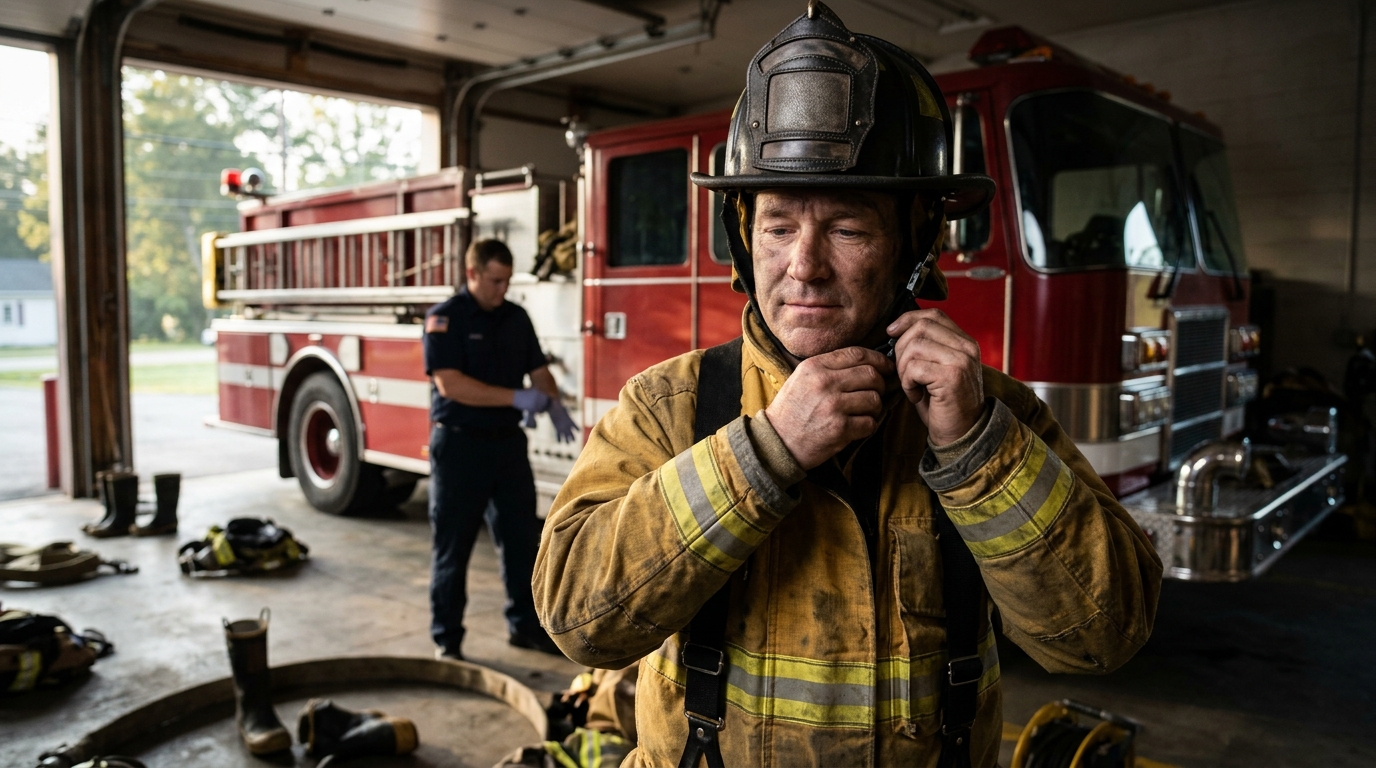
New York gives volunteer firefighters their own statutory protection, separate from the general rule for unpaid charitable helpers. Under New York’s Volunteer Firefighters’ Benefits Law, active volunteer firefighters who are injured or made ill in the line of duty may receive cash benefits, medical care, or both. The local political subdivision pays for the insurance, and the volunteers do not have to contribute to the cost.
That protection comes with a short deadline. A New York volunteer firefighter must notify a listed local official or a fire company representative of the injury within 90 days. A firefighter who is hurt on a call should write down the date, the place, and the name of the person notified, so there is a clear record of when and how the injury was reported.
Alaska handles the question by listing exceptions by name. Its statute, as described by the Alaska Department of Labor and Workforce Development, lists separate exceptions for volunteer emergency medical technicians, volunteer firefighters, emergency and disaster relief forces, special officers, and members of the organized militia. Each group is tied to its own section of the Alaska Statutes: AS 23.30.238, AS 23.30.243, AS 23.30.244, AS 23.30.041, and AS 23.30.236, respectively. A volunteer firefighter in Alaska should therefore read the section that covers firefighters rather than assume the general volunteer rules apply.
Texas takes a third route. An emergency-service organization that is not a political subdivision, or that is separate from one, may elect coverage for its named active volunteer members under Texas Labor Code § 406.098. The statute defines “normal functions” to include responses, training, meetings, equipment maintenance, and organizational functions. A volunteer hurt while cleaning a fire engine at the station may therefore fall within the election, even if no call was underway. Covered volunteers receive full medical benefits and minimum compensation payments, but only if the volunteer is on the organization’s named list.
These three states show that a firefighter’s protection can depend on whether it comes from a statute written for firefighters, a list of exceptions, or an election made by the organization. The reporting rules also differ. New York’s 90-day notice period applies to New York volunteers, and a firefighter in another state should not assume it carries over. Each state sets its own requirements for who must be told, how quickly, and in what form.
Volunteer firefighters can make these questions easier to answer by keeping their own records. Training sign-in sheets, station duty rosters, and call logs show which activities happened and when, which matters in Texas, where routine station work can count as a normal function. A copy of the organization’s list of named members, if one exists, should also be kept, because that list decides who is covered under an election.
Should Nonprofits Add Volunteers to Their Workers Comp Policy?
Whether a nonprofit should add volunteers to its workers’ comp policy is the organization’s decision, and it should be made only after checking the state’s rules with the insurer and the state agency. In Virginia, for example, unpaid volunteers generally are not employees under the workers’ compensation act, but a business may add them to its policy by endorsement. The choice exists, but the endorsement must actually be issued for the protection to apply.
Washington shows how an election can come with reporting and recordkeeping duties. An organization that elects volunteer coverage may report either its actual volunteer hours or 100 hours per volunteer per calendar year under the state’s reporting rules. Actual hours give a more accurate record but require careful tracking of every shift. The flat 100-hour figure is simpler to report, but the organization should ask its insurer how each method affects what it pays.
The records requirement is the part organizations most often underestimate. A Washington organization electing volunteer coverage must keep auditable volunteer records for three full calendar years after it reports the hours. Sign-in sheets, shift schedules, and a current roster of who was serving, with dates, are the kinds of records that can prove coverage later. Records kept only in a staff member’s inbox or a personal spreadsheet may not meet an audit.
Deadlines, recordkeeping rules, and policy costs differ from one jurisdiction to another, so no organization should assume that a rule from one state carries over to another. Before deciding, an organization should ask its insurer and the state agency:
- Whether volunteers can be added by endorsement or election, and for which kinds of activity
- When hours or names must be reported, and to whom
- How long records must be kept and what form they must take
- How the premium is calculated and whether the method affects the cost
The answers should be recorded in the organization’s files, along with the name of the person who gave them and the date.
Once the organization decides to cover volunteers, it should confirm coverage in writing before any volunteer begins work. The written confirmation should name each covered volunteer, the role, the start date, the state where the work will happen, and the endorsement or election that applies. A verbal assurance from a board member or program coordinator does not show what the policy actually includes, and a volunteer who starts work before the paperwork is complete may be unprotected on the first day.
Is Volunteer Accident Insurance the Same as Workers Comp?

Volunteer accident insurance is not the same as workers’ compensation, even though both can help pay when a helper is hurt. Workers’ comp is a state-based system that applies only where the law says a person is covered, while a volunteer accident policy is a private insurance contract whose benefits are written into the policy itself.
An optional volunteer accident policy may help pay medical bills after an injury during volunteer work. It is not necessarily workers’ comp, and it may not provide the same protection. Its benefits, limits, and exclusions come from the policy wording, so two policies that look similar on the surface can pay very differently after a claim.
A policy can cover medical bills without providing wage replacement or disability benefits. A volunteer who has a regular job and misses several weeks of work after a fall at a food bank may have the emergency room and surgery bills addressed, yet receive nothing for the lost paycheck. Coverage that pays only for treatment leaves the volunteer responsible for every other financial loss the injury causes.
Limits matter as much as the type of benefit. Volunteer accident programs for nonprofits have generally been priced at a few dollars per volunteer per policy term, with minimum annual premiums in the low hundreds of dollars. Medical-expense limits in these programs have commonly ranged from about $100,000 to $250,000. These are general market figures, and the actual price and limit depend on the number of volunteers, the activities covered, and the terms the organization chooses.
A limit that sounds large can still be exhausted by a serious injury. Hospitalization, surgery, and follow-up rehabilitation can add up quickly, so a volunteer should look at how the policy applies the limit to each stage of treatment. Some policies also set separate sub-limits for items such as ambulance transport, dental care from an accident, or physical therapy.
Exclusions deserve the same attention. A policy may exclude particular activities, certain travel, or injuries that happen outside scheduled volunteer hours. Each exclusion should be compared against the work the volunteer actually does, rather than the job title printed on a sign-up sheet.
Before relying on any policy, a volunteer or organization should read the schedule of benefits, note the medical limit and any deductible, and ask whether the policy pays first or only after health insurance has responded. Those details determine whether the policy helps with the bills a volunteer is likely to face, and whether it leaves gaps that workers’ comp in the same state might have filled.
How Can a Volunteer Check Coverage Before Getting Hurt?
Before an injury, a volunteer can confirm coverage by answering five questions: which state the work is in, what kind of organization is involved, whether any value beyond expense repayment is received, whether a policy actually names the volunteer, and when any injury must be reported. Each answer changes which rules apply, so the questions should be asked in order and the replies kept in writing.
The answers should come from the organization’s policy documents, not from a verbal assurance. Work through the steps below with a coordinator or board member, and bring copies of the forms you sign.
- Identify the state where the volunteer work physically takes place, because that state’s statute controls, and the same role can be covered on one side of a state line and not on the other.
- Ask whether the organization is a nonprofit, a public entity, or an emergency-service group, since Ohio, for example, treats public employers differently from private employers and nonprofits.
- Ask whether the volunteer will receive any stipend, meal, housing, or other benefit beyond expense reimbursement, and request the terms in writing, because New York and Alaska both look at what a payment is worth.
- Ask whether the organization has added volunteers to its workers’ comp policy by endorsement or election, and request a copy of the endorsement that names the volunteer’s role.
- If no workers’ comp coverage exists, ask whether the organization holds a separate volunteer accident policy, then read its medical limit, any sub-limits, its exclusions, and whether it pays before or after health insurance.
- Find any notice deadline that applies, such as the 90-day period New York volunteer firefighters have to report an injury to a listed local official or fire company representative, and confirm the equivalent deadline in the state where the work happens.
- Write down the date, the name of each person who confirmed coverage, and the statute or policy form cited, then keep those notes with receipts and shift records.
Confirming Volunteer Coverage Before an Injury Occurs
Start with the document that decides the question: the organization’s current workers’ comp policy, especially any endorsement or election that names volunteers. Ask the coordinator for a copy this week, then compare the listed roles with what you actually do on a shift. If your role is missing, you are not covered for that work, no matter what the sign-up form says.
If you volunteer as a firefighter in New York, put the 90-day injury notice deadline on your calendar today, and write down the name of the local official or fire company representative you would notify. If you volunteer for an emergency-service group in Texas, confirm that your name appears on the organization’s named active member list before your next shift, because the election covers only those members.
Next, identify the state where the work happens and note the statute that governs it on the same page as the endorsement. If the organization has no workers’ comp coverage for volunteers and offers only a volunteer accident policy, compare its medical limit, any sub-limits, and its exclusions with the duties you perform. Ask whether the policy pays before or after health insurance, since that answer changes what you may owe out of pocket.
Finally, keep one folder with signed forms, the date of each confirmation, and the name of the person who gave it. Bring that folder to any injury report, so the paperwork matches the coverage you were promised.
Frequently Asked Questions
1. Can I do volunteer work while receiving workers’ comp benefits?
Doing volunteer work while receiving workers’ comp benefits can affect those benefits, especially wage-replacement payments, so the volunteer should not assume the two can be combined. Before taking any shift, a volunteer receiving benefits should confirm the rules with the claims adjuster or the state workers’ compensation agency. Written approval from the treating doctor is also useful if the volunteer role involves physical activity.
2. Do board members or unpaid committee members count as volunteers for workers’ comp?
Board members and unpaid committee members are generally judged by the same tests that apply to other volunteers, including state law and whether they receive pay or other value in return. A board member who only has expenses reimbursed is in a different position from one who receives a stipend, free housing, or other benefits. Because many board and committee roles do not appear on a sign-up sheet, the organization should confirm in writing whether those positions are named in its workers’ comp endorsement or election.
3. Can a volunteer sue the organization after being injured?
Whether a volunteer can sue the organization after an injury depends on state law, the facts of the injury, and whether the volunteer is covered by workers’ compensation. In many states, a covered worker who is injured on the job is limited to the benefits that the workers’ comp system provides rather than a lawsuit against the employer. A volunteer who is not covered may have other legal options, so a lawyer familiar with that state’s rules can explain which path applies.
4. Does a volunteer’s personal health insurance cover injuries sustained during volunteer work?
A volunteer’s personal health insurance may pay for injuries sustained during volunteer work, but the policy wording decides whether it does. Some health plans exclude injuries that are covered by workers’ compensation or another work-related coverage, so the answer depends on the exclusions in that specific policy. The volunteer should call the insurer, ask how volunteer injuries are handled, and record the date and the representative’s name.
5. What should a volunteer do first after an injury during volunteer work?
A volunteer injured during volunteer work should first get medical care for any serious symptoms, because treatment comes before paperwork. Next, the volunteer should report the injury to the organization’s coordinator in writing as soon as possible, noting the date, the place, and any witnesses. Copies of medical bills, visit notes, and any incident form should be kept together, and a volunteer firefighter in New York should also meet the 90-day notice deadline.